
Simulation · Minimal Organization · Logistics and transport
Airport
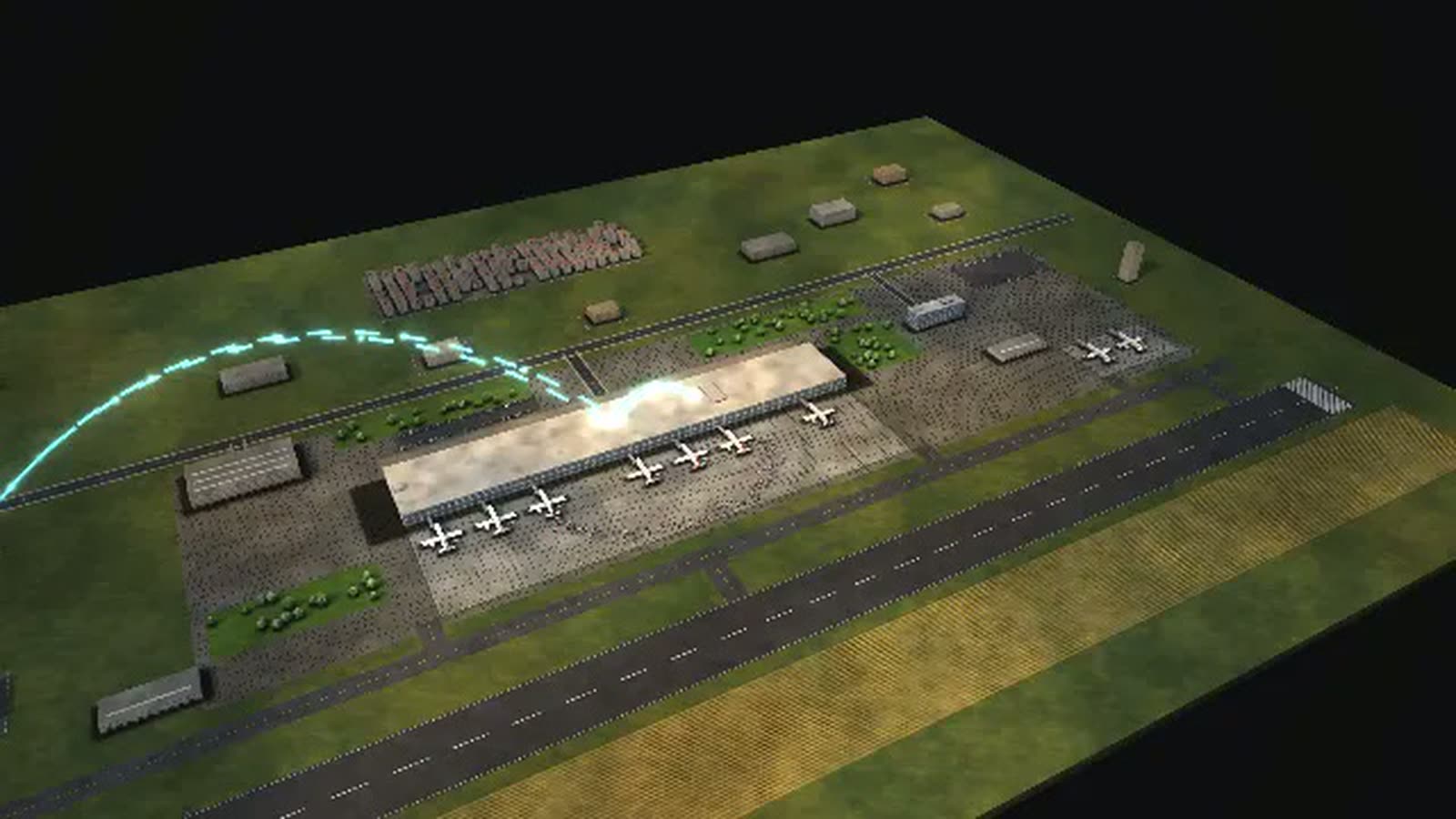
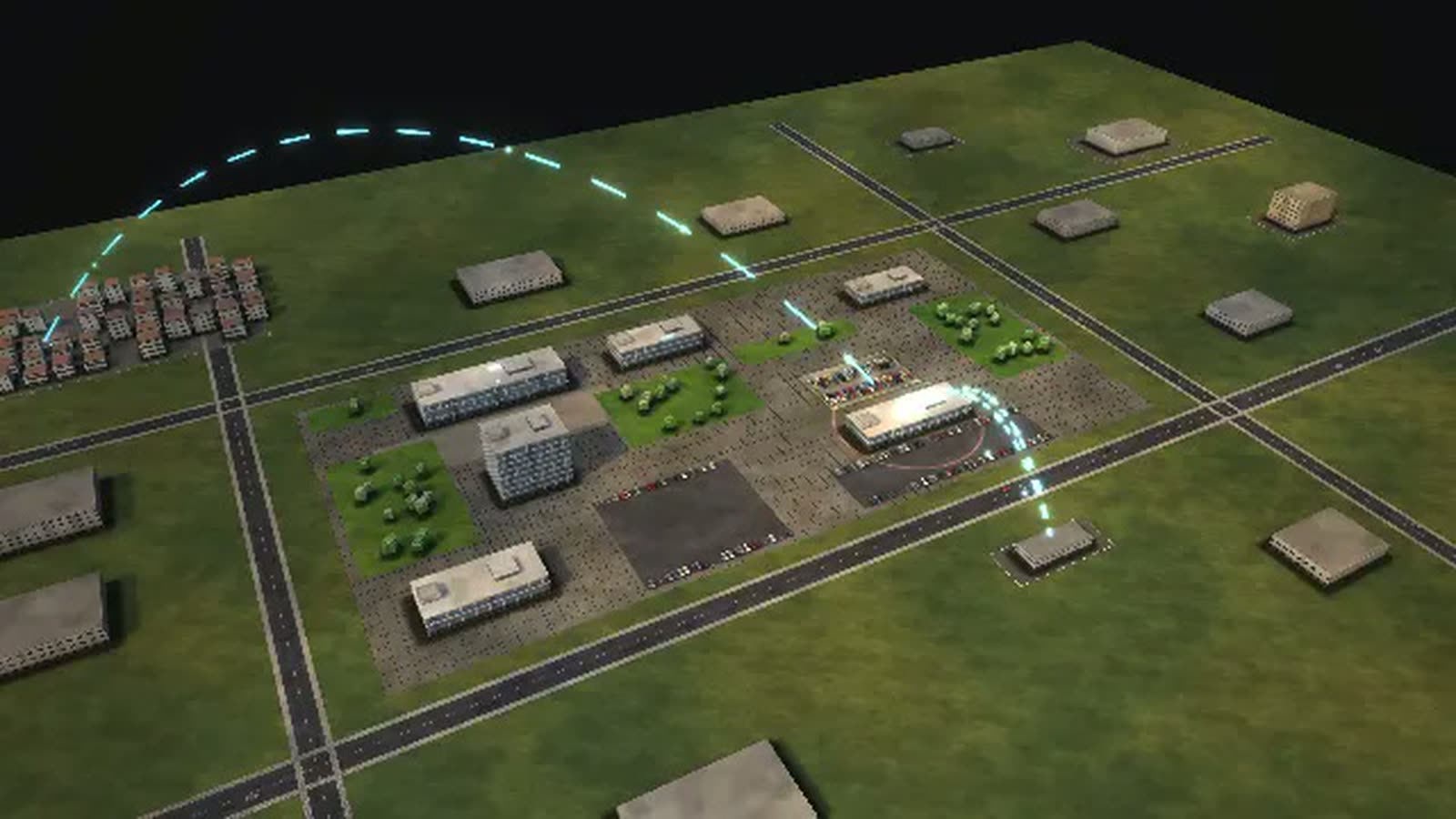
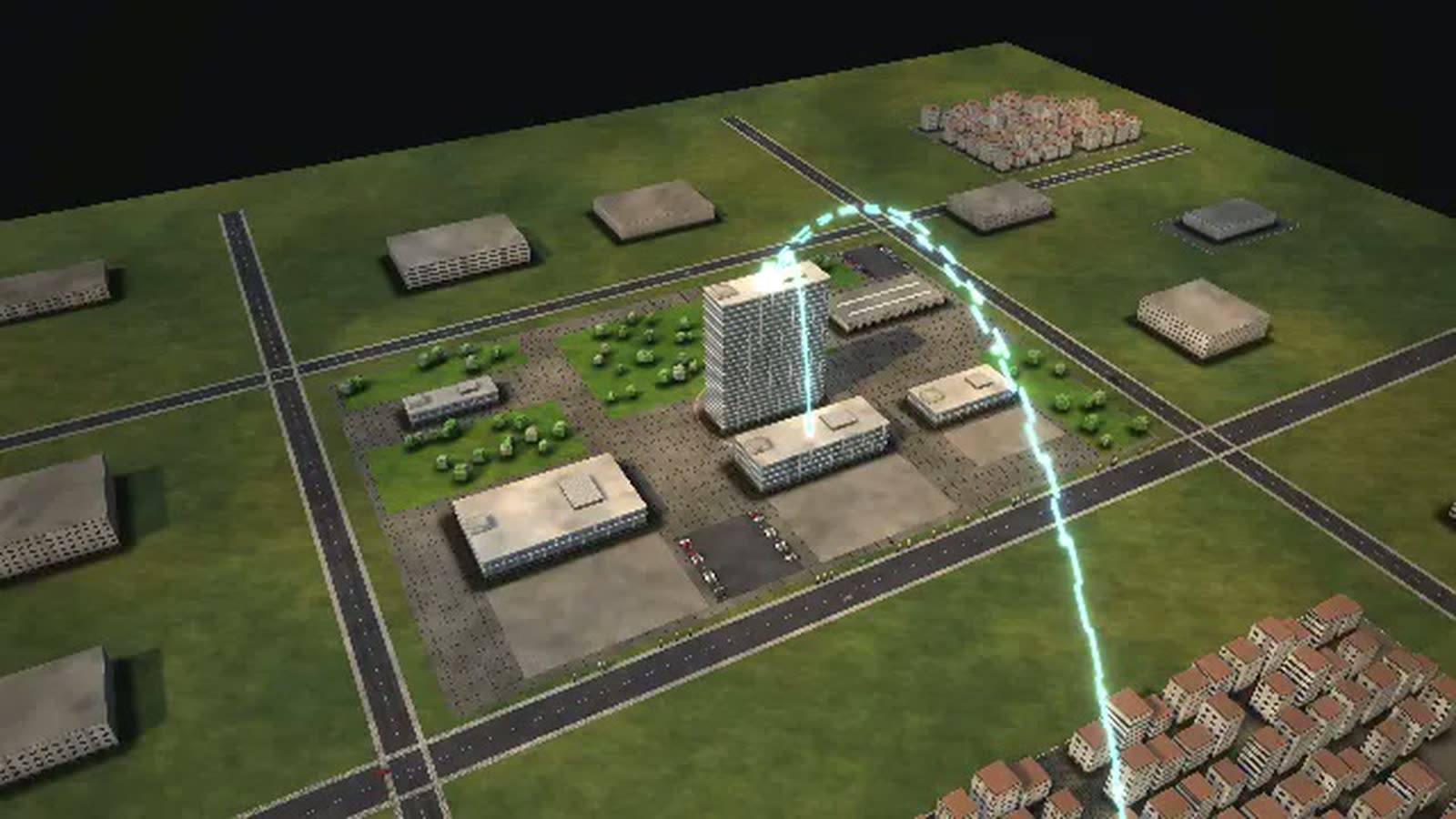
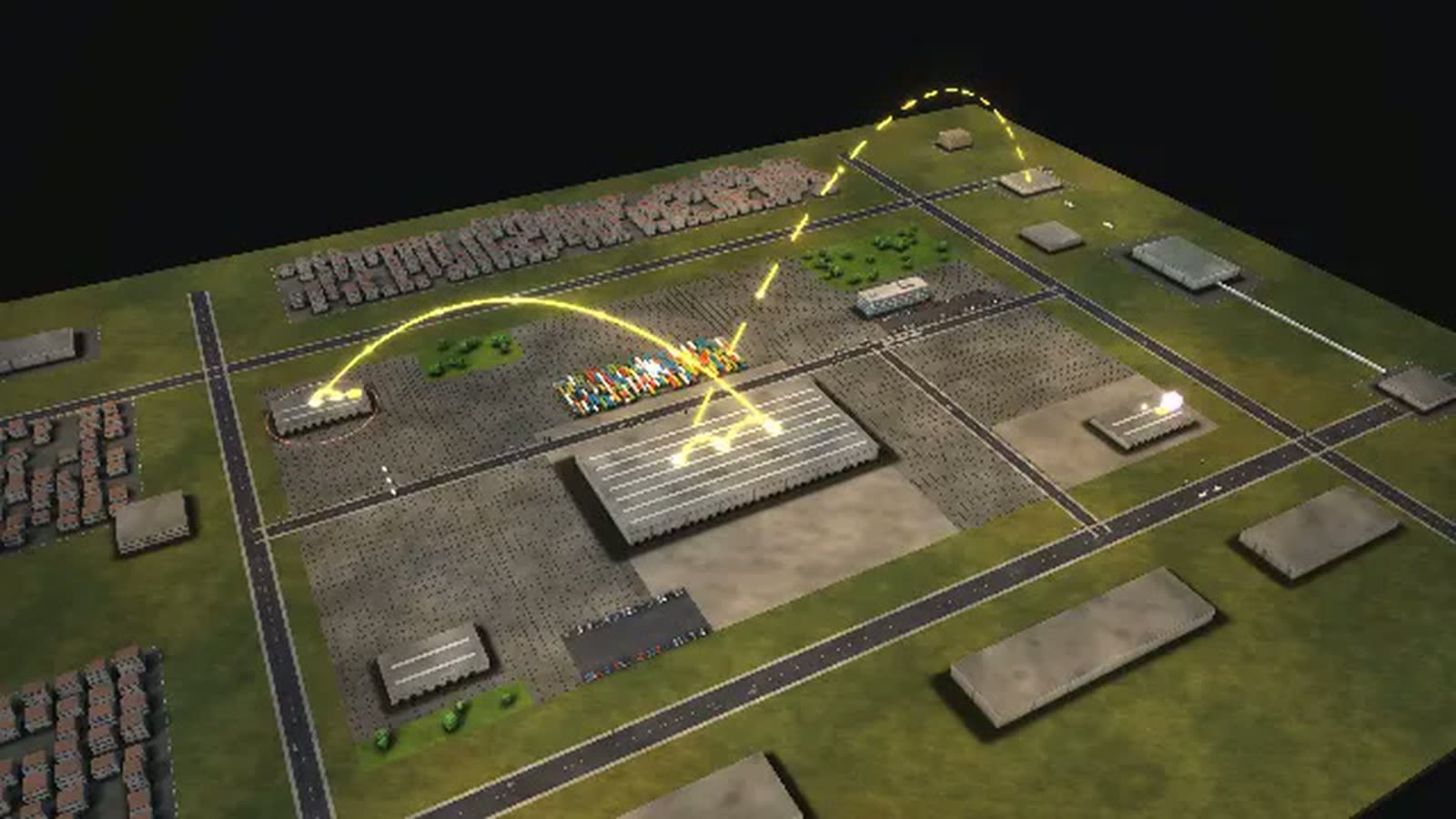
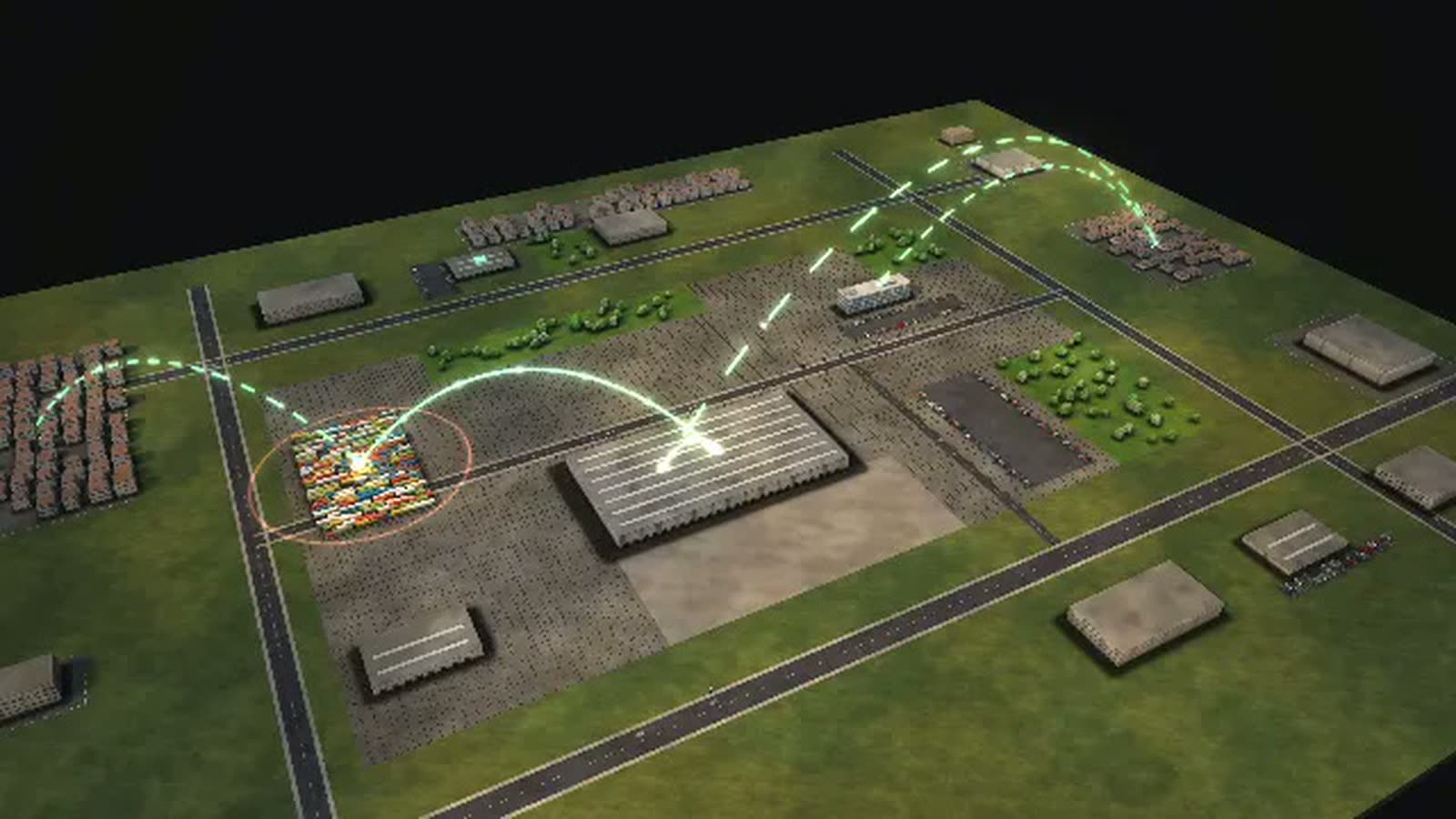
An airport as a walkable model: passengers from check-in through security to the gate, plus baggage, turnaround and winter operations.
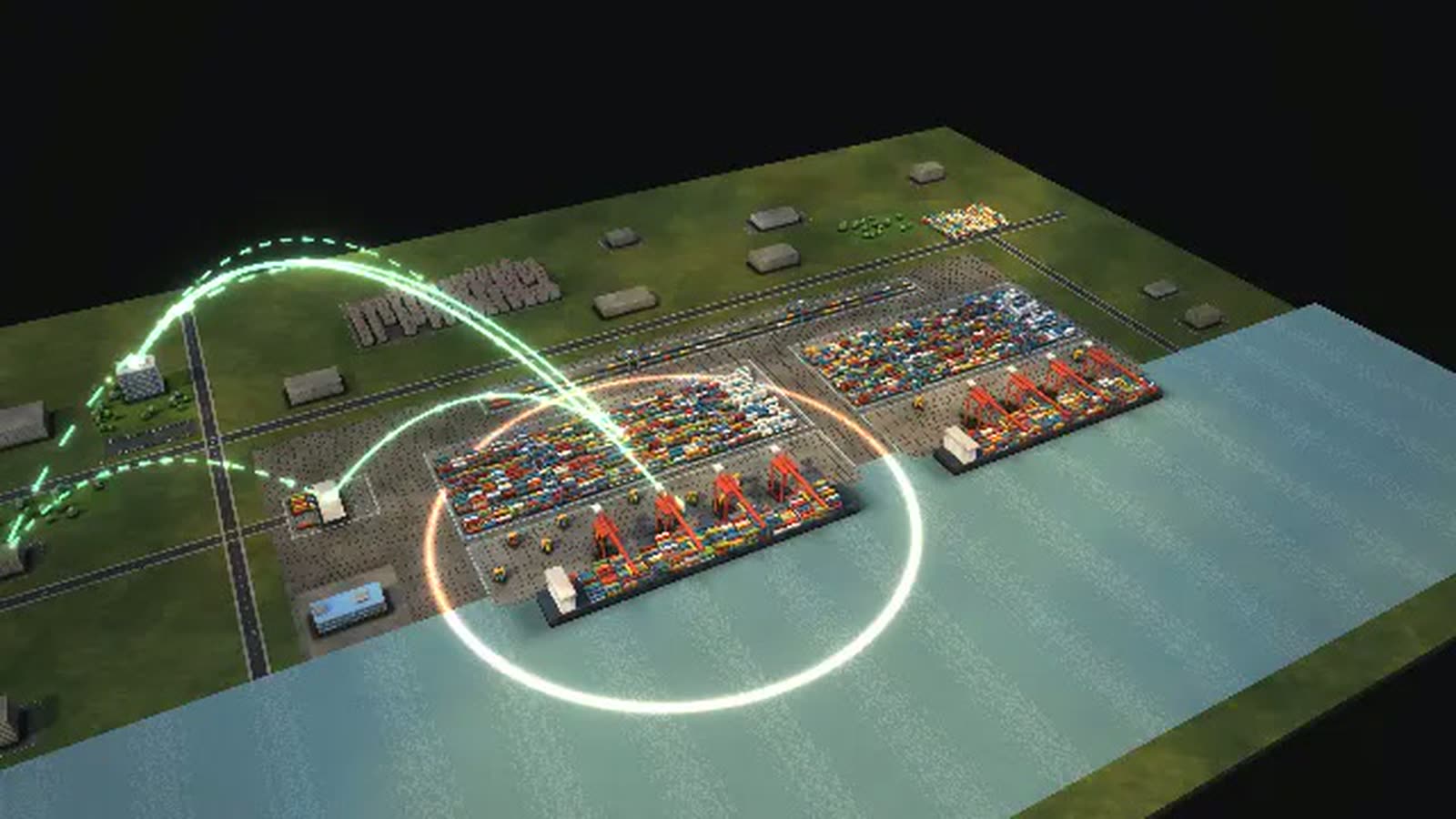
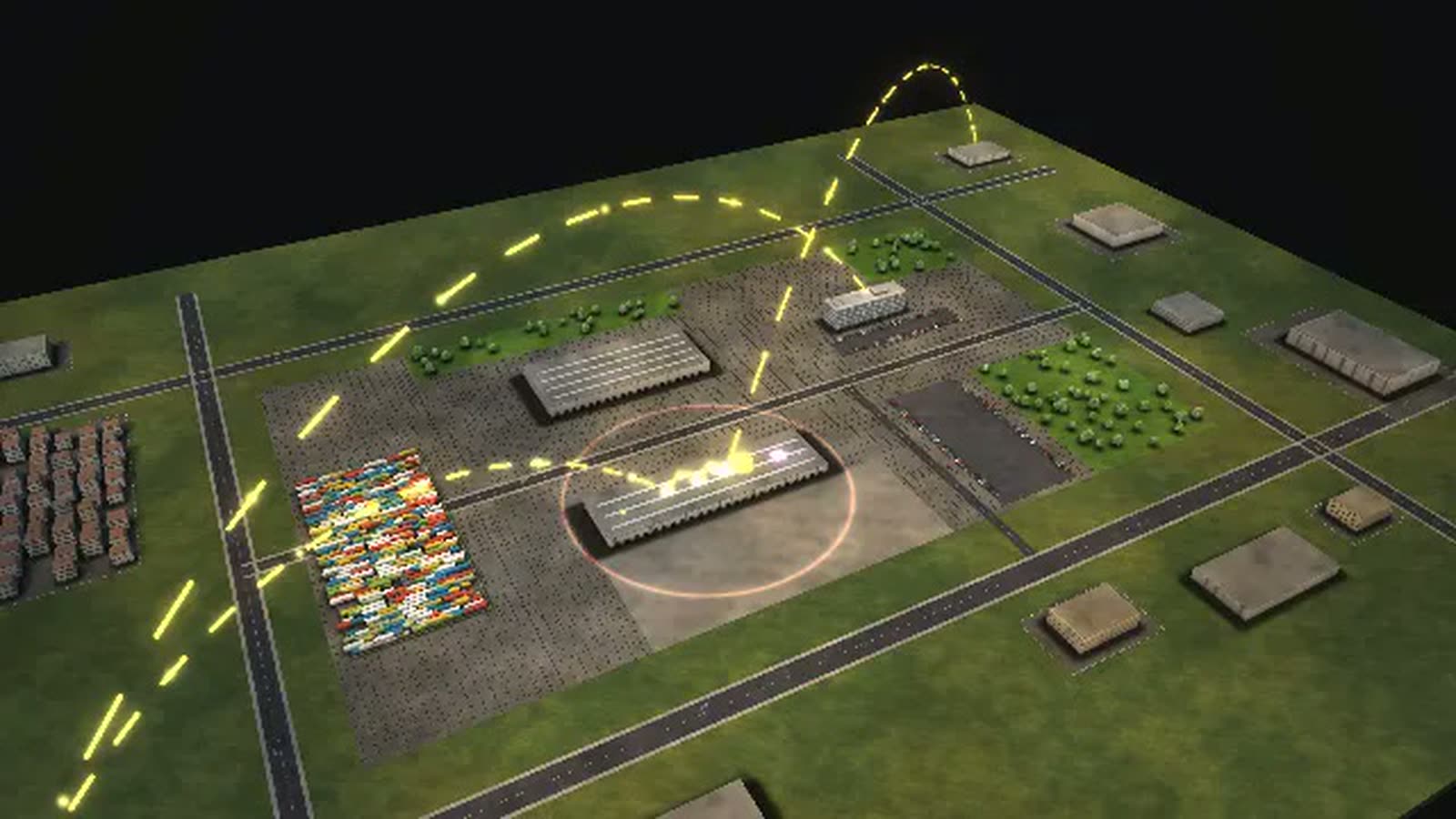
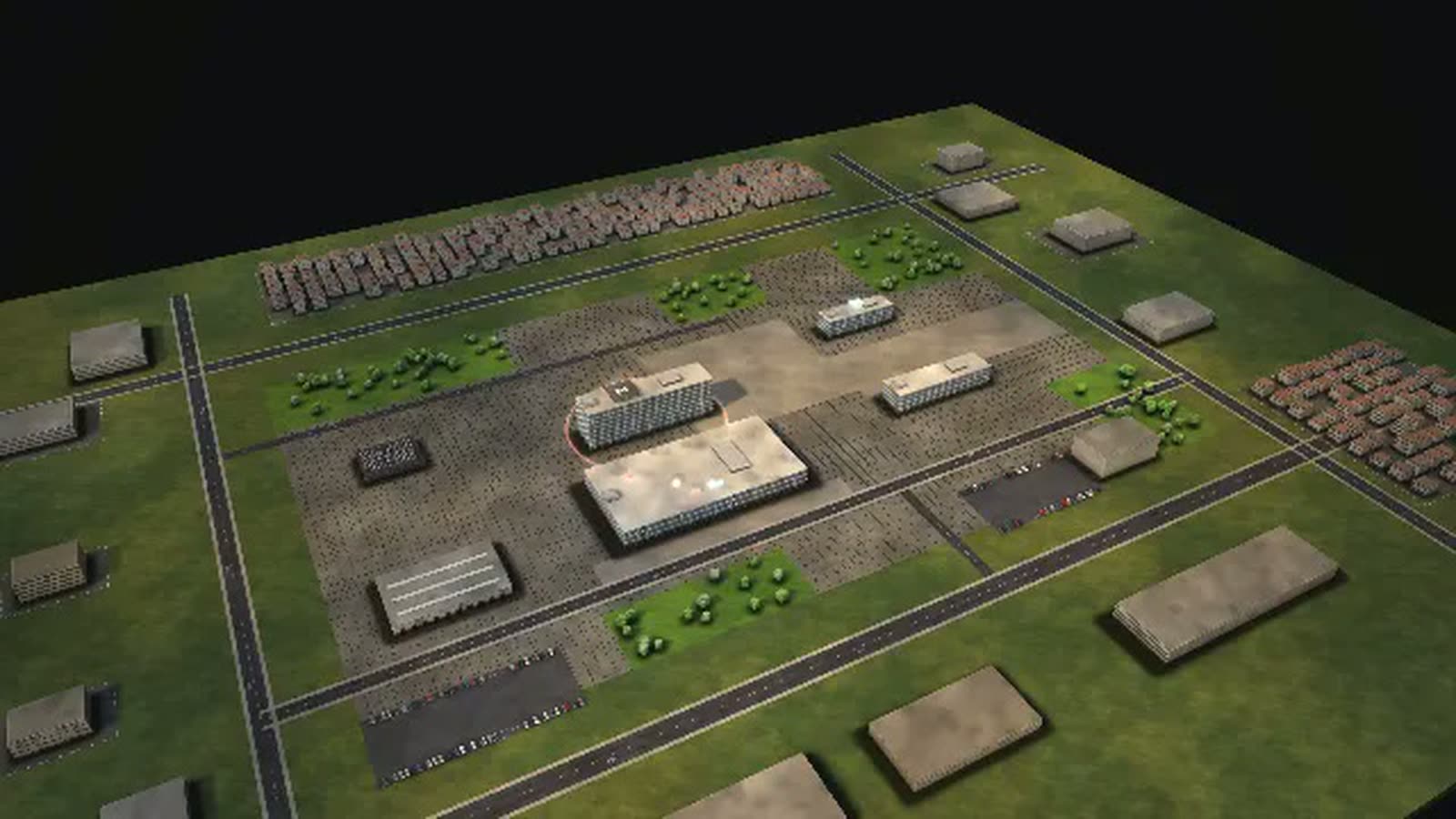
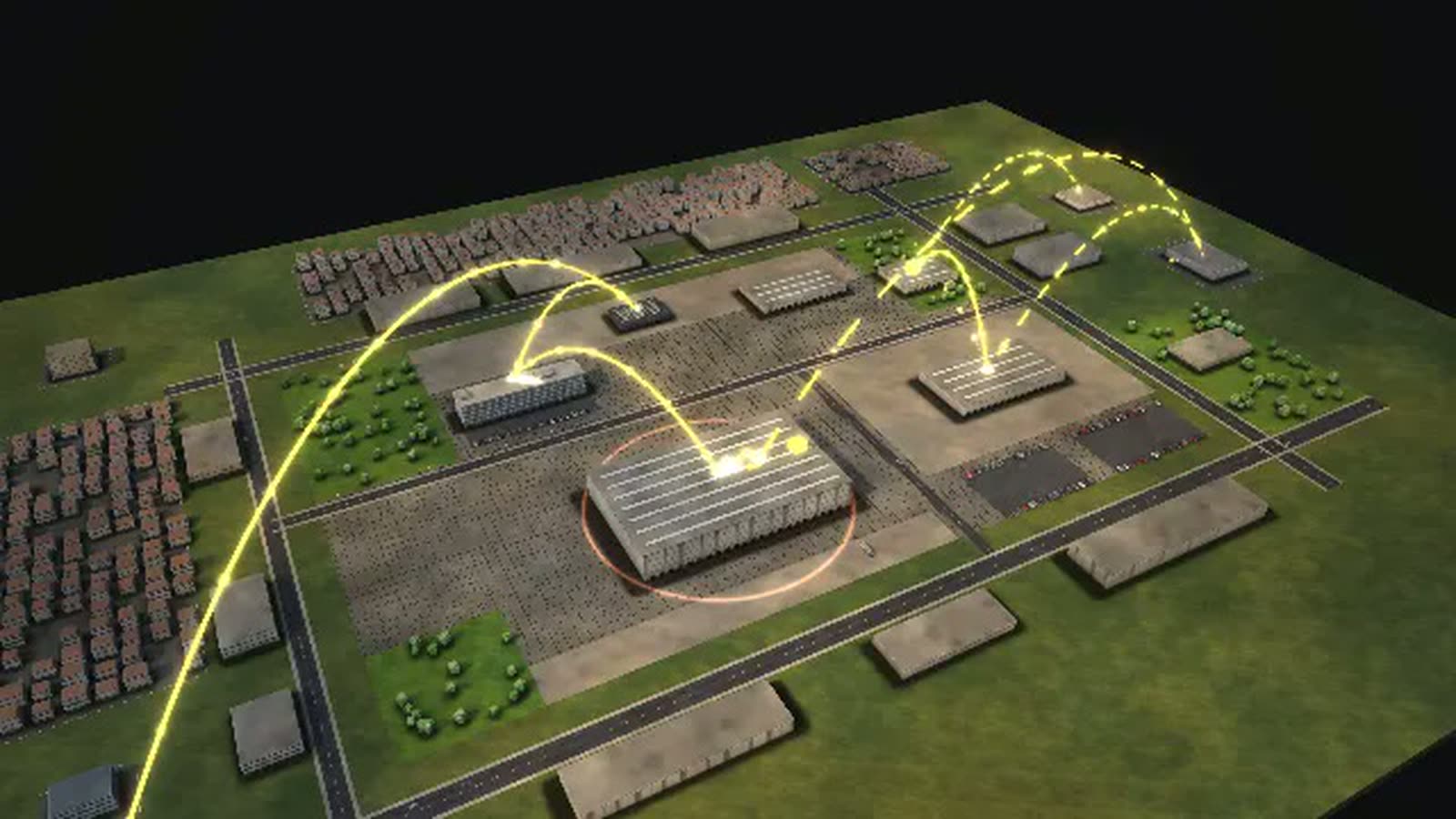
All data are fictional – FLUGHAFEN OSTERVENN does not exist. The model can be fitted to your airport's real data and filled with what nobody sees live today: passenger numbers per hour and security lane, or waiting times from counting sensors.
An airport passenger process simulation built around FLUGHAFEN OSTERVENN, a fictional airport operator. It provides runways, terminal and rhythm – but almost everything passengers see is done by others: coordinating without authority. The main process takes passengers from check-in through security screening to the gate. Their bags run in parallel through hold baggage screening and, if needed, a second-level check. The target in the model: at security within 30 minutes of check-in.
The site has the terminal, apron, de-icing pad, operations building, airport fire service, winter services and engineering, and a car park. At the start of the holidays or during a warning strike, the queue in front of security grows in plain sight. CT scanners and open lanes shorten it; a second de-icing pad saves time in winter. Alongside, an aircraft is turned around between two flights, and it snows.
In the model, security screening is assigned to the operator; at many airports in Germany the federal police commission private providers instead. Documented in the sources: the separate roles and A-CDM with shared target times. This page is for airport management, terminal operations, planning, winter services, communications and the partners on the airport.
Passengers depart
- 01
Check-in and bag drop: Twenty passengers drop their bags at the machine.
- 02
Security screening: Cabin bags onto the belt, through the walk-through.
- 03
Passenger and suitcase take separate routes.
- 04
Waiting at the gate: Waiting at the gate, coffee, paper.
- 05
Baggage system with screening: Every bag is screened and sorted.
- 06
Level 2 screening: An image is unclear: a person takes a look.
- 07
Passenger at the gate, bag at the aircraft.
- 08
Boarding: Boarding via the jet bridge.
- 09
On board.
How an airport can use the model
-
Internal communication
‘Where people work’ shows how many companies work in the terminal, and ‘Who works with whom’ how airlines, ground handlers, federal police and air navigation fit together.
Pour quiAirport management, communications, airport partners
-
Onboarding
New colleagues follow twenty passengers and their suitcases on separate paths until passenger and bag meet again at the aircraft.
Pour quiNew staff in terminal, baggage system and aviation security
-
Training
‘Baggage system fails’ holds bags back for three hours; ‘A-CDM platform fails’ removes the shared target times for two. Both can be practised without risk.
Pour quiTrainees, airport operations centre, baggage handling
-
Explaining to customers
Show passengers, airlines and politicians why security takes longer at the start of the holidays and what CT scanners change: liquids and laptops stay in the bag.
Pour quiCommunications, passenger service, airlines
-
Strategic overview
More security lanes, CT scanners, a second de-icing pad, better A-CDM data: ‘What each control does’ ranks the investments by their effect.
Pour quiAirport management, planning, workforce planning
What is shown – why – for whom
| Ce qui est montré | Pourquoi | Pour qui |
|---|---|---|
| Diagram ‘Where the site gets tight’: security screening | PourquoiShows the queue at the start of the holidays. | Pour quiTerminal operations, communications |
| Diagram ‘What each control does’: security lanes, CT scanners, de-icing, A-CDM | PourquoiRanks investments by effect. | Pour quiManagement, investment planning |
| Diagram ‘Who works with whom’: airlines, ground handlers, federal police, air navigation | PourquoiShows coordination without authority. | Pour quiAirport partners, onboarding |
| Diagram ‘The path across the site’: terminal, apron, de-icing pad | PourquoiShows the routes when it snows. | Pour quiWinter services, operations |
| Diagram ‘Year, week, day’: holidays and daily peaks | PourquoiShows the peaks across the year. | Pour quiWorkforce planning |
| Diagram ‘Where people work’ in the terminal | PourquoiShows how many companies work in the terminal. | Pour quiCommunications, politics |
| Process ‘An aircraft is turned around’ | PourquoiShows handling between two flights with shared target times. | Pour quiAirlines, ground handlers |
Departments in the model
-
Board
Leads the operator – airlines, handlers and authorities do not belong to it.
-
Apron control
Assigns stands and directs apron traffic.
-
Airport operations centre and A-CDM
Shares target times with all partners – coordinating without authority.
-
Terminal operations
Keeps the terminal running: gates, routes, information.
-
Aviation security (on behalf of the federal police)
Screens passengers and cabin baggage – a delegated task.
-
Baggage handling
Sorts and screens every bag.
-
Infrastructure and engineering
Runways, apron, energy, buildings.
-
Winter services
Clears runways in convoys.
-
Airport fire service
Must reach any runway end within minutes.
-
Safety management and compliance
Evaluate reports, keep the certificate.
-
Retail, parking, real estate
Rents and parking – almost half of the revenue.
-
Passenger service
Information, help, care during disruptions.
-
IT
Airport database and A-CDM platform.
All processes in the model
Passengers depart
- 01Check-in and bag drop: Twenty passengers drop their bags at the machine.
- 02Security screening: Cabin bags onto the belt, through the walk-through.
- 03Passenger and suitcase take separate routes.
- 04Waiting at the gate: Waiting at the gate, coffee, paper.
- 05Baggage system with screening: Every bag is screened and sorted.
- 06Level 2 screening: An image is unclear: a person takes a look.
- 07Passenger at the gate, bag at the aircraft.
- 08Boarding: Boarding via the jet bridge.
- 09On board.
An aircraft is turned around
- 01Landing and taxiing: A short-haul jet lands and taxis to the stand.
- 02On-block, stand assigned: Apron control reports on-block.
- 03Handling: baggage, cleaning, catering, fuel: Bags out, cleaning, catering, fuel, bags in.
- 04Target times TOBT and TSAT: The airline reports its target time, the platform calculates start-up approval.
- 05New departure slot: Too late: a new departure slot is needed.
- 06Off-block, taxiing: Off-block: the aircraft taxis to the runway.
- 07Take-off: Take-off.
- 08Airborne.
It snows
- 01Snow warning: The weather service reports snowfall from the morning.
- 02Winter services declare the level: Winter services declare the level.
- 03Clearing, de-icing and informing run at the same time.
- 04Clear the runway in convoys: Snow ploughs drive in convoy along the runway.
- 05De-icing the aircraft: Handlers de-ice every aircraft before take-off.
- 06Inform passengers: Passenger service informs in the hall.
- 07Runway clear, aircraft de-iced.
- 08Situation: cancellations?: Operations checks: can all flights still go?
- 09Camp beds and care: Camp beds and blankets for stranded passengers.
- 10Normal operation.
What you can change
Controls
- Passenger volume: At the start of the holidays many more passengers come at the same time.
- Security lanes: How many lanes screen at once.
- CT scanners: Liquids and laptops stay in the bag: each lane handles more (model assumption).
- A-CDM data discipline: Accurate target times: fewer new slots (model assumption).
- Second de-icing pad: More de-icing positions: winter costs less time (model assumption).
Disruptions
- Warning strike in aviation security: For eight hours only a third of the lanes are staffed.
- Baggage system fails: For three hours the baggage system stands still – bags stay behind.
- Snowfall: For a day it keeps snowing: handling takes longer.
- A-CDM platform fails: For two hours there are no shared target times.
What the model gives an airport
-
01
The queue before it forms
At the start of the holidays or during a warning strike, the simulated wait visibly jumps beyond 30 minutes – in the terminal and in ‘Where the site gets tight’.
-
02
Coordination without authority
The model shows what the operator does itself and what partners and authorities do. Shared target times connect them, and losing them is felt at once.
-
03
Plan for winter in summer
The process ‘It snows’, with runway clearing, de-icing and camp beds for stranded passengers, can be played through at any time – also with a second de-icing pad.
-
04
Turnaround as a chain
Landing, stand, handling, target times, off-block: an aircraft is turned around between two flights, visible step by step.
-
05
For the terminal and the big screen
Runs in the browser and on large projections, with 14 diagrams and a guided tour on first start.
Basis and limits
Fictional airport · model based on researched industry structures · no forecast for real companies
1 case = 20 passengers, 1 aircraft or 1 winter day · 1 figure ≈ 25 employees
All volumes, durations, rates and capacities are model assumptions, not values of a real airport.
Security screening is delegated to the operator here; at many airports the federal police contracts private providers.
Documented: separate roles of operator, airlines, handlers, federal police and air navigation; A-CDM with target times; one hundred percent baggage screening.
Public sources the model is based on:
- VO (EU) 139/2014 Flugplätze
- RL 96/67/EG Bodenabfertigung
- Luftsicherheitsgesetz (§§ 5, 8, 9)
- Airport Collaborative Decision Making (Eurocontrol)
Your airport as a model
Would you like to see your security checkpoints, turnarounds or winter operations like this? Send us a message or call, and we'll look together at which data your airport can provide. Ask us for the password to start the airport in the simulation.
cube4tec.de/spiele/minimal-organization/
Poser une question à ce sujet
Minimal Organization: Flughafen
Similar business models
-
Container shipping line
A container line with its own terminal as a walkable model: gate, yard, stowage plan and quay cranes, timed by a fixed schedule.
-
Freight forwarder
A freight forwarder as a walkable model: groupage, ocean and air freight, cross-docking and customs in a running simulation.
-
University hospital
A university hospital as a walkable model: see where an emergency patient's time goes and why the strongest lever sits on the wards.
-
District administration
A rural district administration as a walkable model: why the morning queue at vehicle registration grows, what shortens it and where the district office runs short of staff.
-
Hotel
A city and conference hotel as a walkable model: how a room gets from check-out at 11 to check-in at 3 pm and where cleaning, inspection or front desk run out of time.
-
Parcel service
A parcel service as a walkable model: the overnight run through the hub, sorter and shuttles, then the morning route to the doorstep.
-
Food retail
A food retailer as a walkable model: fresh produce from automatic ordering through the night in the distribution centre to the shelf before opening.
-
Online retail
An order from click to doorstep as a walkable model: payment check, warehouse, packing, trucks, sortation and delivery in a running simulation.
All data are fictional – FLUGHAFEN OSTERVENN does not exist. The model can be fitted to your airport's real data and filled with what nobody sees live today: passenger numbers per hour and security lane, or waiting times from counting sensors.