
模拟 · Minimal Organization · Logistics and transport
Container shipping line
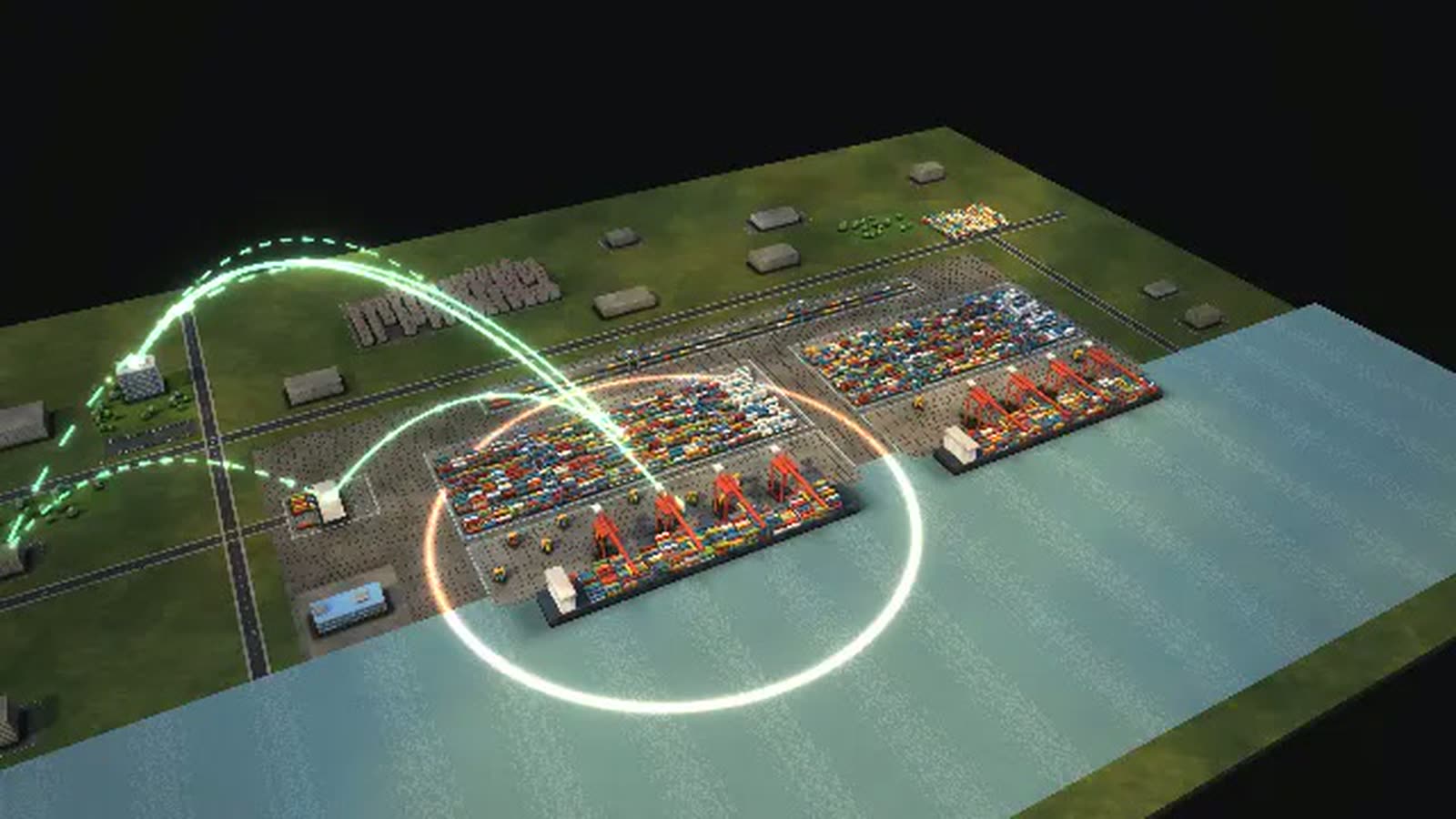
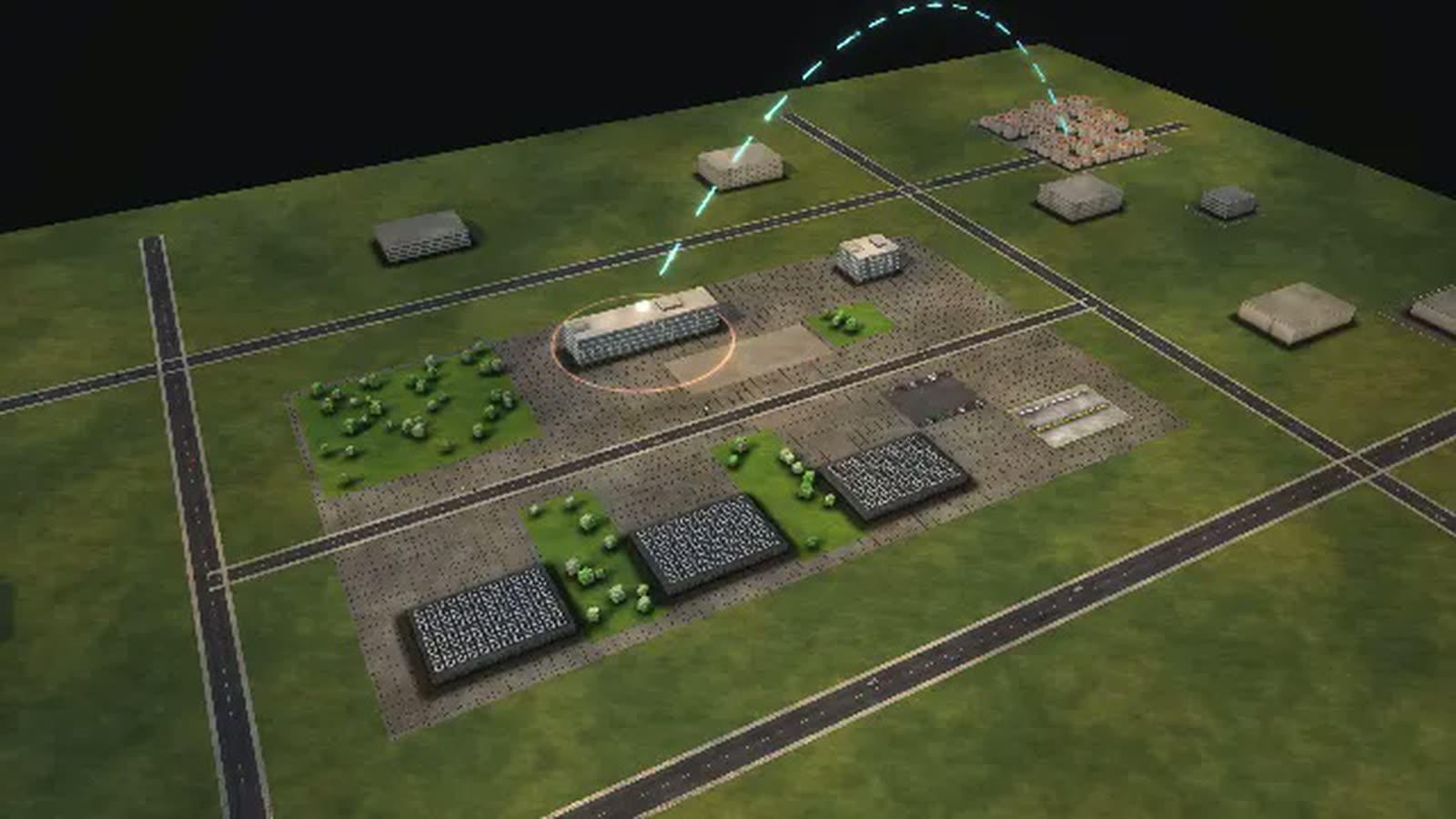
A container line with its own terminal as a walkable model: gate, yard, stowage plan and quay cranes, timed by a fixed schedule.
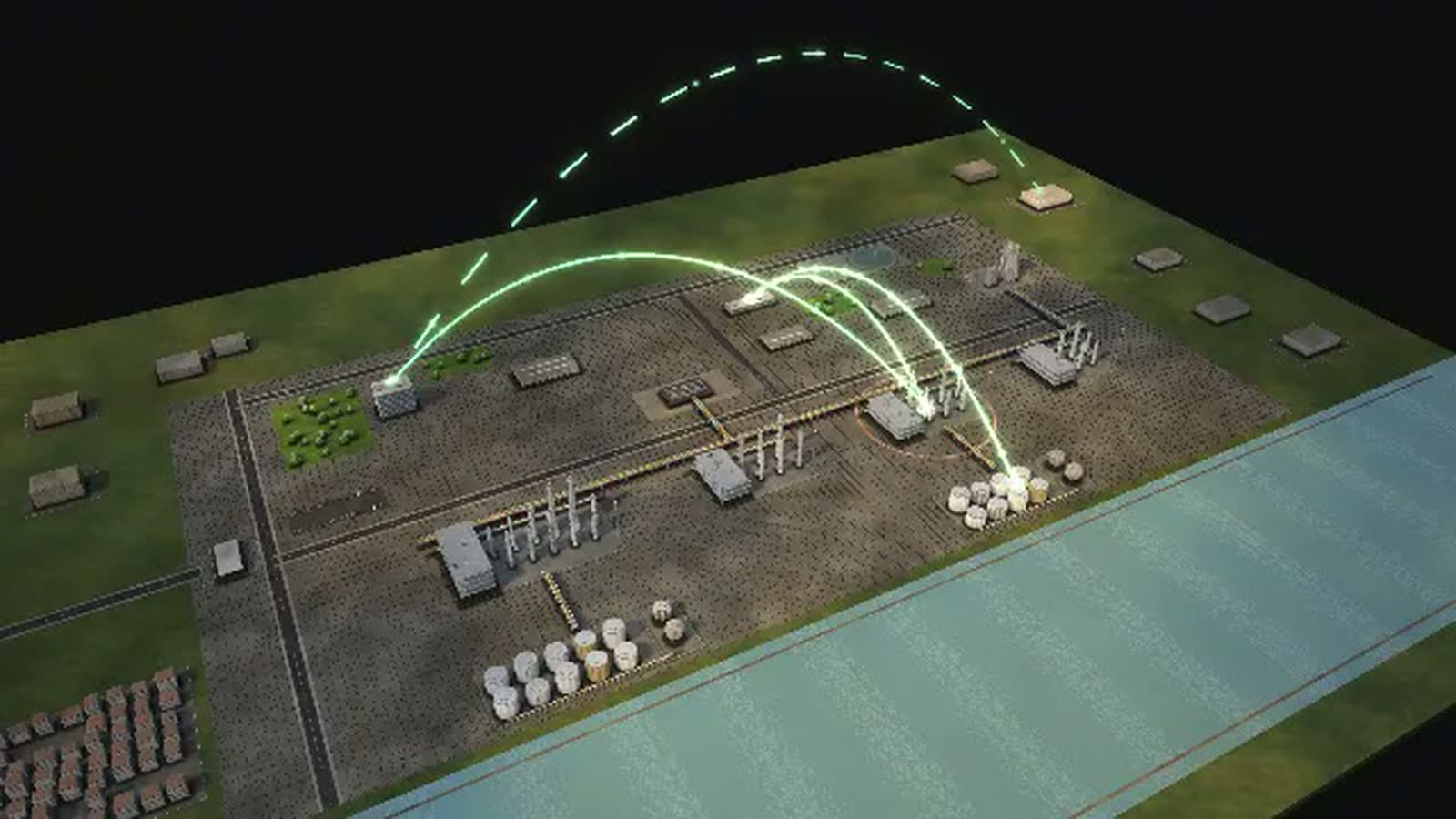
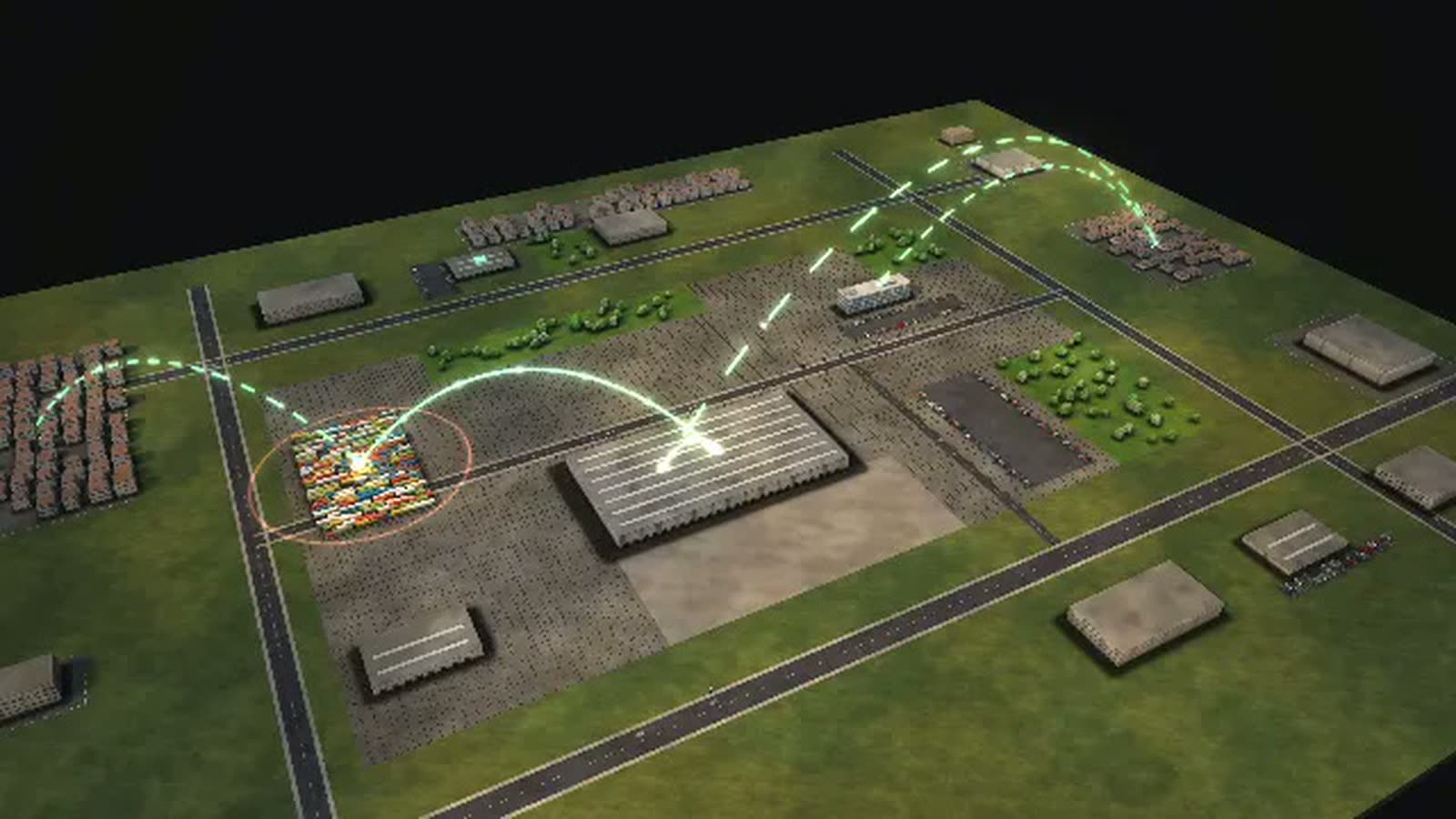
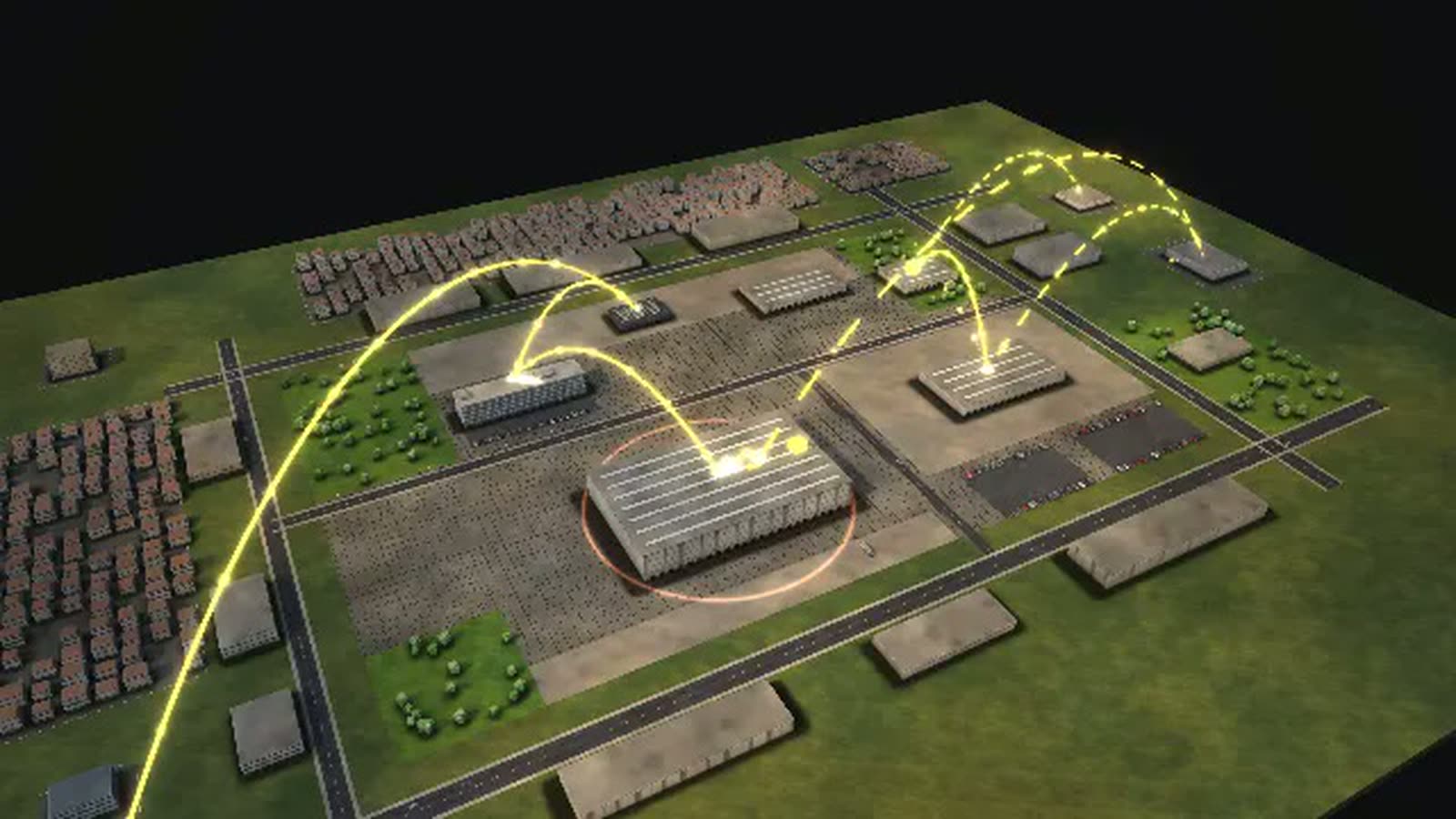
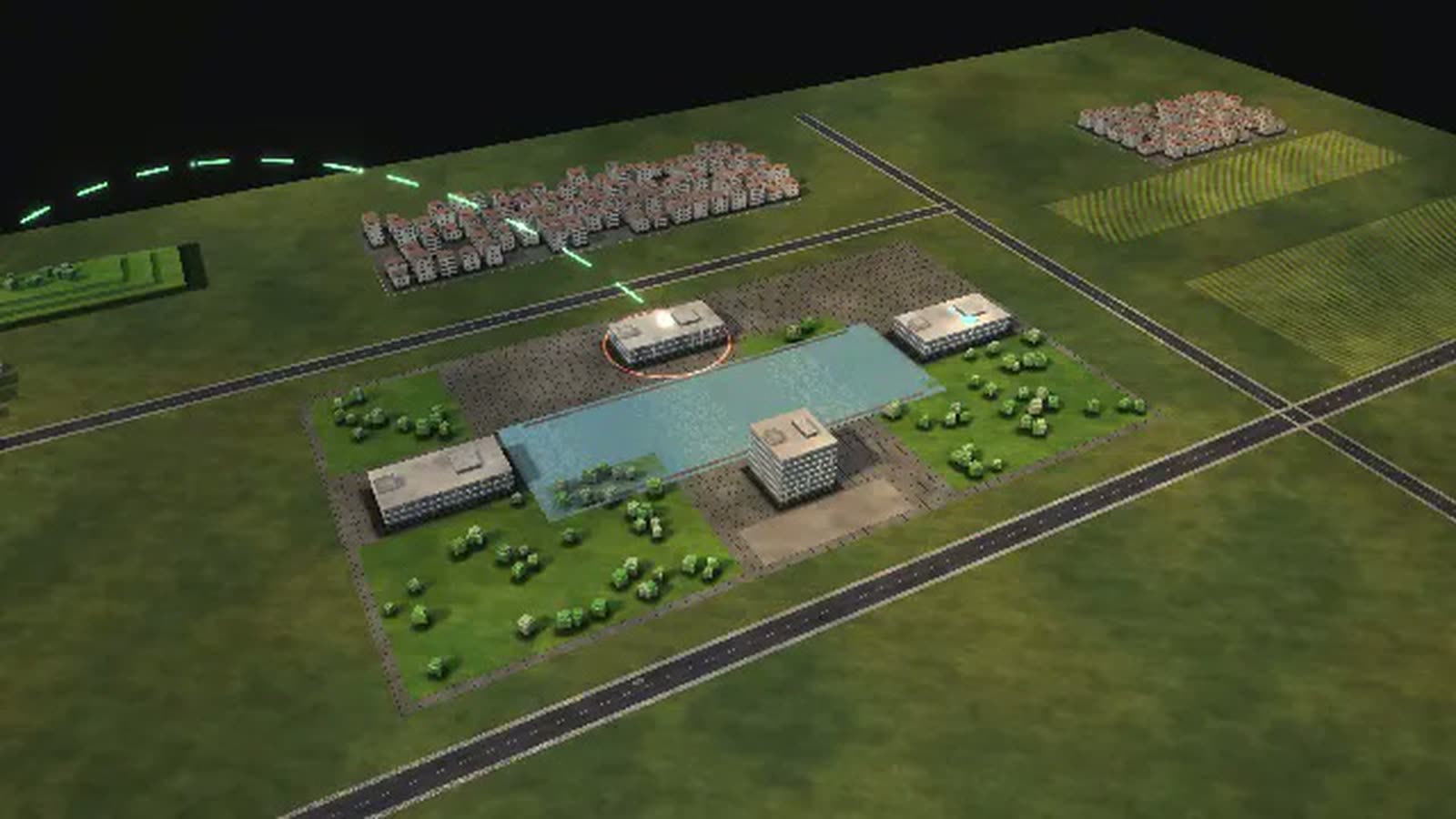
All data are fictional – NORDHAFT GRUPPE does not exist. The model can be fitted to your port's real data and filled with what few people see side by side today: ship arrivals and time at berth, or yard occupancy per block and hour.
The container terminal export process, as a running model. At the fictional NORDHAFT GRUPPE, ships sail to a fixed schedule, and the group's own terminal must bring every box to the right place at the right time. A forwarder books ten containers to Asia. They pass gate, yard, stowage planning and the ship-to-shore cranes one after another until they are on board. If the ship is full, the rest rolls over to the next one.
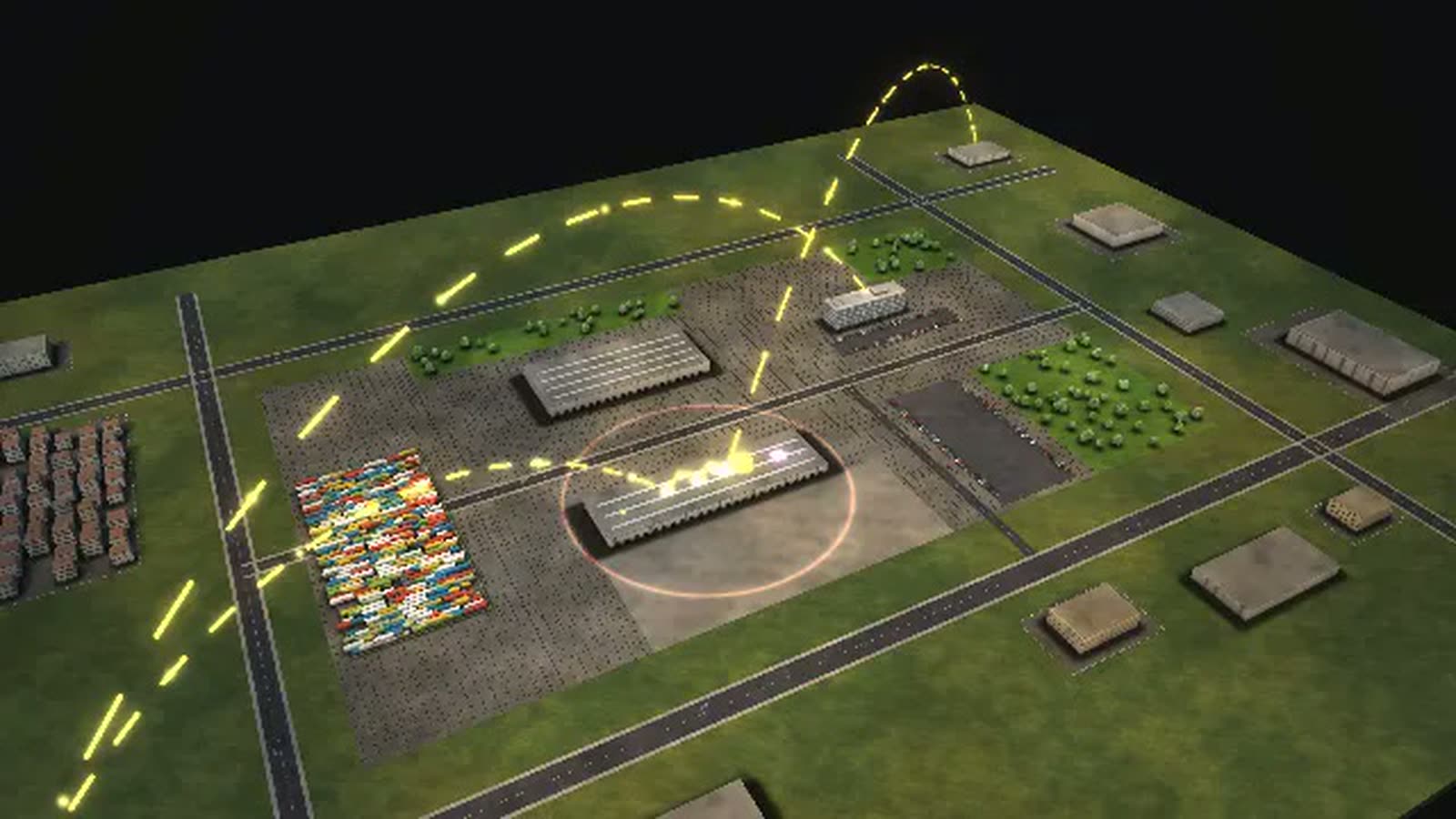
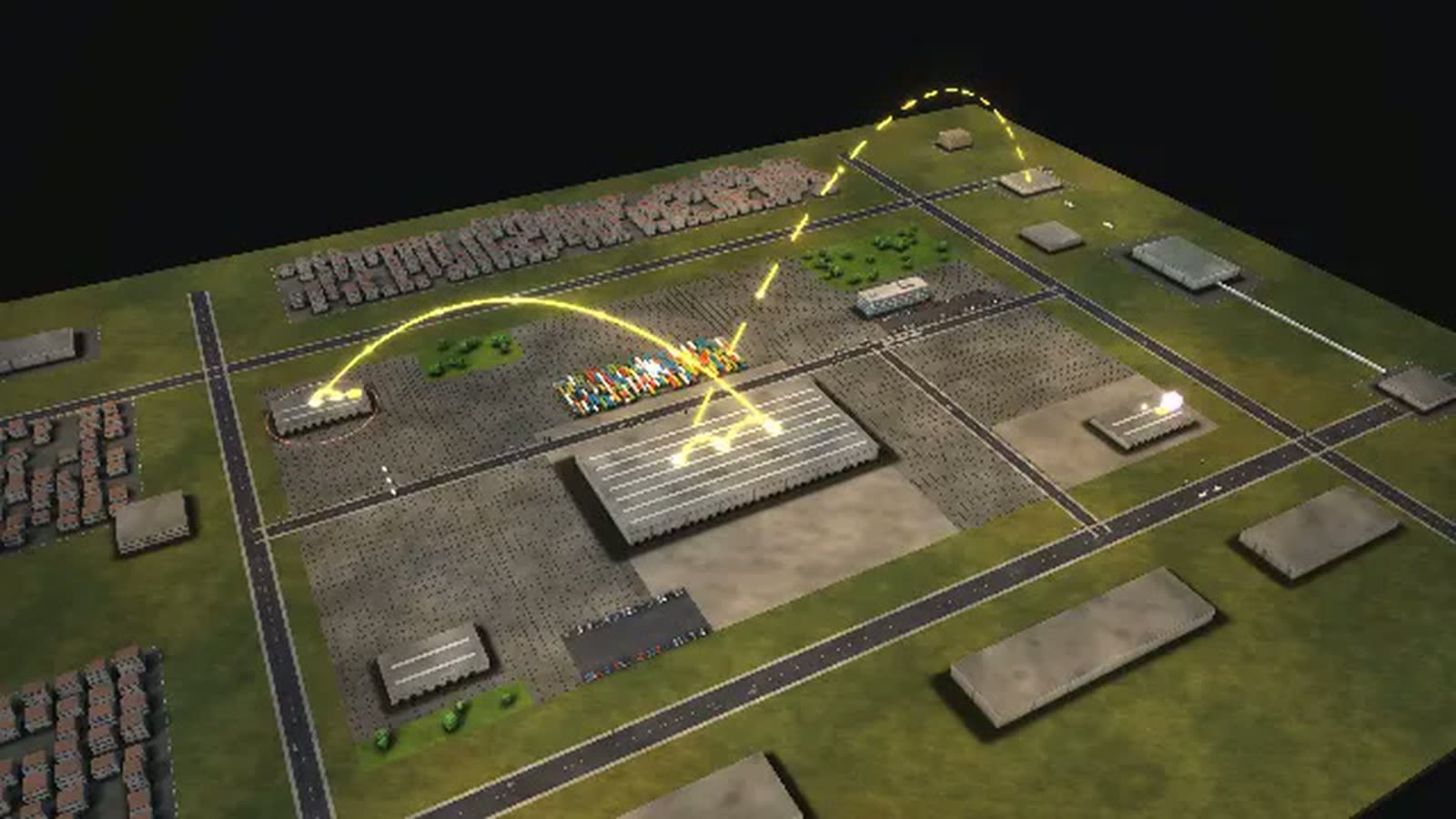
The site has nine buildings: the shipping line headquarters, two berths, container yards west and east, the gate, a rail terminal, the terminal control centre and an empty container depot. When delayed ships arrive bunched together, the berths and the yards fill up in plain view. More cranes per ship shorten time at berth but cost more; more block trains inland relieve the gate. Alongside, a ship calls at the port and an import container goes inland.
Three departures a week with fixed slots are a simplification. Documented in the sources: the terminal as a separate company, pilots as a public-law service, and release by customs. This page is for shipping line and terminal management, planning, sales, hinterland logistics and the port authority.
An export container goes on board
- 01
Booking and rate: A forwarder books ten containers to Asia.
- 02
Release empty container: Equipment releases empty containers at the depot.
- 03
Loading at the shipper and export declaration run in parallel.
- 04
Shipper loads, truck delivers: The shipper loads, trucks bring the containers.
- 05
Export declaration to customs: Customs releases the goods for export.
- 06
Containers here, customs done.
- 07
Gate: entry: At the gate a camera reads the container number.
- 08
Stacking in the yard: A gantry crane stacks the containers by ship and destination.
- 09
Stowage plan: Stowage planning fixes where each box stands on board.
- 10
Loading onto the ship: Ship-to-shore cranes load the ship. If it is full, the rest rolls to the next.
- 11
Bill of lading: The bill of lading goes to the shipper.
- 12
On board.
How a shipping line or terminal can use the model
-
Internal communication
The collaboration view shows shipping line and terminal as two companies in one process: booking, equipment and stowage planning on one side, gate, yard and quay operations on the other.
适用对象Board, terminal management, internal comms
-
Onboarding
‘The path across the site’ takes newcomers along with an export container from the gate through the yard to the quay crane and the rail terminal.
适用对象New staff in terminal and documentation
-
Training
The disruption ‘Terminal system fails’ stops gate, yard and berth planning for four hours. Trainees watch trucks, boxes and ships back up – and then drain away.
适用对象Port trainees, terminal shift leads
-
Explaining to customers
Show shippers and forwarders the schedule as a rhythm: three departures a week. Miss one, and the box waits for days.
适用对象Sales and booking, customer service, forwarders
-
Strategic overview
Three, four or six cranes per ship, more rail inland, larger ships: ‘What each control does’ ranks investments and contracts.
适用对象Management, planning, berth planning
What is shown – why – for whom
| 展示内容 | 为什么 | 适用对象 |
|---|---|---|
| Diagram ‘Where the site gets tight’: berths, yard, gate | 为什么Shows the pressure inside the terminal. | 适用对象Terminal management, port authority |
| Diagram ‘The path across the site’: gate, yard, quay, rail terminal | 为什么Shows the path of a container. | 适用对象Onboarding, forwarders |
| Diagram ‘What each control does’: cranes, rail share, slots | 为什么Ranks investments and contracts. | 适用对象Management, planning |
| Diagram ‘Year, week, day’: three departures a week | 为什么Explains the schedule as a rhythm. | 适用对象Sales, customers |
| Diagram ‘Where it gets tight’ when ships arrive bunched | 为什么Shows the effects of delays. | 适用对象Berth planning |
| Collaboration view between shipping line and terminal | 为什么Shows two companies in one process. | 适用对象Management, supervisors |
| Process ‘An import container goes inland’ | 为什么Shows truck versus rail. | 适用对象Hinterland logistics, local authorities |
Departments in the model
-
Group board
Leads the shipping line and the terminal company.
-
Network planning
Sets services and rotations – the same departure every week.
-
Fleet management
Own and chartered ships, bunkers, crew.
-
Sales and booking
Sells slots and rates.
-
Documentation and customer service
Bills of lading, arrival notices, release.
-
Equipment (empty containers)
Brings empty boxes to where cargo is loaded.
-
Stowage planning
Plans where every box stands on board: stability, dangerous goods, port order.
-
Dangerous goods and safety
Checks dangerous goods declarations and safety rules.
-
Finance
Freight, port dues, charter.
-
Terminal management (separate company)
The terminal company also serves other lines – treated equally.
-
Berth and vessel planning
Allocates berths and time windows.
-
Quay operations (ship-to-shore cranes)
Discharges and loads ships around the clock.
-
Yard and horizontal transport
Stacks containers and moves them between quay, yard and gate.
-
Gate
Processes trucks: pre-notice, inspection, handover.
-
Rail terminal
Loads block trains to the hinterland.
-
Engineering and terminal system
Crane workshop and the terminal system that knows every box.
All processes in the model
An export container goes on board
- 01Booking and rate: A forwarder books ten containers to Asia.
- 02Release empty container: Equipment releases empty containers at the depot.
- 03Loading at the shipper and export declaration run in parallel.
- 04Shipper loads, truck delivers: The shipper loads, trucks bring the containers.
- 05Export declaration to customs: Customs releases the goods for export.
- 06Containers here, customs done.
- 07Gate: entry: At the gate a camera reads the container number.
- 08Stacking in the yard: A gantry crane stacks the containers by ship and destination.
- 09Stowage plan: Stowage planning fixes where each box stands on board.
- 10Loading onto the ship: Ship-to-shore cranes load the ship. If it is full, the rest rolls to the next.
- 11Bill of lading: The bill of lading goes to the shipper.
- 12On board.
A ship calls (including other lines)
- 01Pre-arrival notification: The agent reports arrival, crew and dangerous goods via the single window.
- 02Allocate berth: The terminal allocates berth and time window.
- 03Pilot aboard, river passage: A pilot boards and guides the ship through the fairway.
- 04Tugs and mooring: Tugs push the ship alongside, linesmen fix the lines.
- 05Discharging and loading at berth: Cranes discharge and load around the clock.
- 06Departure with pilot: Out again with pilot and tugs.
- 07Settle port dues: The port authority invoices port dues.
- 08Departed.
An import container goes inland
- 01Discharge and stack: Ten containers come off the ship into the yard.
- 02Arrival notice: Customer service notifies the consignee.
- 03Customs clearance and release run in parallel.
- 04Customs clearance: Customs checks the declaration and decides: release or inspection.
- 05Release (freight paid): The line releases once freight is paid.
- 06Released.
- 07Onward by truck, rail or to inspection: Truck or block train – or has customs ordered an inspection?
- 08Inspection at the scanner: The container goes through the scanner.
- 09Slot with the trucker: The trucker books a time slot.
- 10Gate: exit: At the gate: check and handover.
- 11Block train inland: Gantry cranes load the box onto a block train.
- 12Empty back to the depot: The consignee returns the empty box to the depot.
- 13Delivered.
What you can change
Controls
- Cargo volume: Before the holidays in Europe everyone wants to ship at once.
- Slots per departure: How many boxes this port may load per departure.
- Cranes per ship: More cranes, shorter time at berth – and higher cost.
- Rail share inland: More block trains relieve the gate.
Disruptions
- Storm closes the fairway: For a day pilotage and mooring take three times as long; ships bunch up.
- Terminal system fails: For four hours gate, yard and berth planning stand still.
- Strike at the terminal: For a day only a third of the cranes work.
- Delayed ships arrive bunched: For two days three times as many ships arrive.
What the model gives a shipping line
-
01
The port as a stage
Berths, container yards and gate stand as a walkable 3D site. You see the pressure exactly where it builds up.
-
02
Delays in advance
The simulation models queues. Three times as many ships for two days show in ‘Where the site gets tight’ where the quay fills up first.
-
03
Truck versus rail
The process ‘An import container goes inland’ shows truck, rail and inspection. The ‘Rail share inland’ control shows how block trains relieve the gate.
-
04
Storm, strike, system failure
Four disruptions can be triggered, from a closed fairway to a strike in which only a third of the cranes work.
-
05
Brought to life by your data
Real ship arrivals, yard occupancy and gate waiting times turn the example into your own terminal.
Basis and limits
Fictional shipping line · model based on researched industry structures · no forecast for real companies
1 case = 10 containers or 1 ship · 1 figure ≈ 25 employees
All volumes, durations, rates and capacities are model assumptions, not values of a real line or terminal.
Three departures per week with fixed slots are simplified; real services allocate per customer and alliance.
Documented: terminal as a separate company, pilots under public law, customs decides on release and inspection, notifications via the single window.
Public sources the model is based on:
- Aufgaben einer Hafenbehörde (Beispiel)
- Gesetz über das Seelotswesen
- EU Maritime Single Window, VO (EU) 2019/1239
- IMO Just-in-Time Arrival Guide
- UNCTAD Review of Maritime Transport
Your port as a model
Would you like to see your terminal, berths or hinterland traffic like this? Contact us by email or phone and we'll discuss which terminal and booking data the model needs. You can also ask us for the password to try it yourself.
cube4tec.de/spiele/minimal-organization/
就此咨询
Minimal Organization: Reederei
Similar business models
-
Freight forwarder
A freight forwarder as a walkable model: groupage, ocean and air freight, cross-docking and customs in a running simulation.
-
Airport
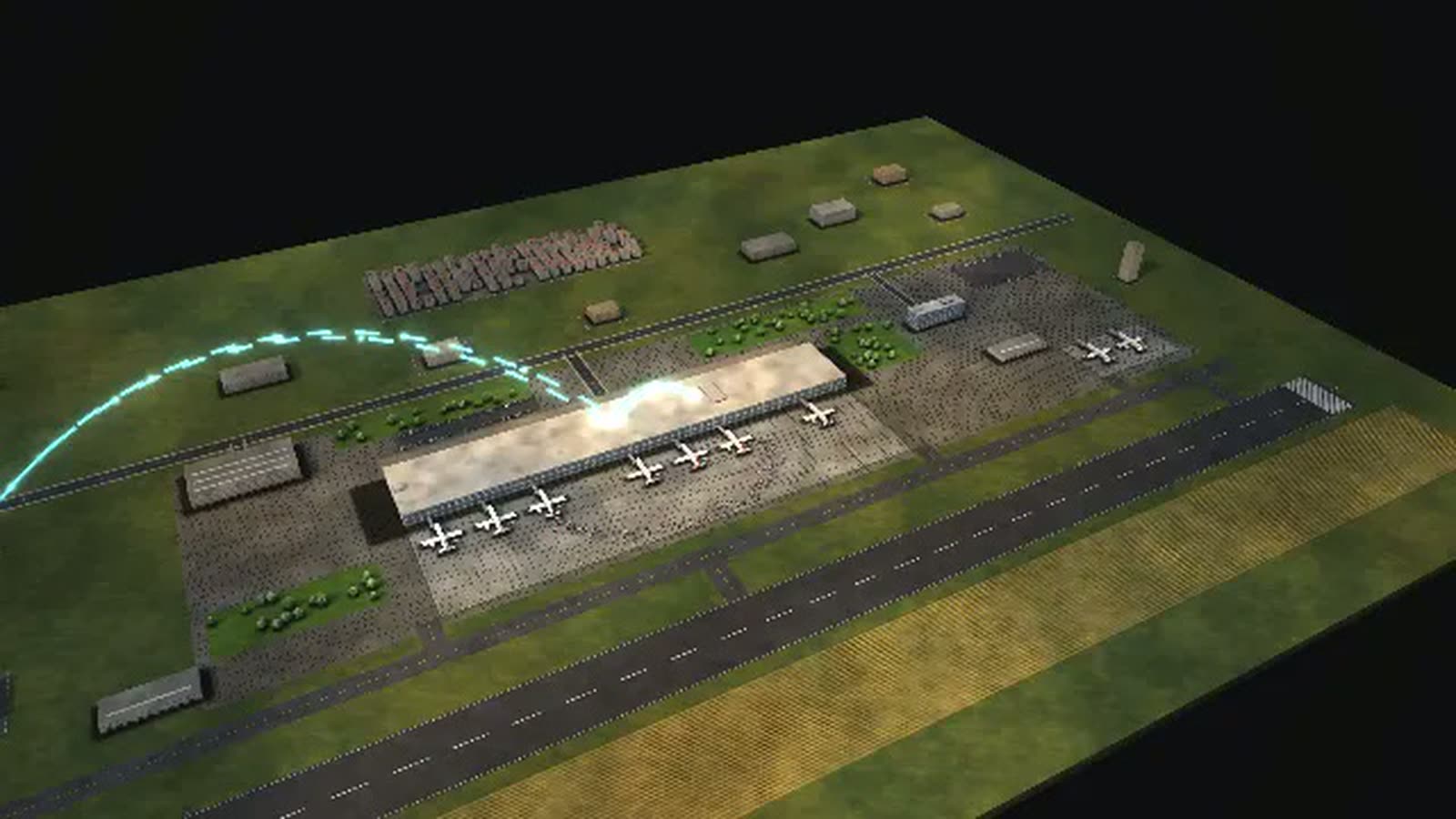
An airport as a walkable model: passengers from check-in through security to the gate, plus baggage, turnaround and winter operations.
-
Parcel service
A parcel service as a walkable model: the overnight run through the hub, sorter and shuttles, then the morning route to the doorstep.
-
Chemical group with integrated site
A chemical site as a walkable model: see how a polyethylene order runs through the integrated site and which plants stall when the cracker trips.
-
Food retail
A food retailer as a walkable model: fresh produce from automatic ordering through the night in the distribution centre to the shelf before opening.
-
Online retail
An order from click to doorstep as a walkable model: payment check, warehouse, packing, trucks, sortation and delivery in a running simulation.
-
Search engine
A search and advertising group as a walkable model: auctions in milliseconds, experiments over weeks, and a new ad campaign that waits for people.
-
Cloud provider
A cloud provider as a walkable model: support cases, zone outages and new data centres on three time scales, in a running simulation.
All data are fictional – NORDHAFT GRUPPE does not exist. The model can be fitted to your port's real data and filled with what few people see side by side today: ship arrivals and time at berth, or yard occupancy per block and hour.