
Simulation · Minimal Organization · Digital platforms
Online retail
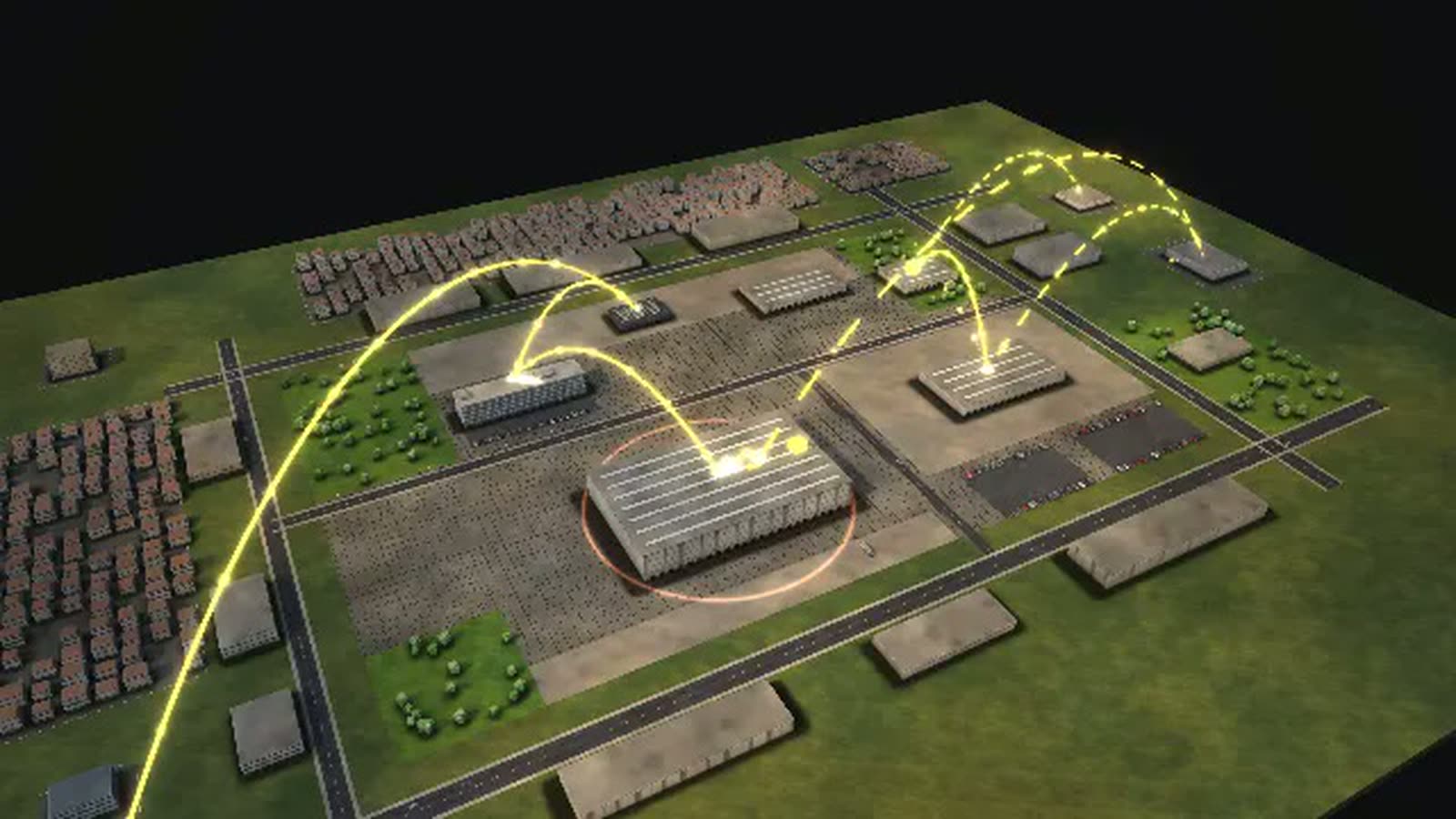
An order from click to doorstep as a walkable model: payment check, warehouse, packing, trucks, sortation and delivery in a running simulation.
All data are fictional – VANTO does not exist. The model can be fitted to your company's real data and filled with what nobody can see today: real order curves by hour and sale day, or pick and pack rates per shift shown live above the buildings.
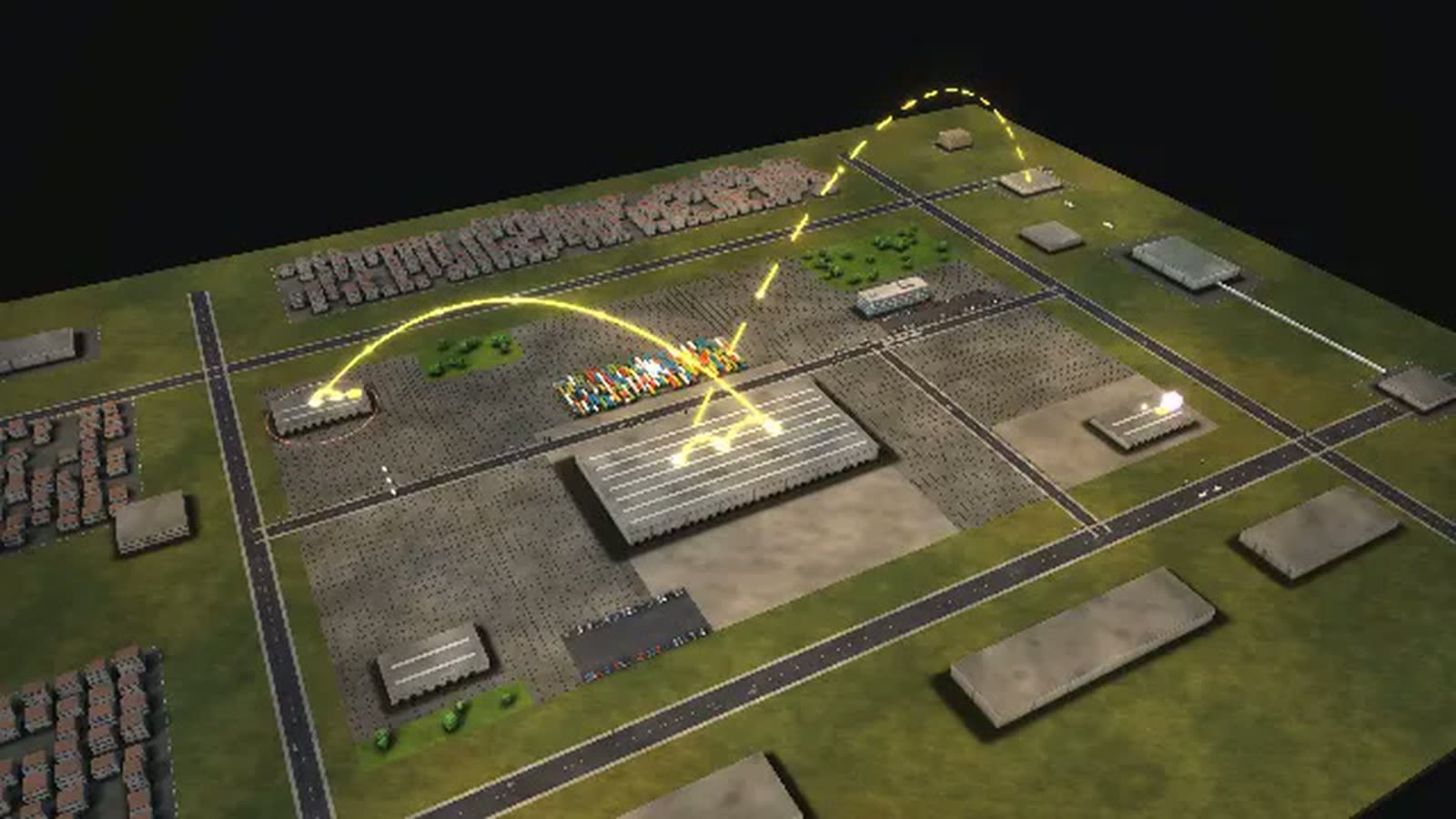
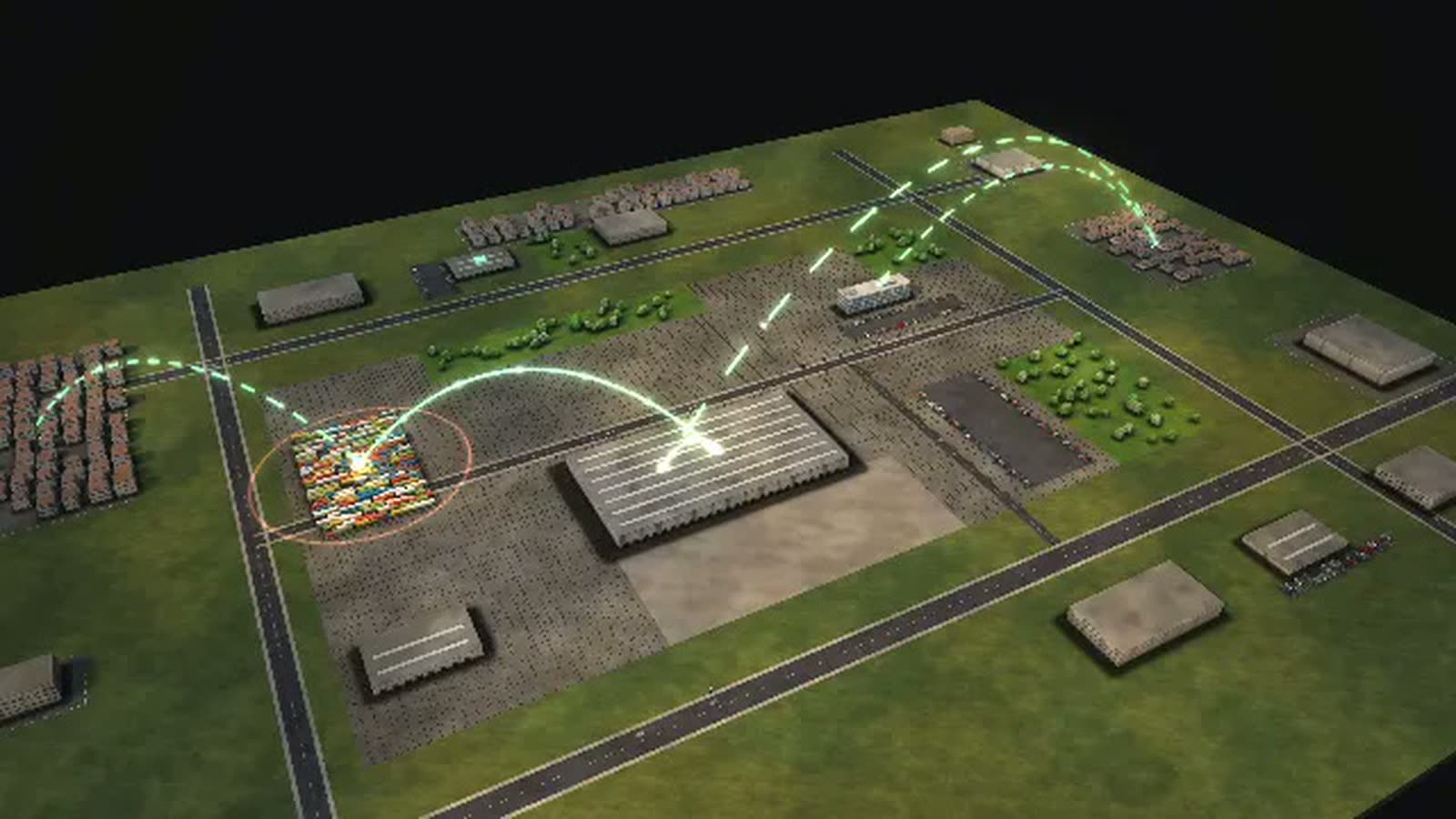
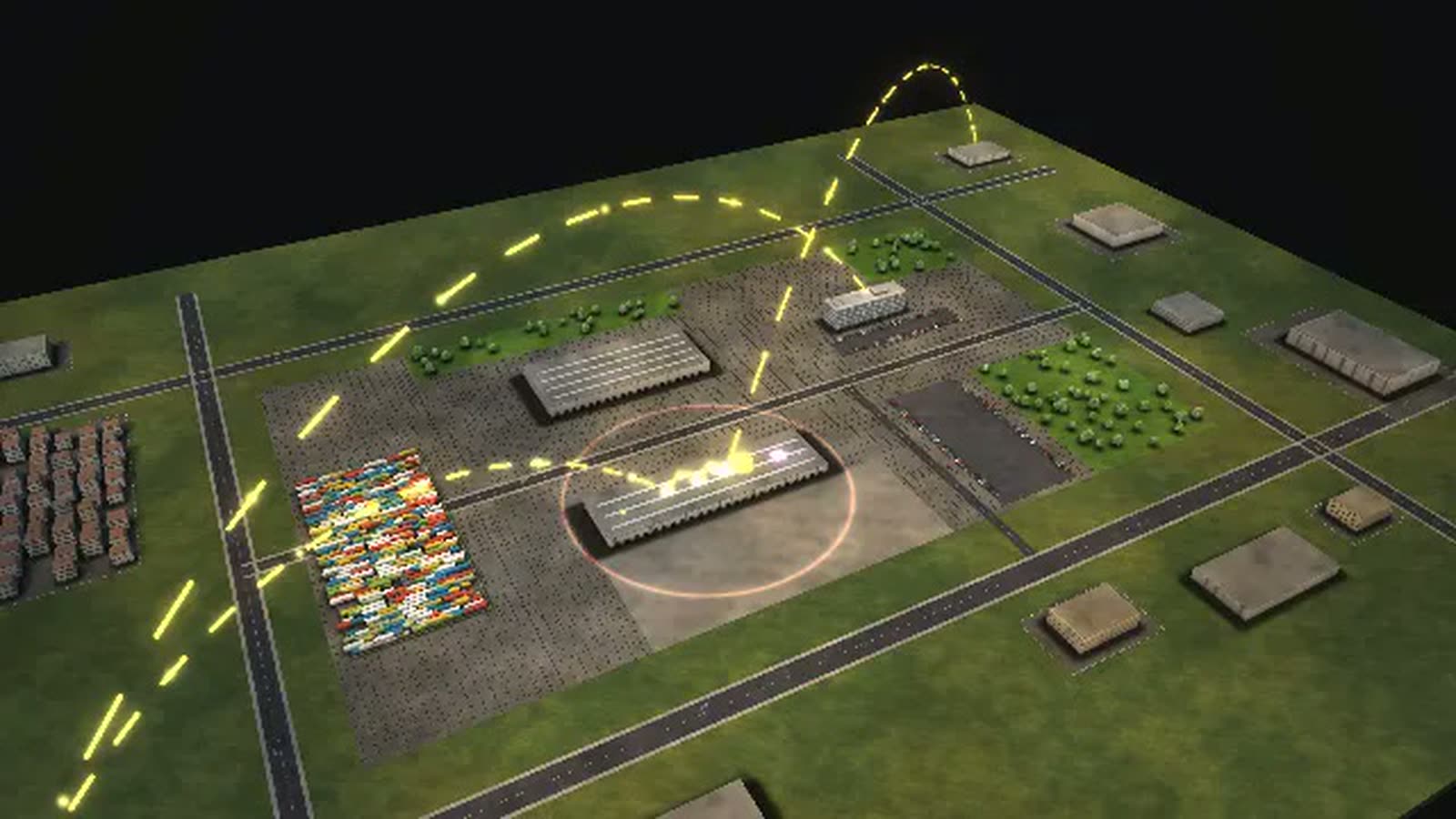
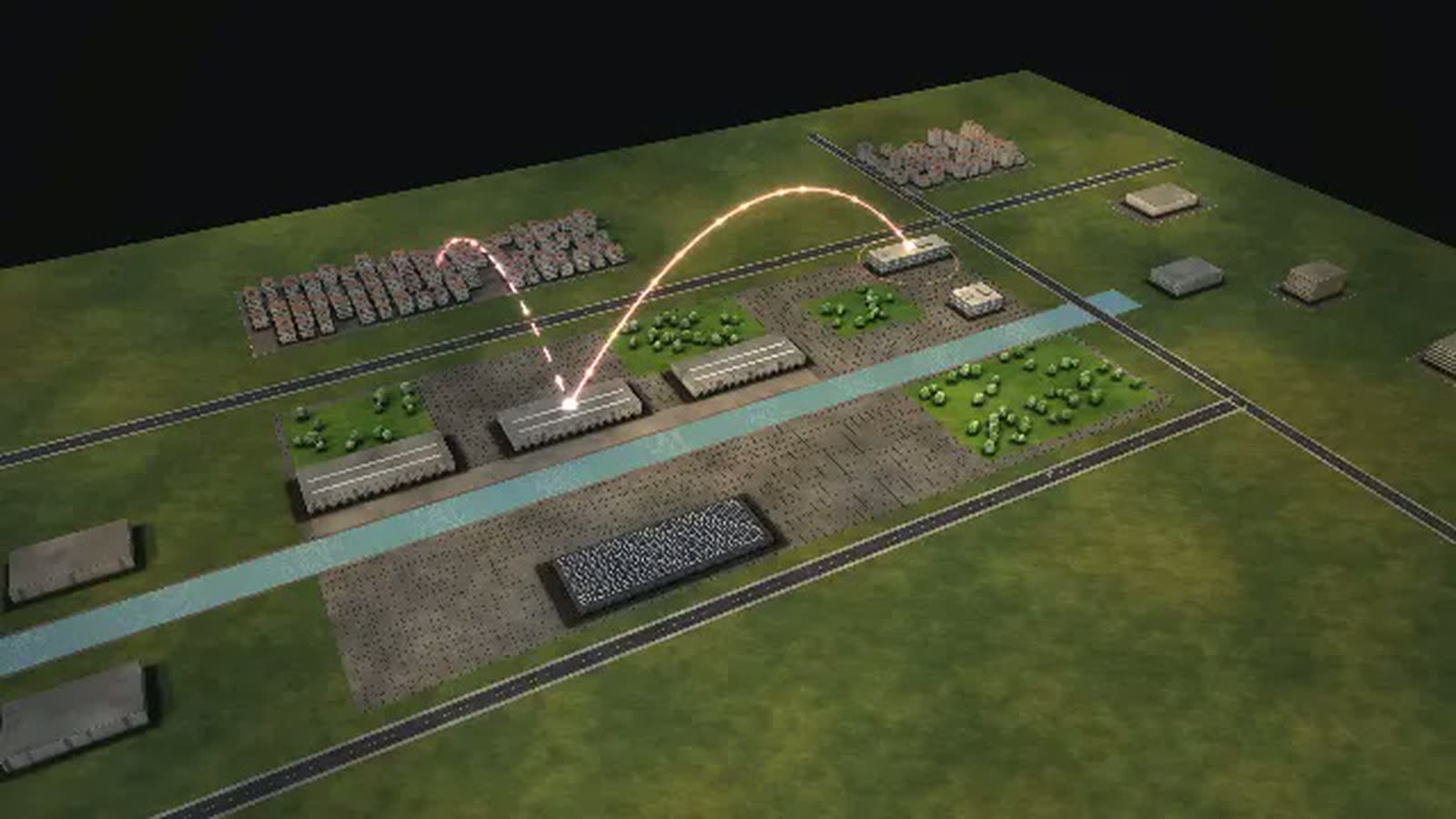
An e-commerce fulfilment process simulation built around VANTO, a fictional online retailer with a marketplace. You follow an order from the click to the doorstep: payment check, warehouse, packing, truck, sortation centre and the morning delivery route. Trucks leave every hour and routes start at 7:30, so the time of the click helps decide whether the 36-hour delivery promise holds.
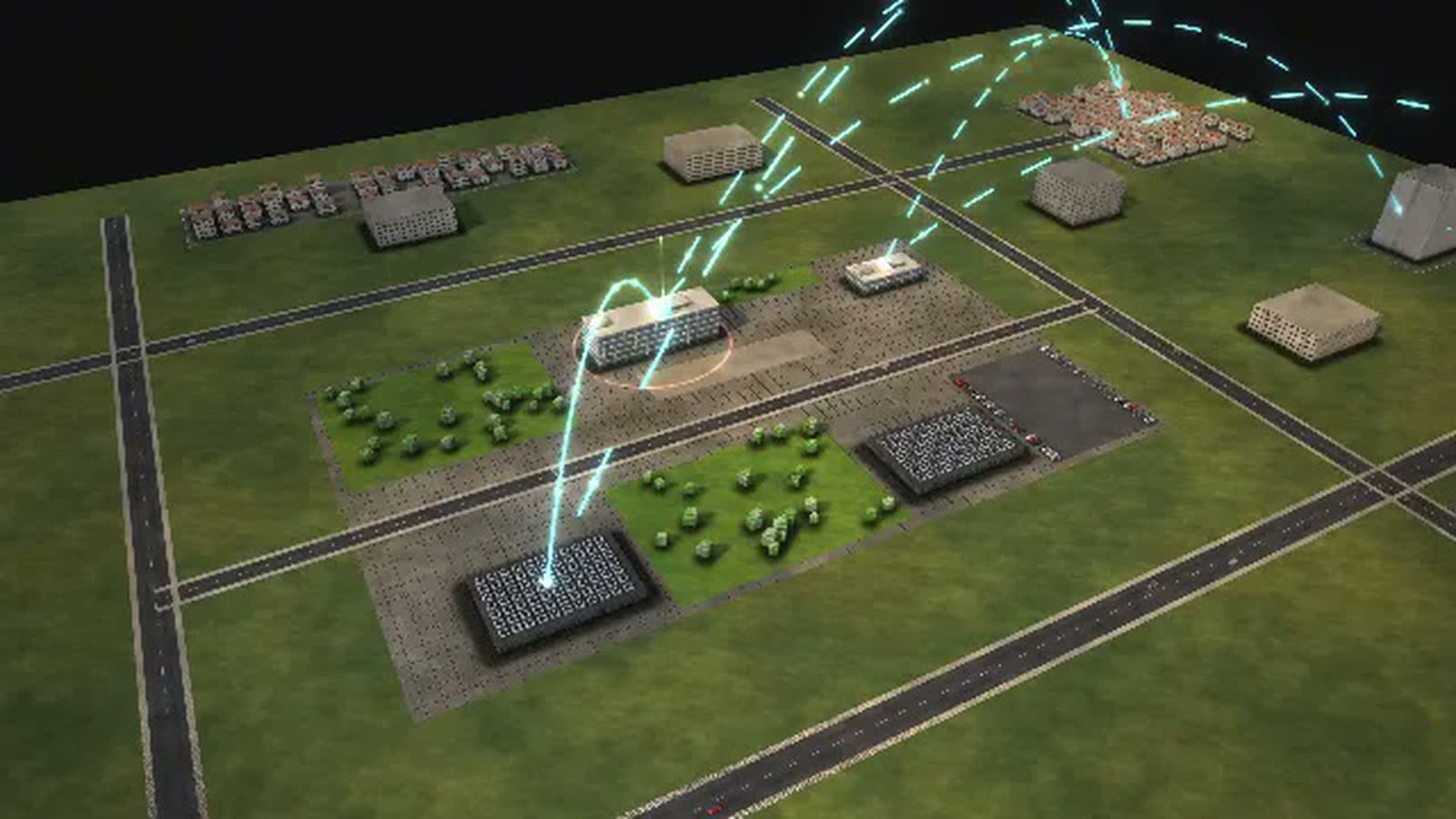
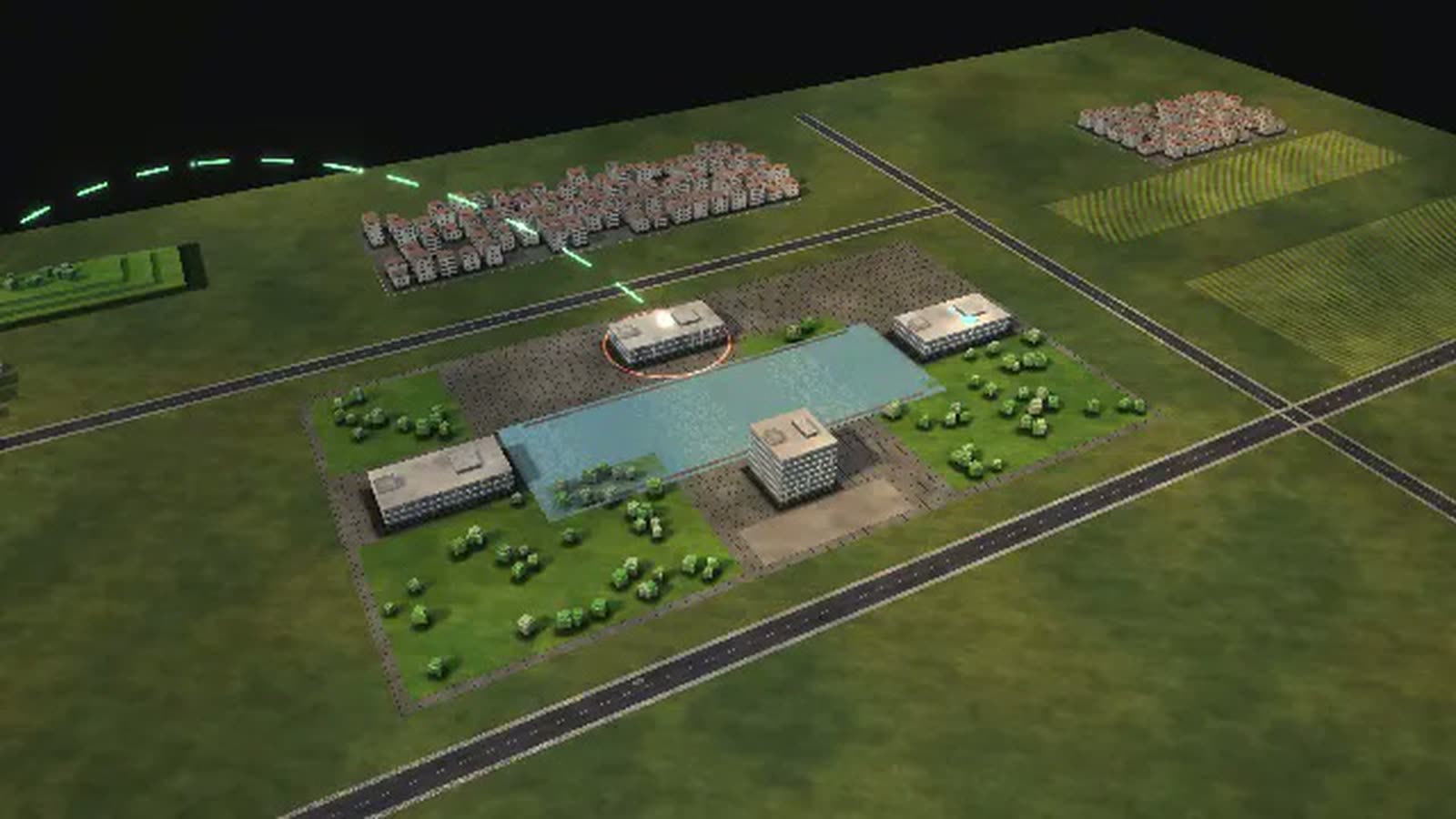
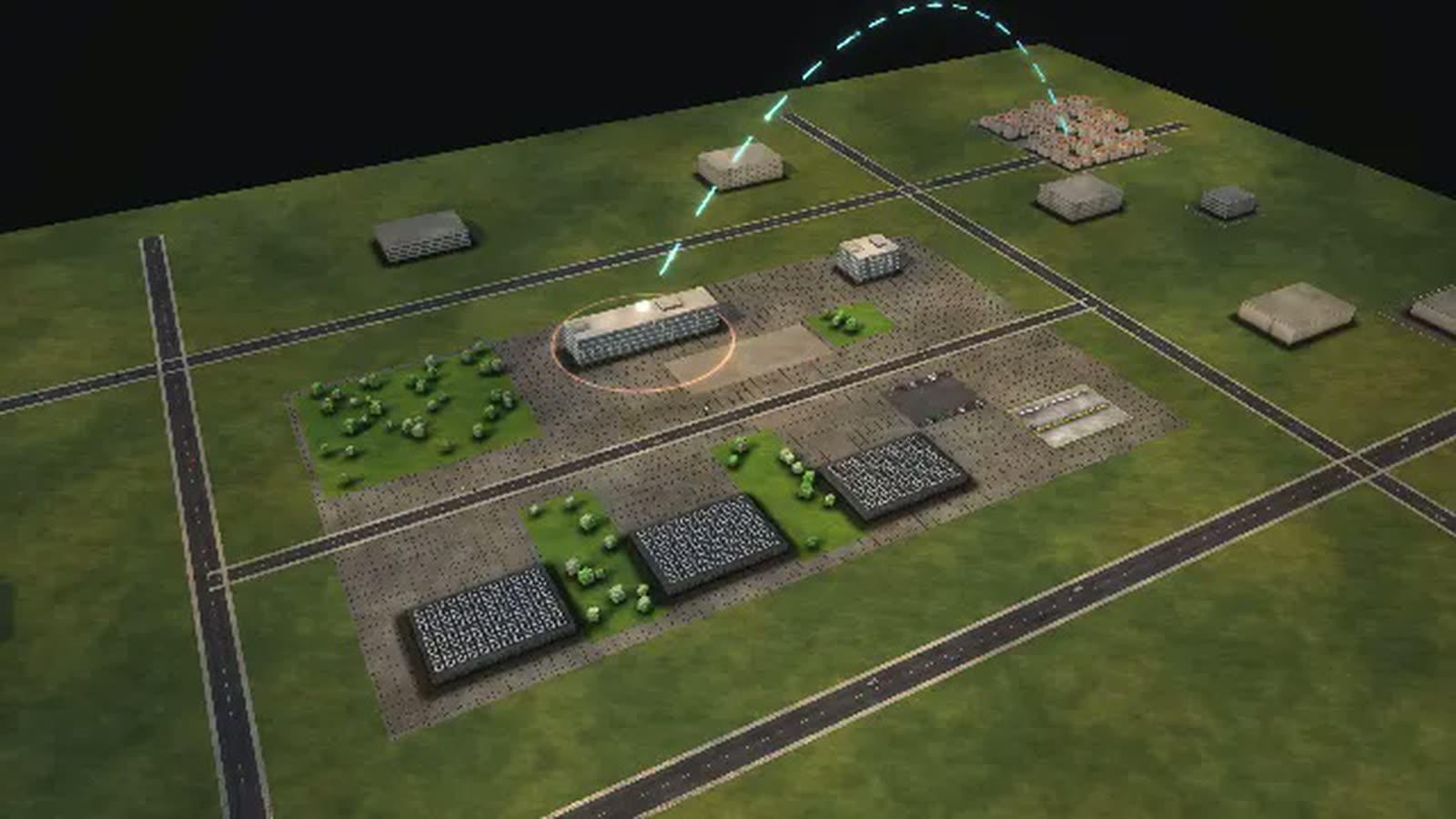
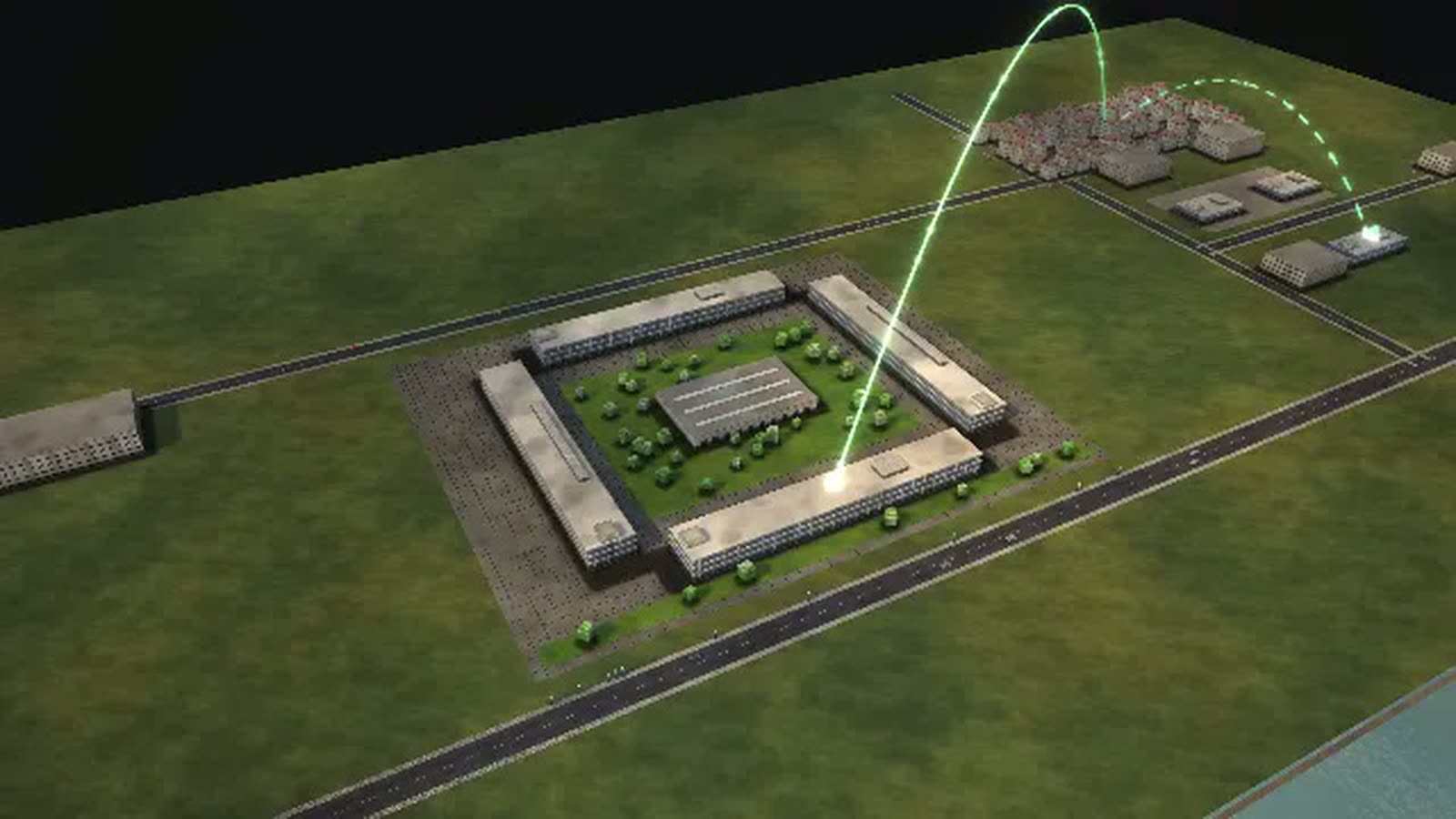
The site has six buildings, among them the fulfilment centre, sortation centre, returns centre and delivery station. On a peak day the queue builds visibly in front of the weakest link – sometimes picking, sometimes the sorter. Stricter fraud review sends more orders to the review team. Two more processes run alongside: a return coming back and a new seller joining the marketplace.
This page is for people who run or explain operations in a real online retail business: site and shift managers, logistics and capacity planners, customer service, IT and senior management.
An order is delivered
- 01
Shop (automatic): A customer orders in the shop. The system creates the order.
- 02
The order splits: two checks run side by side.
- 03
Authorisation at card network: The customer's bank checks the card and authorises the amount.
- 04
Fraud score (automatic): A score estimates the fraud risk. Inconspicuous orders pass immediately.
- 05
Payment review team: A person looks at the suspicious order.
- 06
The order is cancelled.
- 07
Both checks are done.
- 08
Warehouse assignment (automatic): The order system picks the warehouse that has the goods and can deliver fastest.
- 09
Picking: In the warehouse people pick the items from shelves on three levels.
- 10
Packing: The items go into a fitting box, the label is printed.
- 11
Truck departure (hourly): A truck leaves every full hour. Whatever is finished later waits for the next one.
- 12
Line haul: An external haulier takes the parcels to the sortation centre.
- 13
Sorter: The sorter reads the label and sends each parcel to the chute of its area.
- 14
Route start (morning): Routes start at 7:30. Everything that is here by then goes out today.
- 15
Delivery: A driver from a partner company brings the parcel to the door.
- 16
Again: Route start (morning): Nobody was home. The parcel comes back and goes out again tomorrow.
- 17
The parcel has arrived.
How an online retailer can use the model
-
Internal communication
Headquarters, fulfilment centre, sortation centre, returns centre and delivery station in one picture. The collaboration view draws arcs between the departments that work on an order.
Pour quiSenior management, internal comms, works council
-
Onboarding
New starters follow an order as a glowing chain from the shop to the doorstep and see exactly where their own station sits along the way.
Pour quiNew staff in warehouse, dispatch and customer service
-
Training
Trainees trigger the disruption ‘Warehouse system fails’: for two hours nobody knows where the goods are. Picking, packing and inbound stop, and the backlog grows in plain sight.
Pour quiLogistics apprentices, shift leads
-
Explaining to customers
Why does an evening order sometimes arrive a day later? The diagram ‘Year, week, day’ puts the evening peak, hourly trucks and the morning route side by side.
Pour quiCustomer service, marketplace sellers
-
Strategic overview
Controls for warehouse staff, sorter, delivery capacity and fraud review show which investment actually clears the moving bottleneck on a peak day.
Pour quiSenior management, finance, capacity planning
What is shown – why – for whom
| Ce qui est montré | Pourquoi | Pour qui |
|---|---|---|
| Backlog per station from picking to the sorter (Resources view) | PourquoiShows where the day's orders get stuck. | Pour quiFulfilment centre manager, shift leads |
| Glowing chain of one order with the people waiting at each step (Processes view) | PourquoiMakes the path from click to doorstep clear in one picture. | Pour quiNew staff, customer service |
| Diagram ‘Year, week, day’: evening peak, hourly trucks, morning route | PourquoiExplains why the order time decides the delivery promise. | Pour quiLogistics planning, sale-day planning |
| Diagram ‘Where it gets tight’ on a peak day | PourquoiShows the moving bottleneck before it breaks the promise. | Pour quiCapacity planning, senior management |
| Diagram ‘What each control does’: warehouse staff, sorter, routes, fraud review | PourquoiRanks investments by their effect. | Pour quiSenior management, finance |
| Diagram ‘The path across the site’: fulfilment centre, sortation centre, delivery station, returns | PourquoiShows routes and handovers between the sites. | Pour quiSite planning, works council |
| Data view: warehouse system, shop, payment check and who uses them | PourquoiShows who stands still when a system fails. | Pour quiHead of IT, business continuity |
Departments in the model
-
Executive board
Sets goals, budget and strategy, assigns responsibility and decides on large investments.
-
Finance and controlling
Plans and monitors costs and revenue, settles with sellers, reports to the board.
-
Legal and compliance
Makes sure rules are followed – for example the marketplace's duties under the Digital Services Act.
-
Internal audit
Independently checks whether processes and controls work and reports directly to the board.
-
People
Hires, plans shifts with the sites, trains staff.
-
Buying and assortment
Buys own stock from manufacturers, plans stock and prices per category.
-
Marketplace and seller vetting
Onboards new sellers, verifies their details, supports them and suspends them on violations.
-
Shop and search (engineering)
Builds shop, search, checkout and seller portal in small teams that each own one part.
-
Data and network planning
Forecasts demand and decides within seconds which warehouse fulfils an order.
-
Data centre and operations
Runs the systems around the clock; if one fails, part of the work stops.
-
Payment and fraud review
A score decides most orders automatically; suspicious ones are checked by a team by hand.
-
Customer service
Answers questions, registers returns and resolves delivery problems.
-
Logistics management
Steers the sites: shifts, output, bottlenecks. All figures come together in the control room.
-
Inbound
Receives trucks, counts and checks goods and books them into stock.
-
Storage and picking
Stores goods on three levels and picks the items of every order.
-
Packing and dispatch
Packs, labels and loads parcels onto trucks to the sortation centre.
-
Sortation
Sorts parcels by delivery area, under pressure at night.
-
Delivery station and route planning
Plans the routes and hands parcels to delivery partners in the morning.
-
Returns centre
Inspects returned goods and decides: back to stock, B-grade, clearance, back to the seller or recycling.
-
Quality assurance
Checks samples at inbound and resolves discrepancies.
All processes in the model
An order is delivered
- 01Shop (automatic): A customer orders in the shop. The system creates the order.
- 02The order splits: two checks run side by side.
- 03Authorisation at card network: The customer's bank checks the card and authorises the amount.
- 04Fraud score (automatic): A score estimates the fraud risk. Inconspicuous orders pass immediately.
- 05Payment review team: A person looks at the suspicious order.
- 06The order is cancelled.
- 07Both checks are done.
- 08Warehouse assignment (automatic): The order system picks the warehouse that has the goods and can deliver fastest.
- 09Picking: In the warehouse people pick the items from shelves on three levels.
- 10Packing: The items go into a fitting box, the label is printed.
- 11Truck departure (hourly): A truck leaves every full hour. Whatever is finished later waits for the next one.
- 12Line haul: An external haulier takes the parcels to the sortation centre.
- 13Sorter: The sorter reads the label and sends each parcel to the chute of its area.
- 14Route start (morning): Routes start at 7:30. Everything that is here by then goes out today.
- 15Delivery: A driver from a partner company brings the parcel to the door.
- 16Again: Route start (morning): Nobody was home. The parcel comes back and goes out again tomorrow.
- 17The parcel has arrived.
A return comes back
- 01Register return (online): The customer registers the return online and gives the reason.
- 02Refund (VANTO Pay): The payments subsidiary refunds the amount without the goods coming back.
- 03Drop-off at parcel shop: The customer drops the parcel at a parcel shop – often days later.
- 04Return transport: Returns are collected and brought back by truck.
- 05Returns intake: The parcel is scanned; now the system knows the goods have arrived.
- 06Two paths at once: money back to the customer, goods into inspection.
- 07Again: Refund (VANTO Pay): VANTO Pay transfers the amount back.
- 08Inspection and grading: Someone inspects the goods and grades their condition.
- 09B-grade refurbishing: B-grade goods are cleaned, repacked and labelled.
- 10Put-away: The goods go back on the shelf and can be ordered again.
- 11Back to seller: Marketplace goods go back to the seller.
- 12Refund and goods are settled.
- 13The return is complete.
A seller joins the marketplace
- 01Registration in seller portal: A seller creates an account in the seller portal: company, tax data, bank details.
- 02Seller vetting: The team checks identity and details – required for marketplaces by the Digital Services Act (Art. 30).
- 03Seller submits documents: Something is missing. The seller has to submit documents – that can take days.
- 04The seller is not admitted.
- 05Two teams work at once: create listings and approve categories.
- 06Create and match listings: Listings are matched with existing product pages.
- 07Approval of restricted categories: Legal and compliance approve restricted categories such as toys or electronics.
- 08The seller may ship stock.
- 09Seller ships stock: The seller books a dock slot and delivers.
- 10Goods receipt: The goods are counted and compared with the notice.
- 11Resolve discrepancy: Quantity or condition do not match. Quality assurance resolves it with the seller.
- 12Put-away: The goods go on the shelf and can be ordered in the shop.
- 13The seller is selling.
What you can change
Controls
- Orders: More orders per day. Returns follow later.
- Warehouse staff: How many people pick and pack at the same time.
- Sorter: A faster sorter handles more parcels per hour.
- Delivery capacity: How many parcels can go out on routes in the morning.
- Fraud review: Stricter means more orders go to the review team. Less fraud slips through, but it takes longer.
Disruptions
- Warehouse system fails: Two hours without the warehouse system: nobody knows where goods are. Picking, packing and inbound stop.
- Trucks delayed: Motorway jam: for six hours trucks take three times as long. Parcels that miss the route start arrive a day later.
What the model gives an online retailer
-
01
Opened up, not drawn
A walkable 3D site instead of slides and org charts: the fulfilment centre opens floor by floor to show where items are picked, packed and dispatched.
-
02
Watch the bottleneck move
The simulation runs real queues. On a peak day the bottleneck jumps between picking, packing and the sorter, and the diagram ‘Where it gets tight’ tracks it live.
-
03
Rehearse failures safely
Warehouse system down, trucks stuck in a jam: trigger both disruptions without a single real parcel going astray. Miss the route start in the model and delivery slips a day.
-
04
Built for meetings and big screens
Runs in the browser and on large projections. 14 diagrams are calculated live, and a guided tour shows first-time users where everything is.
-
05
Your warehouse, your curves
Feed in your order curves, pick and pack rates and return reasons by product group, and VANTO turns into your own operation.
Basis and limits
Fictional organisation · model based on researched industry structures · no forecast for real companies
1 case in the model = 500 orders · 1 figure ≈ 25 employees
All volumes, durations, rates and capacities are model assumptions for understanding, not measurements of a real company.
Daily order curve with evening peak: model assumption.
Share of delivery by partner firms and return rate: model assumption (no reliable public figures).
Payment is authorised by the customer's bank; trader vetting under DSA Art. 30: documented (source q2).
Public sources the model is based on:
- Verordnung (EU) 2022/2065 – Gesetz über digitale Dienste, Art. 30 Nachverfolgbarkeit von Unternehmern
- EU Digital Markets Act – Gatekeeper
Your online business as a model
Would you like to see your own fulfilment centre, sortation or returns like this? Write or call us and we'll work out which data the model needs. The password for the simulation is available on request.
cube4tec.de/spiele/minimal-organization/
Poser une question à ce sujet
Minimal Organization: Onlinehandel
Similar business models
-
Parcel service
A parcel service as a walkable model: the overnight run through the hub, sorter and shuttles, then the morning route to the doorstep.
-
Food retail
A food retailer as a walkable model: fresh produce from automatic ordering through the night in the distribution centre to the shelf before opening.
-
Payment service provider
A payment service provider as a walkable model: a card payment from authorisation in milliseconds to the payout to the merchant in the morning.
-
Freight forwarder
A freight forwarder as a walkable model: groupage, ocean and air freight, cross-docking and customs in a running simulation.
-
Search engine
A search and advertising group as a walkable model: auctions in milliseconds, experiments over weeks, and a new ad campaign that waits for people.
-
Cloud provider
A cloud provider as a walkable model: support cases, zone outages and new data centres on three time scales, in a running simulation.
-
Smartphone maker
A smartphone maker without its own factory as a walkable model: repairs, spare parts, supply chain and product launch in a running simulation.
-
Social network
A social network as a walkable model: how a report moves through triage, moderation, statement of reasons and appeal, language by language.
All data are fictional – VANTO does not exist. The model can be fitted to your company's real data and filled with what nobody can see today: real order curves by hour and sale day, or pick and pack rates per shift shown live above the buildings.