Simulation · Minimal Organization · Mid-sized firms and services
Industrial bakery
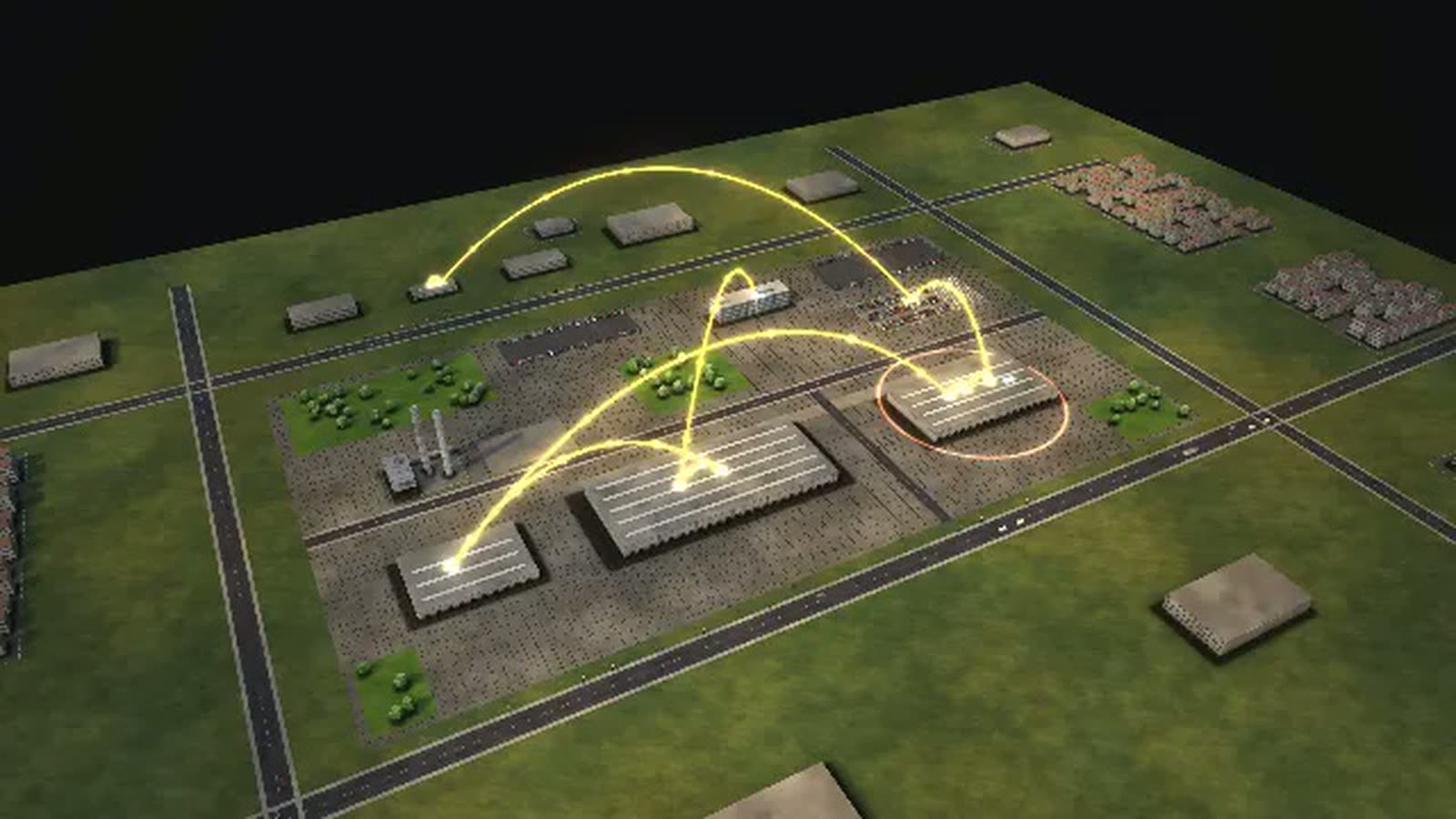
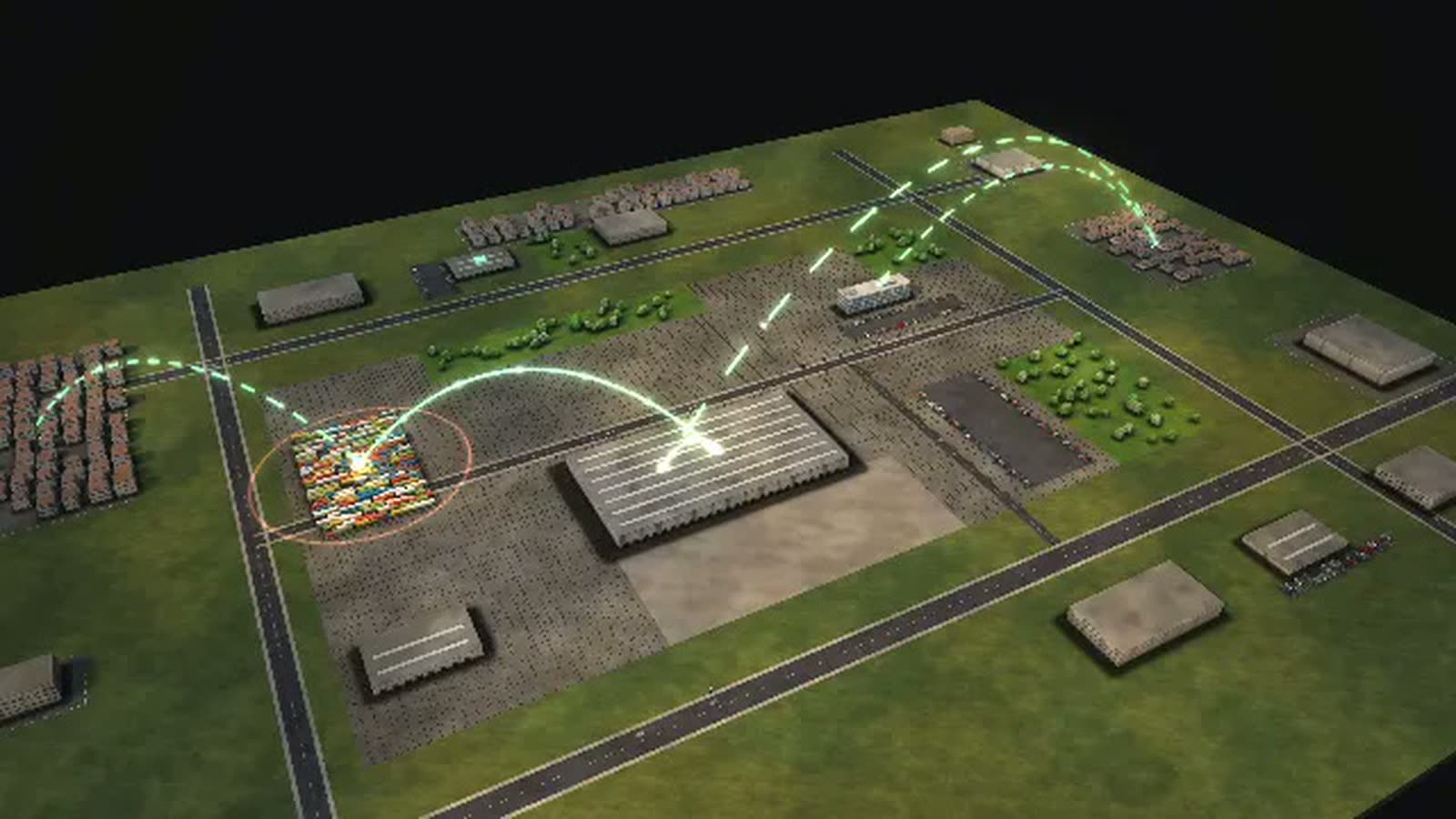
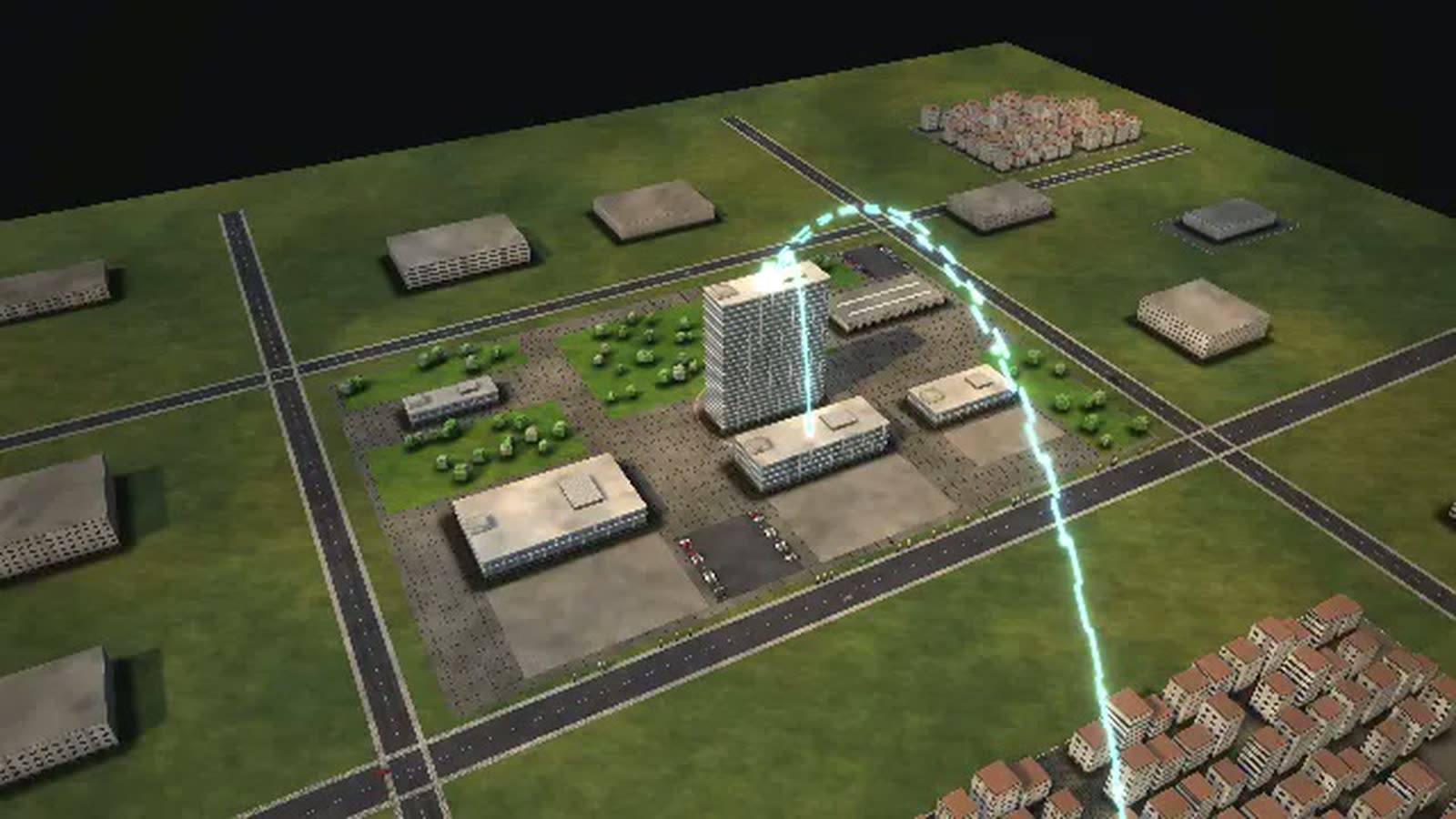
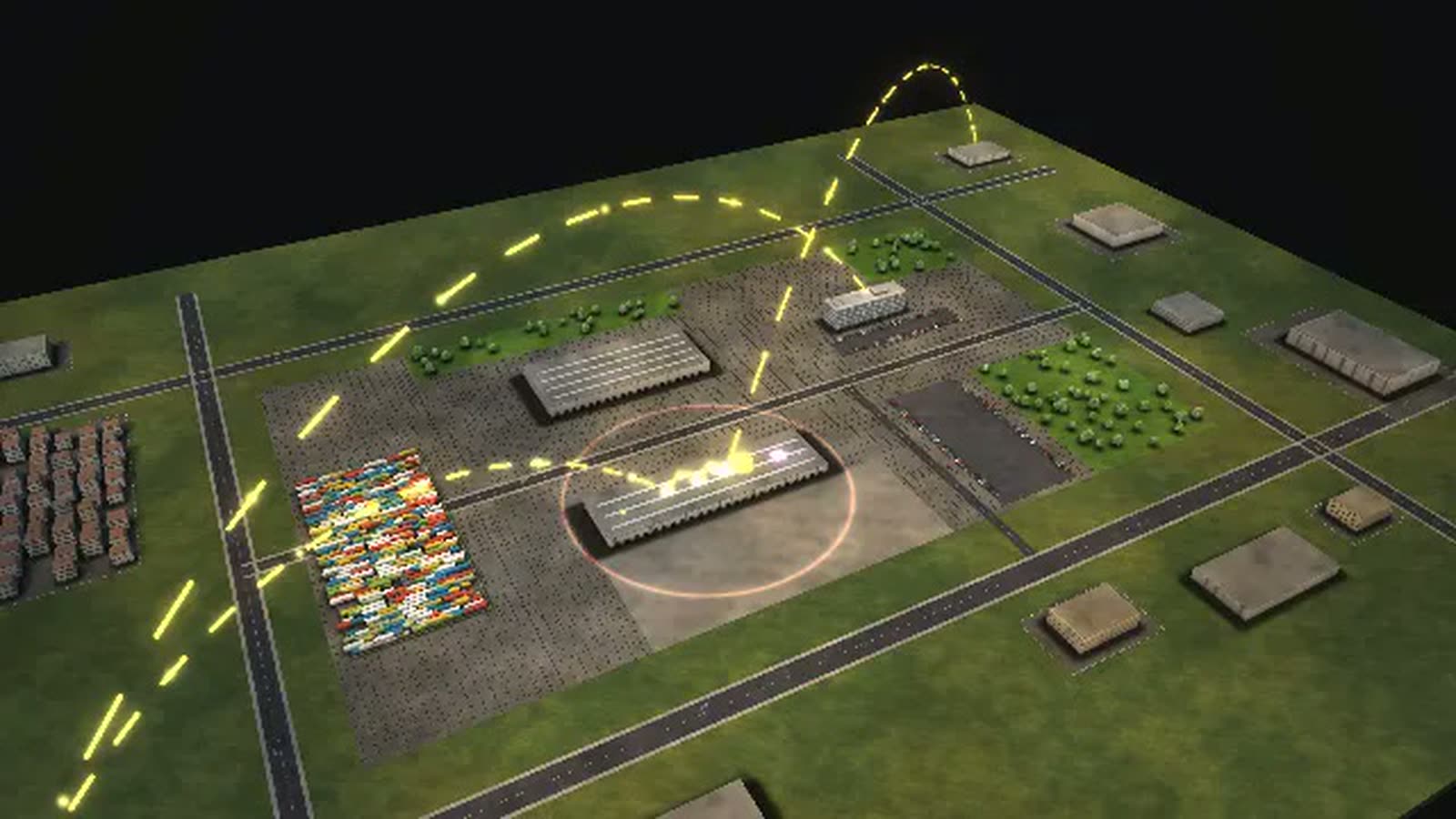
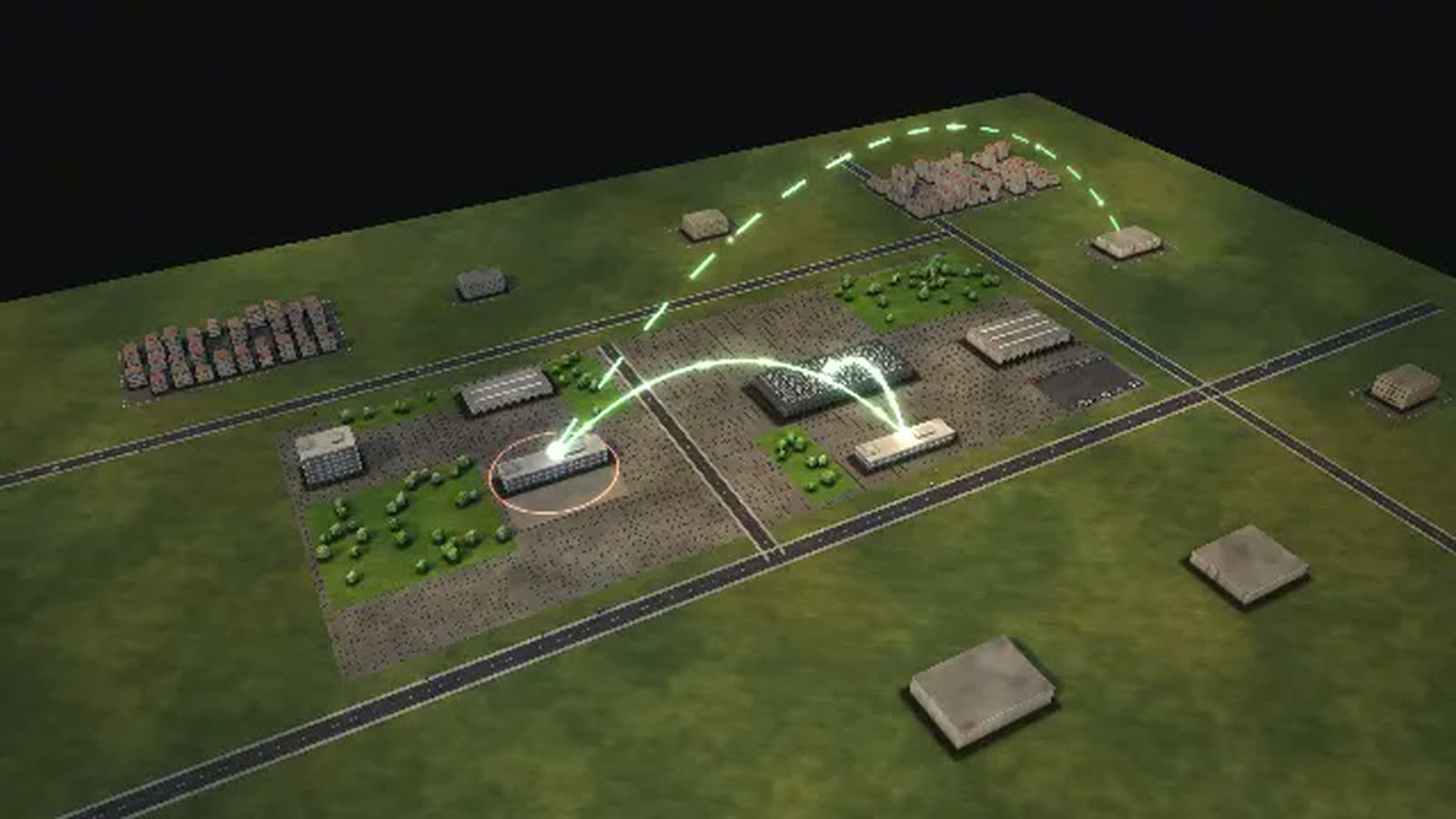
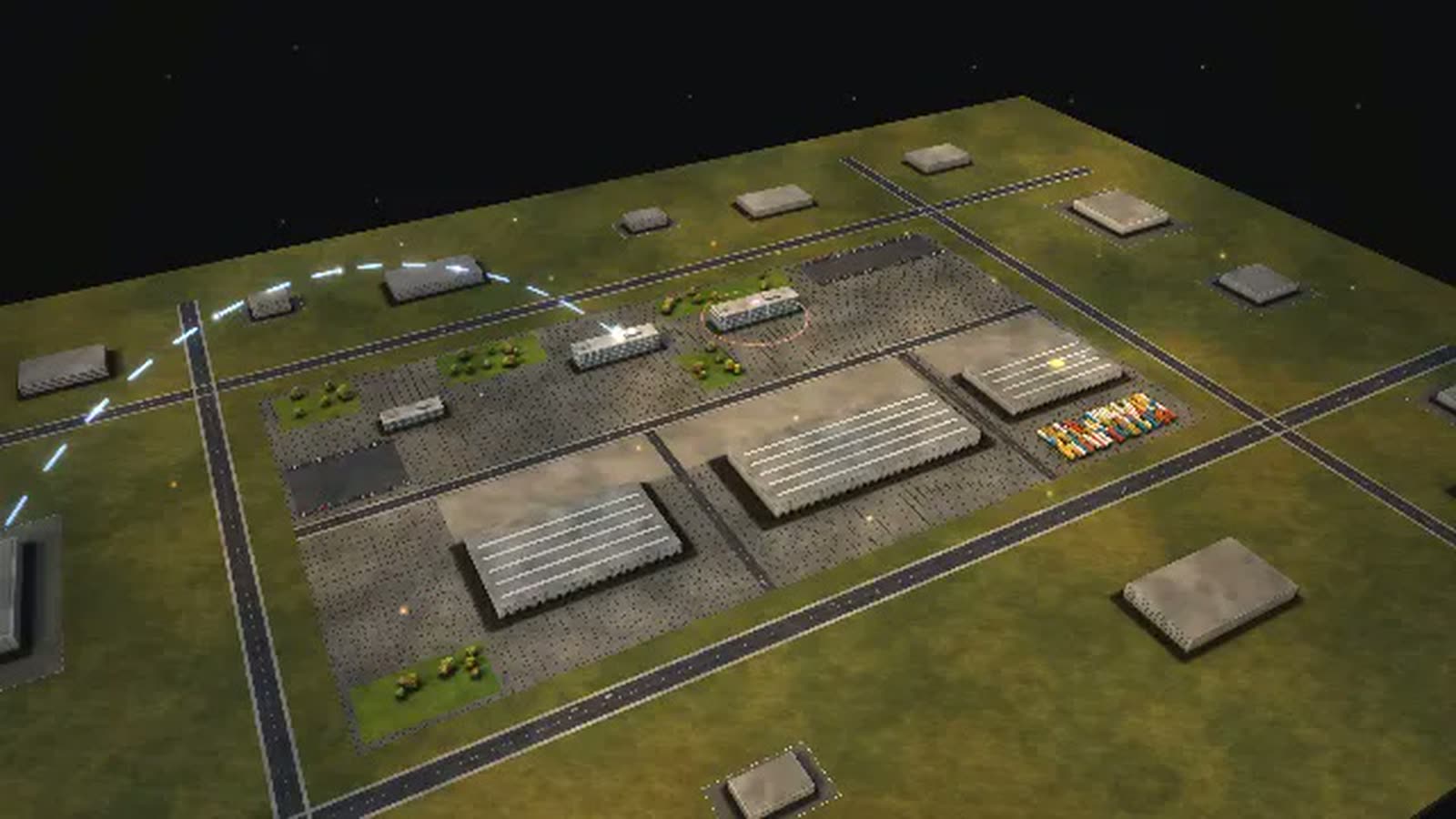
An industrial bakery with 120 shops as a walkable model: how rolls get from the night plan to the counter by 6 am and where oven, proofer or routes hold them up.
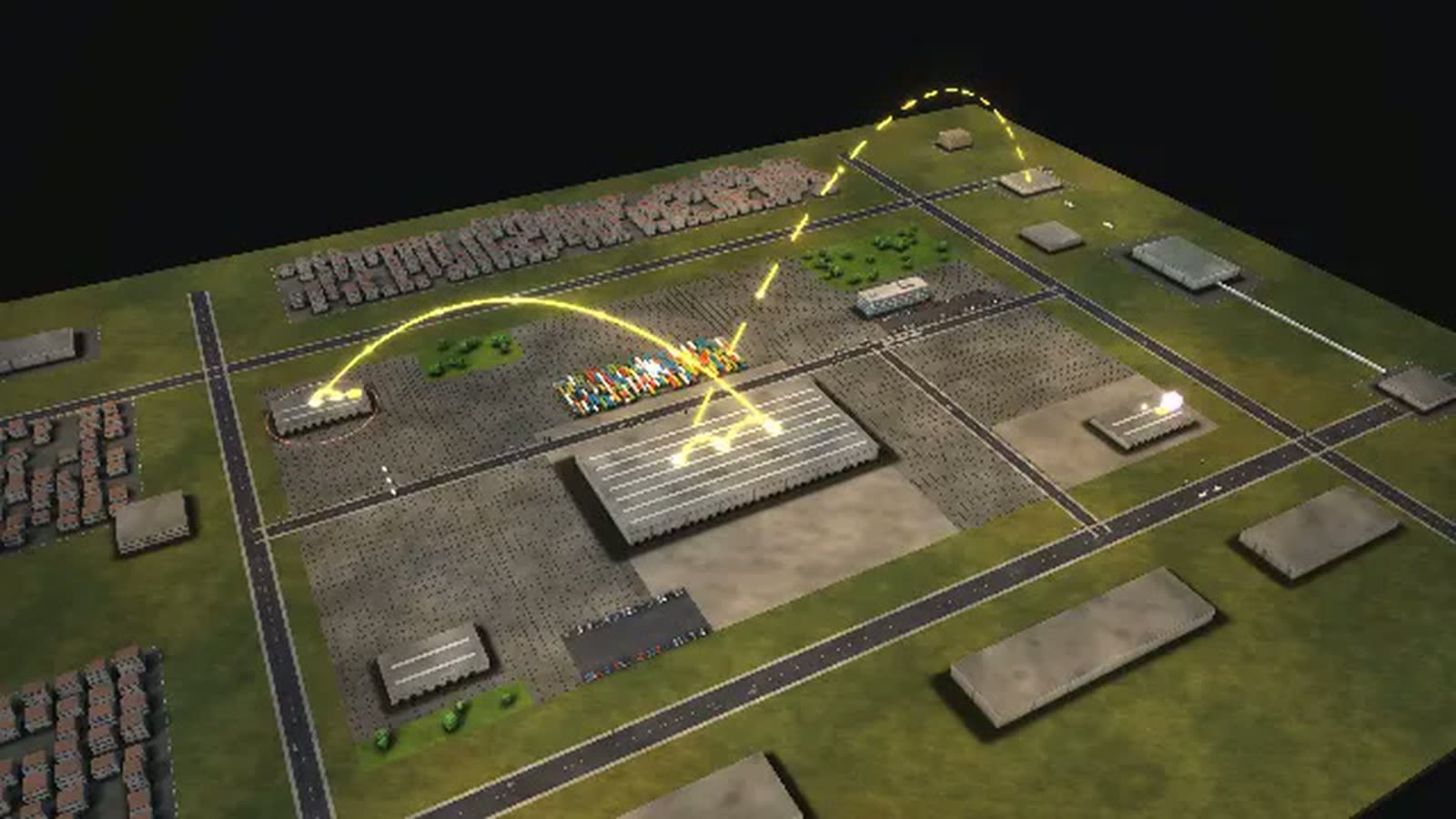
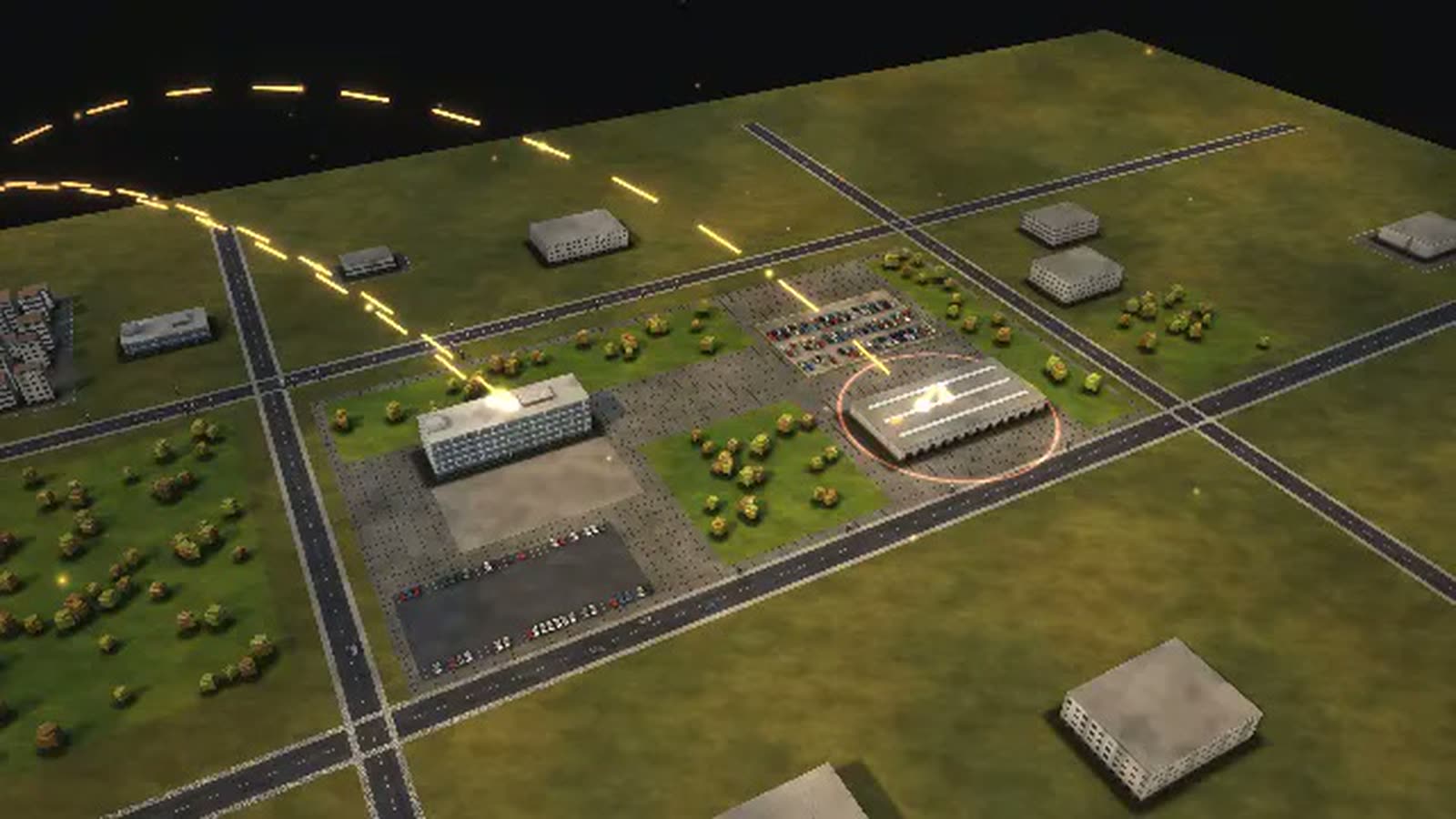
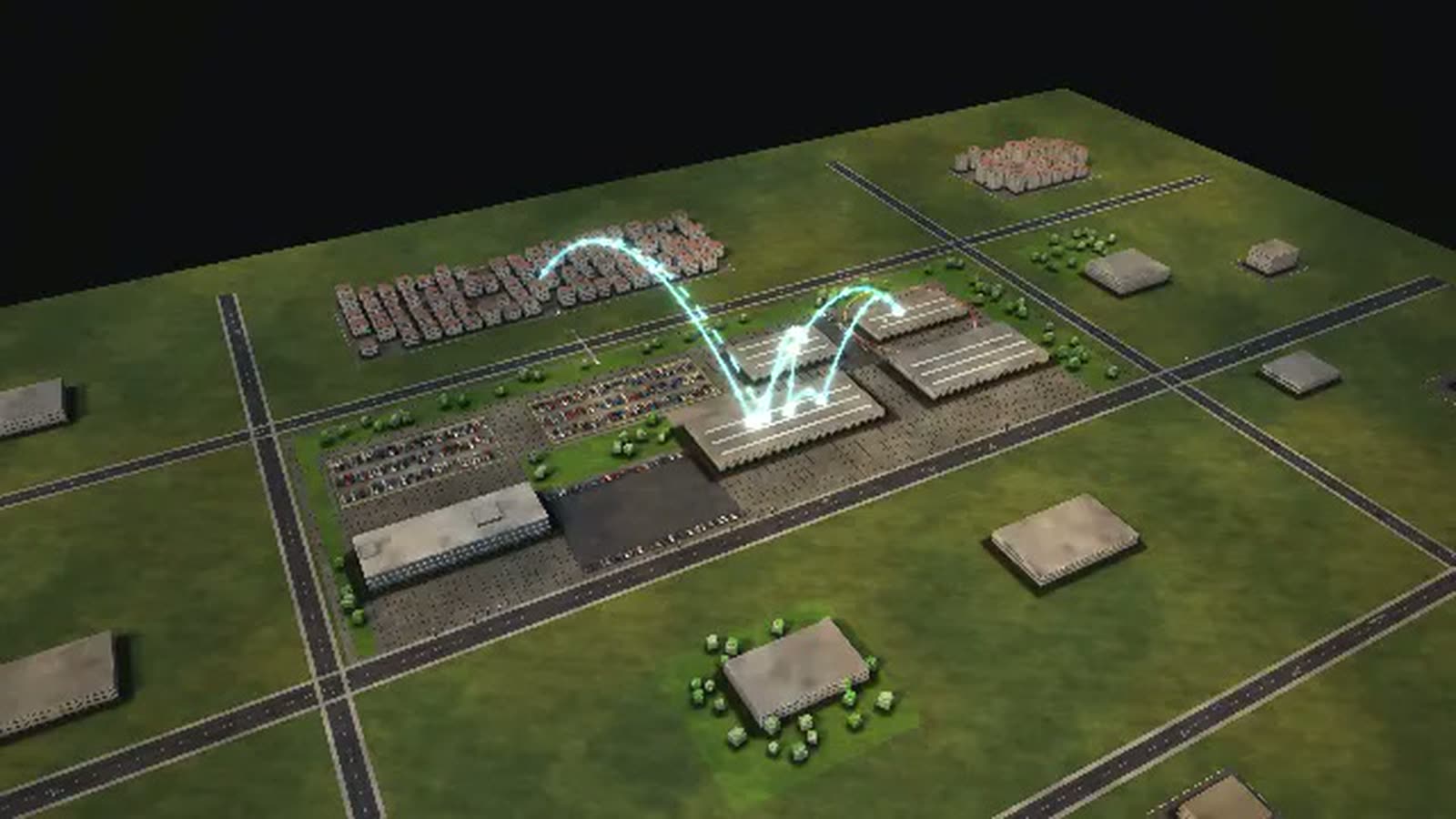
All data are fictional, including quantities and times. The model can be adapted to your bakery's real data and extended with what nobody sees at a glance today – for example oven slots per night, or returns per shop and weather.
This bakery production planning model is built around the fictional KRUMENHOF BACKWAREN and shows how one night goes to plan or stalls. At night dough, bread and cake are made for 120 shops, the routes leave at 2:30 and 4 am – and by 6 am everything must be in the counter.
The main process follows the order of the station shop: 300 rolls, 40 loaves and two trays of cake, placed by 2 pm. At night sourdough is weighed, dough is mixed and divided, the pieces rise in the proofer and pass through the tunnel oven. Quality assurance runs its HACCP checks, the bread cools and crates are sorted per shop in route order. Model target: at the shop before opening, at most 13 hours after production starts.
Key accounts such as hotels, the evening returns and a new bread from idea to shelf run alongside, across seven buildings and 19 departments. The page is intended for owner families and managing directors, production and plant managers, shop sales, HR and training.
Rolls at the shop by 6 am
- 01
Order in the night plan: Ordering closed at 2 pm: the station shop ordered 300 rolls, 40 loaves and two trays of cake. Now its order enters night production.
- 02
Bakehouse and patisserie work on the same order at the same time.
- 03
Dose sourdough and pre-dough: Sourdough and pre-dough have matured for hours; now they are weighed.
- 04
Mix and divide: Mixers combine flour, water, yeast and sourdough; dividers shape the rolls.
- 05
Proofer: In the proofer the dough pieces rise in warmth and humidity.
- 06
Bake in the tunnel oven: The tunnel oven bakes non-stop – trays in, crusty rolls out.
- 07
HACCP sample check: Quality assurance measures core temperature and checks the metal detector (HACCP).
- 08
Cooling belt: On the cooling belt the bread loses steam and heat.
- 09
Frozen dough pieces from the freezer: Dough pieces come from the freezer – produced for stock during the day.
- 10
Finish cakes and snacks: The patisserie fills cream cakes and prepares the snacks.
- 11
Cold room: Cakes and snacks wait in the cold room.
- 12
Everything for the shop is ready.
- 13
Sort crates per shop: Crates run along the belt and are stacked on trolleys per shop – in route order.
- 14
Route start surrounding area (2:30 am): At half past two the vans leave for the surrounding towns.
- 15
Drive to the surrounding area: Up to an hour on country roads, one shop after another.
- 16
Route start city (4 am): At 4 am the city routes start.
- 17
Drive through the city: Through the still empty streets from shop to shop.
- 18
Goods at the shop: The crates are in the shop before 6 am, the early shift fills the counter.
- 19
Sales through the day: Through the day rolls, bread and cake go over the counter.
- 20
Sold.
How an industrial bakery can use the model
-
Internal communication
Bakehouse, patisserie, dispatch, flour silos, fleet yard and the market-square shop side by side: night shift and shop teams see how their work connects.
Pour quiManagement, production management, shop sales
-
Onboarding
New staff in the dough room, oven line or dispatch see an order's path through the night – and why everything runs towards the routes at half past two and four.
Pour quiNew staff in production, logistics and fleet
-
Training
Baking and sales apprentices take the oven control offline or send a night of black ice and watch dough pieces pile up in the proofer while the routes wait.
Pour quiTraining, apprentices in bakehouse and shops
-
Explaining to customers
How do fresh rolls reach the counter by 6 am, and what happens to leftovers? The model shows night work, HACCP checks and the recovery of returns as a picture.
Pour quiShops, marketing, customers
-
Strategic overview
Bake-off in the shop, order forecast, oven staffing, drivers: the model shows which levers act on returns and which on punctuality. Before holidays you see what hits its limit first.
Pour quiOwner, management
What is shown – why – for whom
| Ce qui est montré | Pourquoi | Pour qui |
|---|---|---|
| ‘Year, week, day’ diagram: the night until 6 am, routes at 2:30 and 4 am | PourquoiShows the night rhythm. | Pour quiPlant management, shops |
| ‘Where it gets tight’ diagram: oven, proofer, sorting | PourquoiShows the limit before holidays. | Pour quiProduction management |
| ‘How a case flows’ diagram: rolls all the way to the counter | PourquoiShows every step of a night. | Pour quiTraining, customers |
| ‘What each control does’ diagram: bake-off, order forecast, oven staffing, drivers | PourquoiRanks levers against returns and late deliveries. | Pour quiOwner, management |
| ‘The path across the site’ diagram: silos, bakehouse, dispatch | PourquoiShows the routes through the plant. | Pour quiPlant management |
| Disruption ‘Oven control failure’ | PourquoiShows the knock-on effect on the routes. | Pour quiEngineering |
| Process ‘Returns in the evening’ | PourquoiShows recovery as animal feed, biogas or via food banks. | Pour quiSustainability, shops |
Departments in the model
-
Management (owner family)
The family runs the business in its third generation – the small bakehouse became an industrial bakery.
-
Production management
Master bakers and shift leads: who bakes what and when is decided here.
-
Production planning and scheduling
Turns the shop orders received by 2 pm into the night plan – dough quantities, oven slots, routes.
-
Dough room
Sourdough, pre-doughs, mixing, dividing – from the late afternoon.
-
Oven line
Proofer, tunnel oven and cooling belt – all night.
-
Patisserie
Cakes, gateaux, Danish pastries – much of it the day before, cream at night.
-
Snack production
Filled rolls and salads for the shops.
-
Frozen line
Produces dough pieces for stock during the day, baked off fresh in the shops.
-
Quality assurance and hygiene
HACCP: critical control points such as core temperature and metal detector, samples, hygiene training – reports directly to management.
-
Logistics and picking
Sorts the goods into crates per shop at night and receives the returns in the morning.
-
Fleet
Drivers of the early routes – departures at 2:30 and 4 am.
-
Shop sales (area management)
Area managers each look after about 15 shops: staff, range, sales.
-
Shops (sales)
Counter and café, bake-off through the day – and counting the returns in the evening.
-
Key account sales
Hotels, hospitals, canteens and retailers.
-
Purchasing
Flour, seeds, butter, energy – flour is the largest item.
-
Engineering and maintenance
Keeps ovens, refrigeration, silos and vehicles running – on call every night.
-
Product development
New recipes, seasonal items and tastings.
-
Human resources
Night shifts, shop teams, apprenticeships in baking and sales.
-
Administration, finance and IT
Accounting, controlling, tills and merchandise system.
All processes in the model
Rolls at the shop by 6 am
- 01Order in the night plan: Ordering closed at 2 pm: the station shop ordered 300 rolls, 40 loaves and two trays of cake. Now its order enters night production.
- 02Bakehouse and patisserie work on the same order at the same time.
- 03Dose sourdough and pre-dough: Sourdough and pre-dough have matured for hours; now they are weighed.
- 04Mix and divide: Mixers combine flour, water, yeast and sourdough; dividers shape the rolls.
- 05Proofer: In the proofer the dough pieces rise in warmth and humidity.
- 06Bake in the tunnel oven: The tunnel oven bakes non-stop – trays in, crusty rolls out.
- 07HACCP sample check: Quality assurance measures core temperature and checks the metal detector (HACCP).
- 08Cooling belt: On the cooling belt the bread loses steam and heat.
- 09Frozen dough pieces from the freezer: Dough pieces come from the freezer – produced for stock during the day.
- 10Finish cakes and snacks: The patisserie fills cream cakes and prepares the snacks.
- 11Cold room: Cakes and snacks wait in the cold room.
- 12Everything for the shop is ready.
- 13Sort crates per shop: Crates run along the belt and are stacked on trolleys per shop – in route order.
- 14Route start surrounding area (2:30 am): At half past two the vans leave for the surrounding towns.
- 15Drive to the surrounding area: Up to an hour on country roads, one shop after another.
- 16Route start city (4 am): At 4 am the city routes start.
- 17Drive through the city: Through the still empty streets from shop to shop.
- 18Goods at the shop: The crates are in the shop before 6 am, the early shift fills the counter.
- 19Sales through the day: Through the day rolls, bread and cake go over the counter.
- 20Sold.
A hotel orders for breakfast
- 01Check the key account order: A hotel orders rolls for 400 breakfast guests electronically.
- 02Into the night plan (6 pm): At 6 pm the order enters the night plan.
- 03Mix and divide: The dough is mixed together with the shop orders.
- 04Proofer: Proofer.
- 05Bake in the tunnel oven: Baked in the same tunnel oven.
- 06Cooling belt: Cooling.
- 07Frozen dough pieces from the freezer: Frozen dough pieces from the freezer – the hotel bakes them off itself.
- 08Pick for key accounts: Logistics assembles the delivery per key account.
- 09Truck route key accounts (4:30 am): At 4:30 am the truck leaves for hotels, hospitals and canteens.
- 10Delivery to the key account: Delivery at the hotel kitchen.
- 11Delivered.
Returns in the evening
- 01Count and book the returns: Closing time: the shop counts what is left and books it in the till system.
- 02Pick-up with the morning route (5 am): In the morning the van takes the return crates back.
- 03Return drive to the bakery: Return drive to the bakery.
- 04Receive and sort the returns: Logistics sorts: what is still good, what becomes feed, what biogas.
- 05Handover to the processor: An animal feed company collects the bread.
- 06Collection by the food bank: The food bank collects goods in good condition.
- 07Breadcrumbs from old bread: Dry white bread is ground into breadcrumbs.
- 08Again: Handover to the processor: Cream cakes and snacks go to the biogas plant.
- 09Recovered.
A new bread joins the range
- 01Work out the recipe idea: Product development works on a spelt seed loaf.
- 02Trial bakes, sourcing and lab analysis run at the same time.
- 03Trial bakes in the test bakery: In the test bakery: dough handling, baking time, crumb.
- 04Fix raw material and supplier: Purchasing looks for a supplier of the seed mix.
- 05Samples from the supplier: The supplier sends samples.
- 06Nutrition values and allergens in the lab: A testing lab determines nutrition values and allergens.
- 07Everything is in.
- 08Tasting panel (weekly): Once a week management, area managers and master bakers taste.
- 09Check labelling (FIC): Quality assurance checks the ingredient list and allergen labelling.
- 10Test sale in ten shops: Three weeks of test sales in ten shops.
- 11Does not join the range.
- 12Add to the range: Planning adds the bread to the ordering system of all shops.
- 13In the range.
What you can change
Controls
- Shop order volume: Before Easter, Christmas and long weekends the shops order much more.
- Oven line staffing: How many oven slots and dough lines run at the same time at night.
- Bake-off in the shop: More frozen dough pieces baked off in the shop: the night oven gets freed up, the shop needs time at its oven.
- Vans and drivers: How many shops the 2:30 and 4 am routes can take.
- Order forecast: Orders from a forecast with weather and holidays: fewer returns (model assumption).
Disruptions
- Oven control failure: The tunnel oven is down for three hours: dough pieces pile up in the proofer, the routes wait.
- Flu in the night shift: For a week a quarter of the night shift is missing in the dough room, oven and sorting.
- Black ice: A night of black ice: the vans take more than twice as long.
- Bridge days: For three days before a long weekend the shops order a third more.
The benefit for an industrial bakery
-
01
The night made visible
Silos, dough room, proofer, tunnel oven, dispatch and fleet can be walked through. At night you see where dough pieces and crates are waiting.
-
02
Four processes, one night
Shop deliveries, key accounts, returns and product development run side by side in the event simulation. Bottlenecks at oven, proofer or sorting show at once.
-
03
Rehearse the holidays
Five controls and four disruptions, from bridge days to a night of black ice. Where things get tight, a tip names the control that creates breathing room.
-
04
Diagrams live from the bakehouse
14 diagrams in four groups calculate while the simulation runs, from the night rhythm to the routes across the site.
-
05
For staff meetings and shop rounds
At the office computer or projected large at a staff meeting. A guided tour in eight steps shows how to get started.
-
06
Designed by hand
An artist and developer created the model. Next to the bakery, a food retailer, a hotel and 33 more organisations appear in one overview.
Basis and limits
Fictional company · model based on researched industry structures · no statement about real companies
1 case = one shop's night order, one key account order, one shop's returns or one new product · 1 figure ≈ 15 employees
All volumes, durations, rates and capacities are model assumptions, not values of a real company.
A shop delivery case starts when production of its order begins at night; the order itself came in by 2 pm. The target counts as met if the goods are at the shop before opening.
Documented: HACCP self-checks, allergen labelling, night work, returns and their recovery as feed, biogas or via food banks.
Public sources the model is based on:
- Zentralverband des Deutschen Bäckerhandwerks
- Verband Deutscher Großbäckereien
- VO (EG) 852/2004 (Lebensmittelhygiene, HACCP)
- VO (EG) 178/2002 (Lebensmittelsicherheit)
- Lebensmittelinformationsverordnung VO (EU) 1169/2011
- WWF-Studie „Unser täglich Brot“ (2018)
- Arbeitszeitgesetz § 6 (Nachtarbeit)
- Nationale Strategie zur Reduzierung der Lebensmittelverschwendung (BMEL)
Your bakery as a model
Would you like to see your bakehouse, routes and shops like this? Call or write to us. We will discuss which order and oven data the model needs. To try it yourself, ask for the password and we will send it.
cube4tec.de/spiele/minimal-organization/
Poser une question à ce sujet
Minimal Organization: Großbäckerei
Similar business models
-
Food retail
A food retailer as a walkable model: fresh produce from automatic ordering through the night in the distribution centre to the shelf before opening.
-
Parcel service
A parcel service as a walkable model: the overnight run through the hub, sorter and shuttles, then the morning route to the doorstep.
-
Hotel
A city and conference hotel as a walkable model: how a room gets from check-out at 11 to check-in at 3 pm and where cleaning, inspection or front desk run out of time.
-
Freight forwarder
A freight forwarder as a walkable model: groupage, ocean and air freight, cross-docking and customs in a running simulation.
-
Pharmaceutical company
A pharmaceutical plant as a walkable model: follow a batch from the cleanroom to certification by the qualified person and see where the four weeks go.
-
Special machine builder
A family-owned special machine builder as a walkable model: how a custom packaging line moves from enquiry to site acceptance and where the 28 weeks go.
-
Housing company
A municipal housing company as a walkable model: what happens after a tenant reports a cold radiator, who repairs it and what speeds up the fix.
-
Car dealership
A franchised car dealership with workshop as a walkable model: how a car gets from reception to handover in one day and where lifts, parts or inspections slow it down.
All data are fictional, including quantities and times. The model can be adapted to your bakery's real data and extended with what nobody sees at a glance today – for example oven slots per night, or returns per shop and weather.