
シミュレーション · Minimal Organization · Industry
Car manufacturer
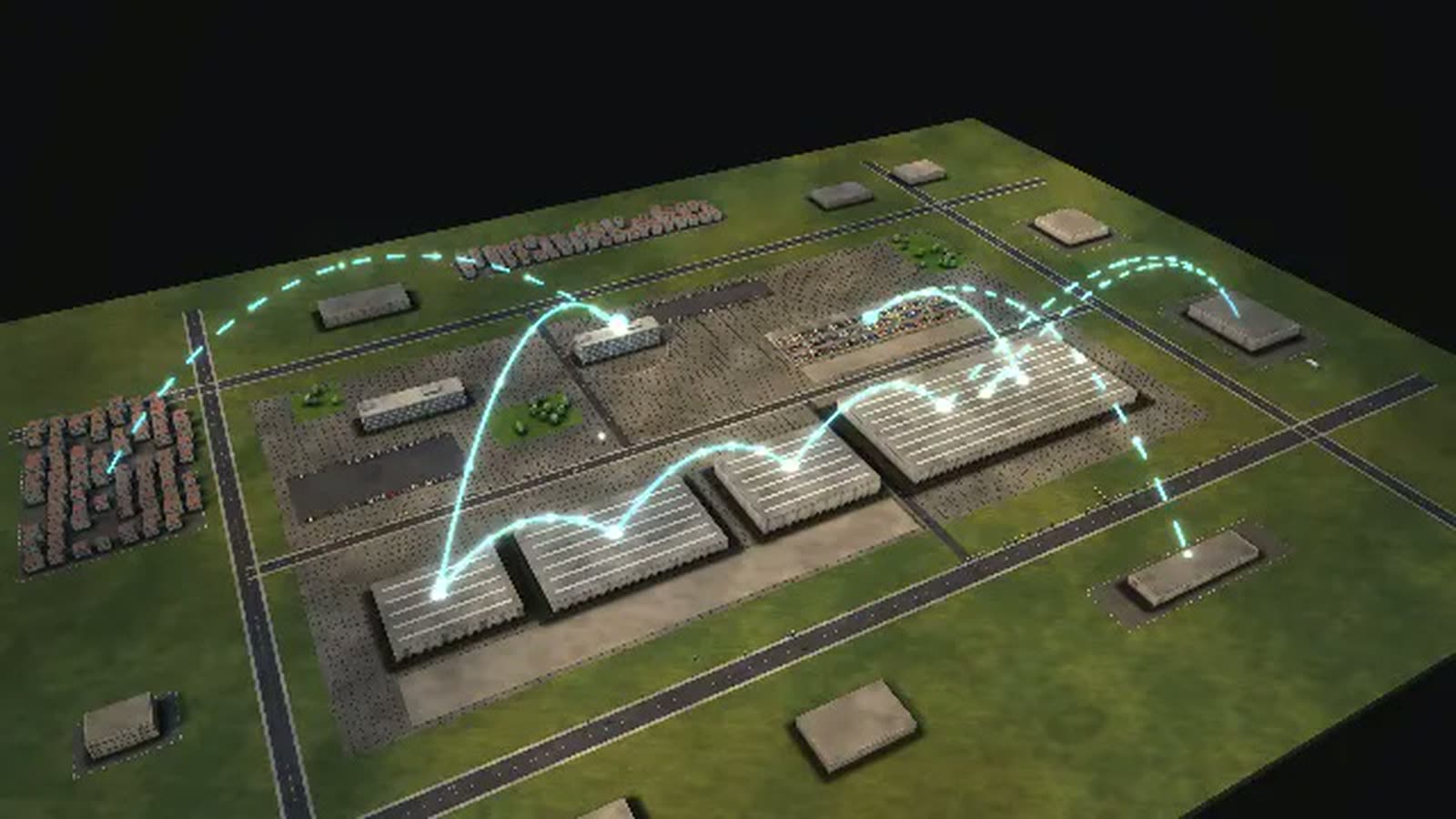
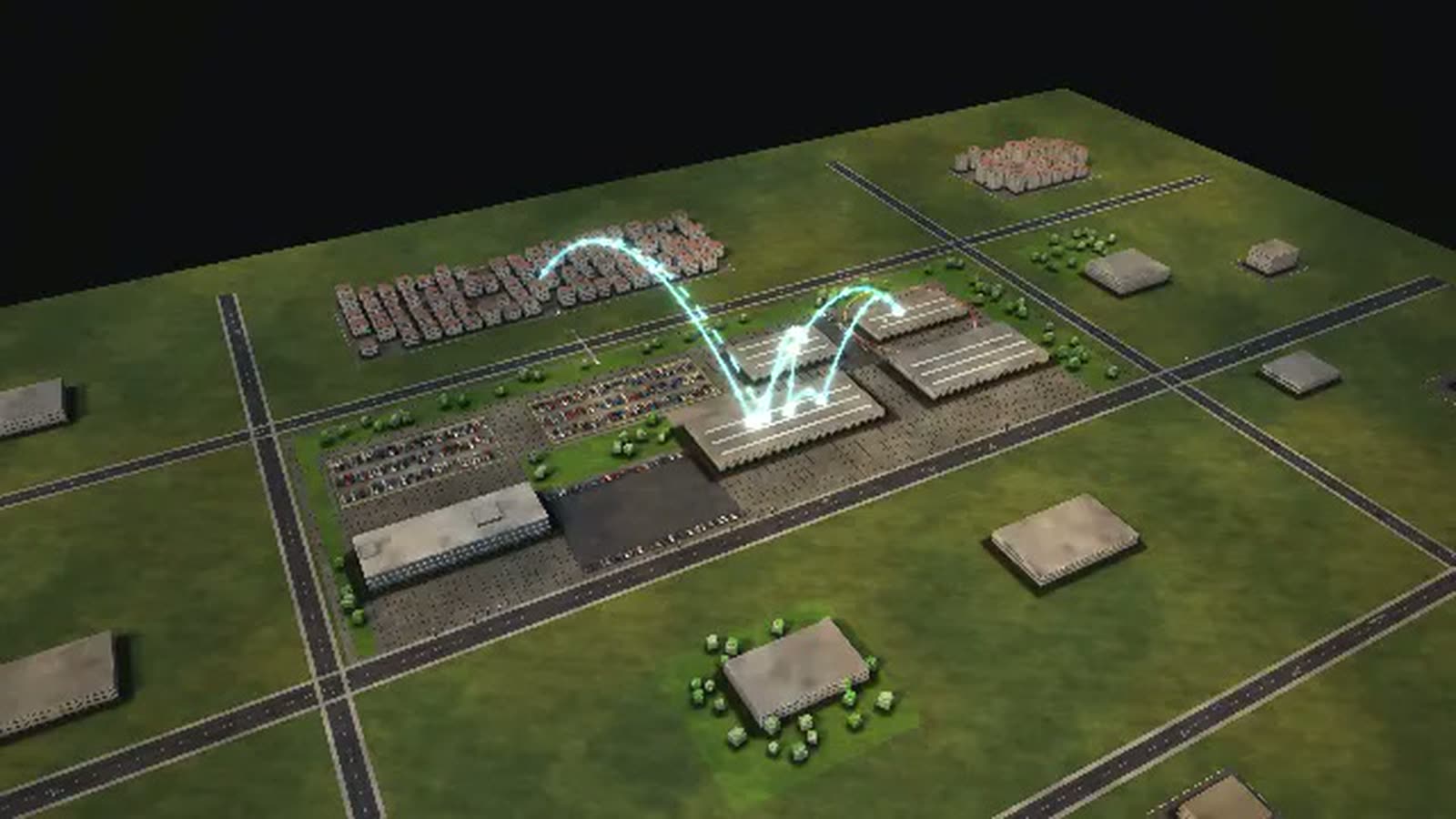
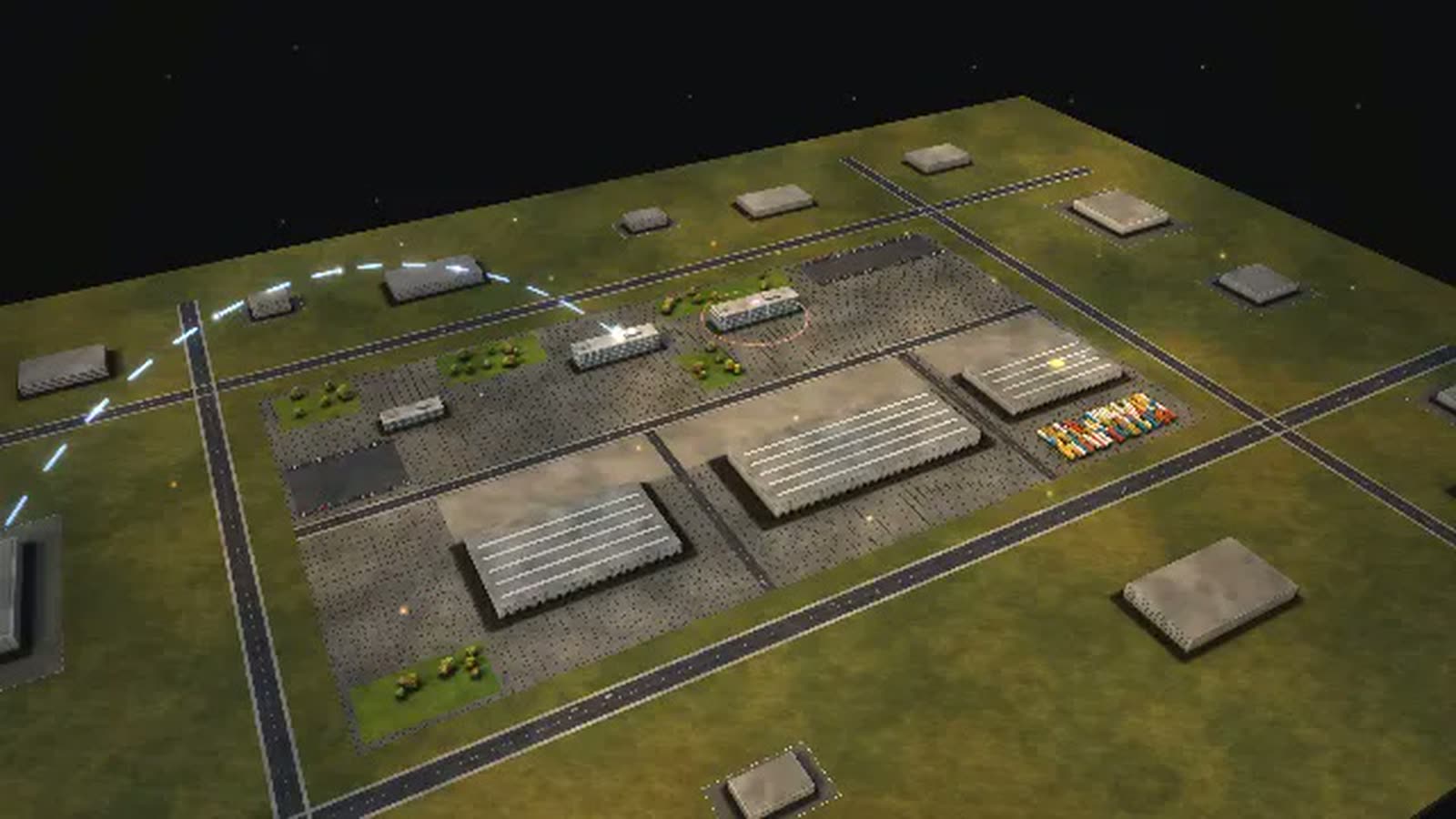
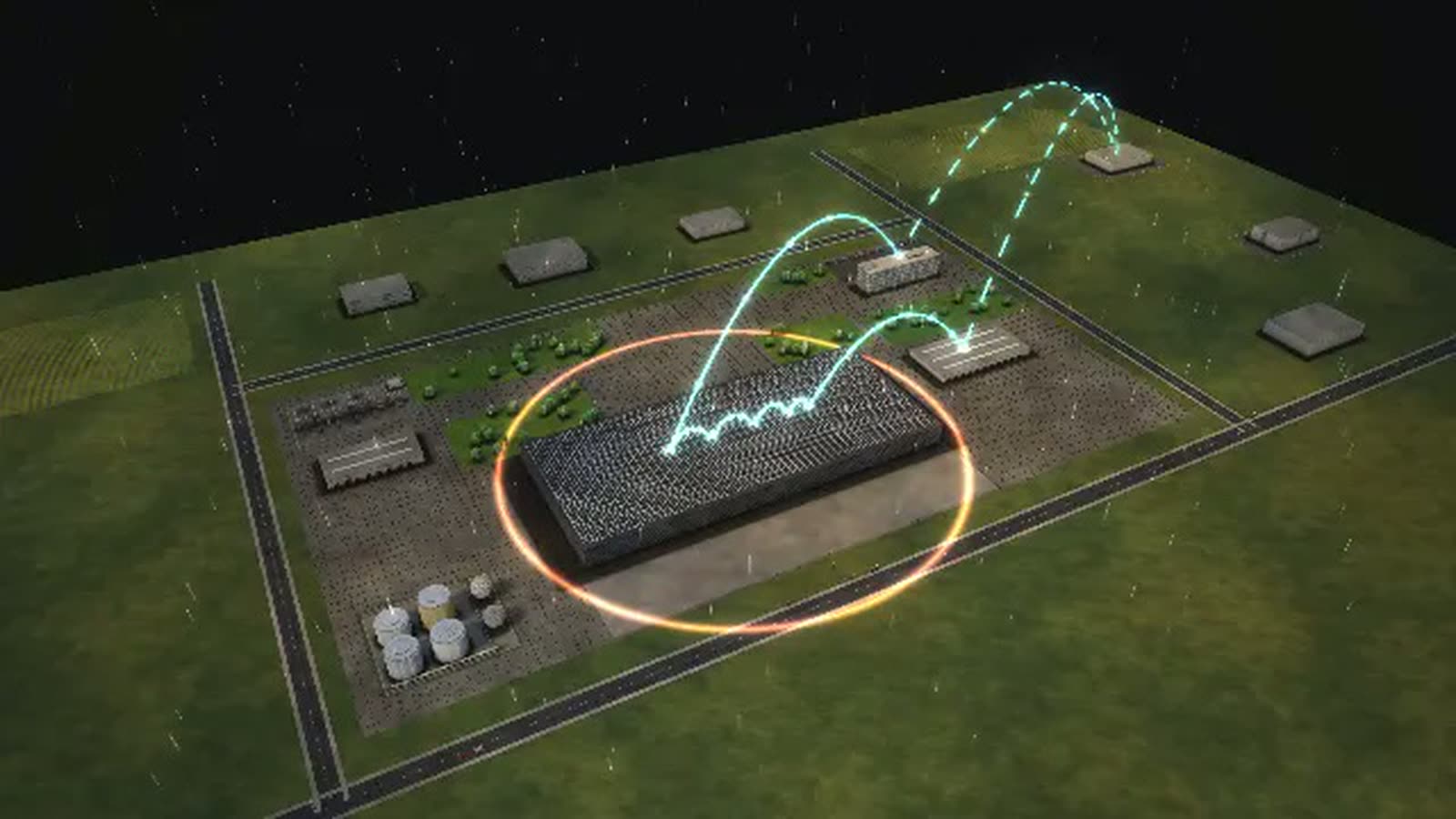
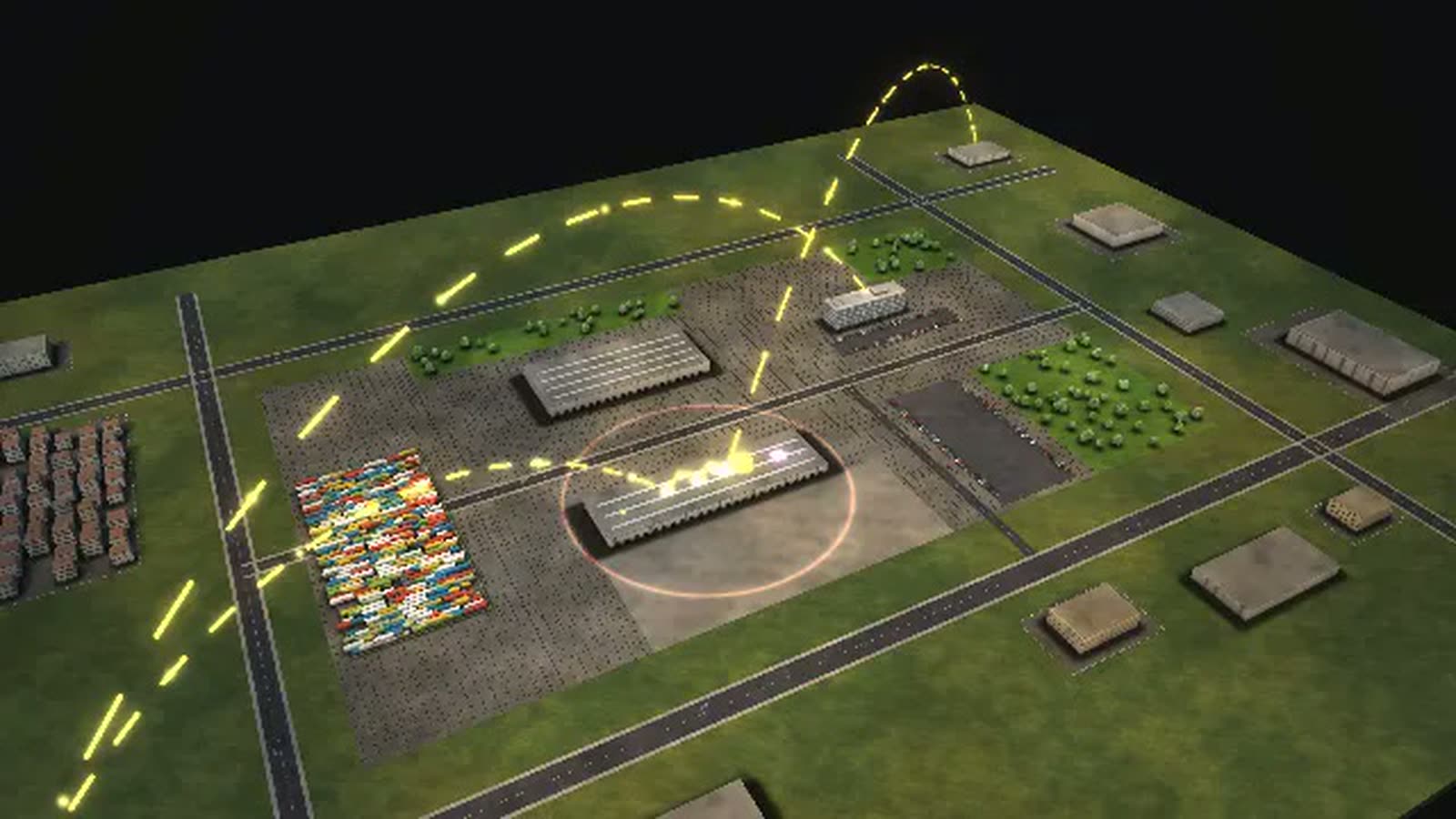
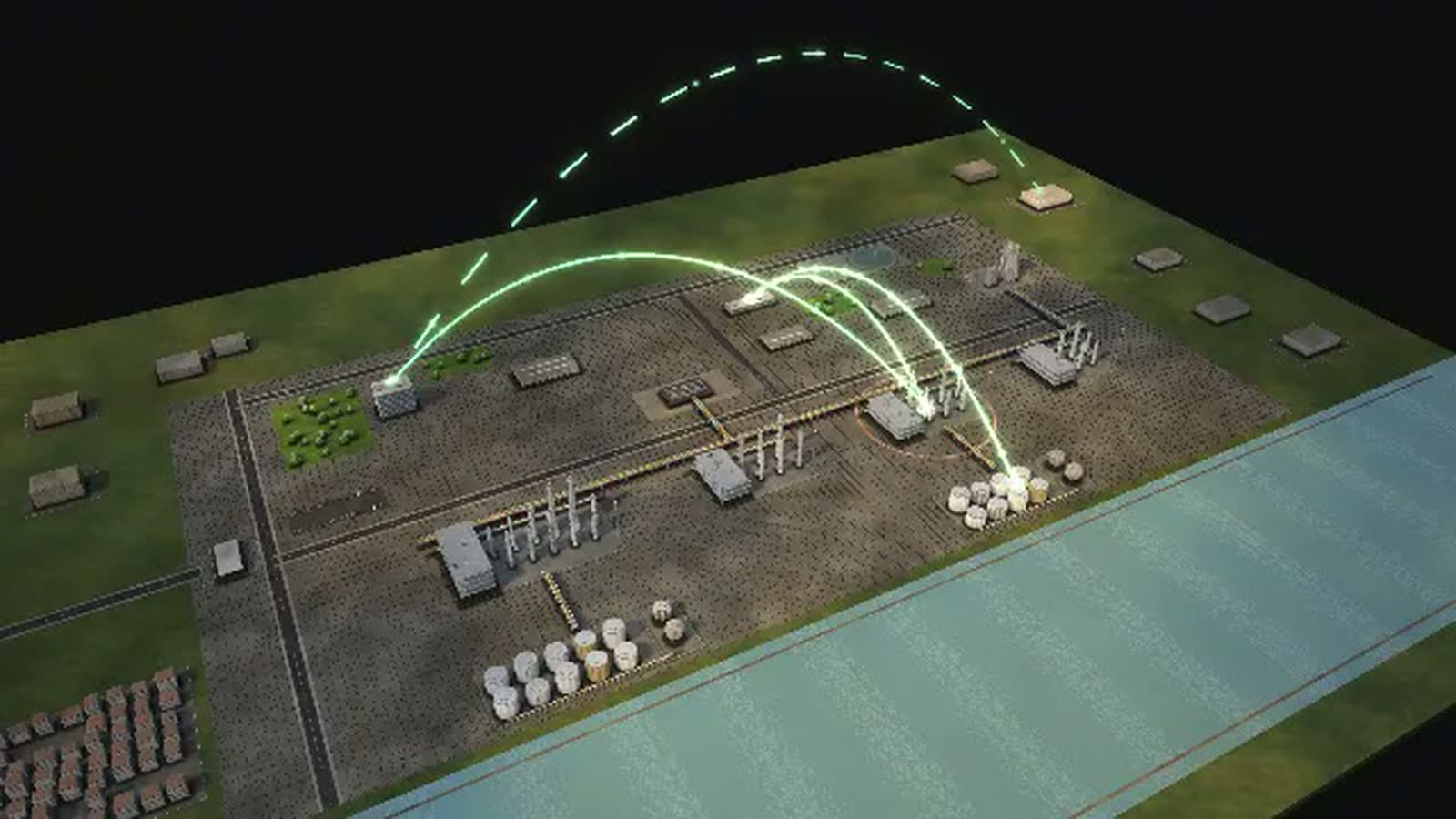
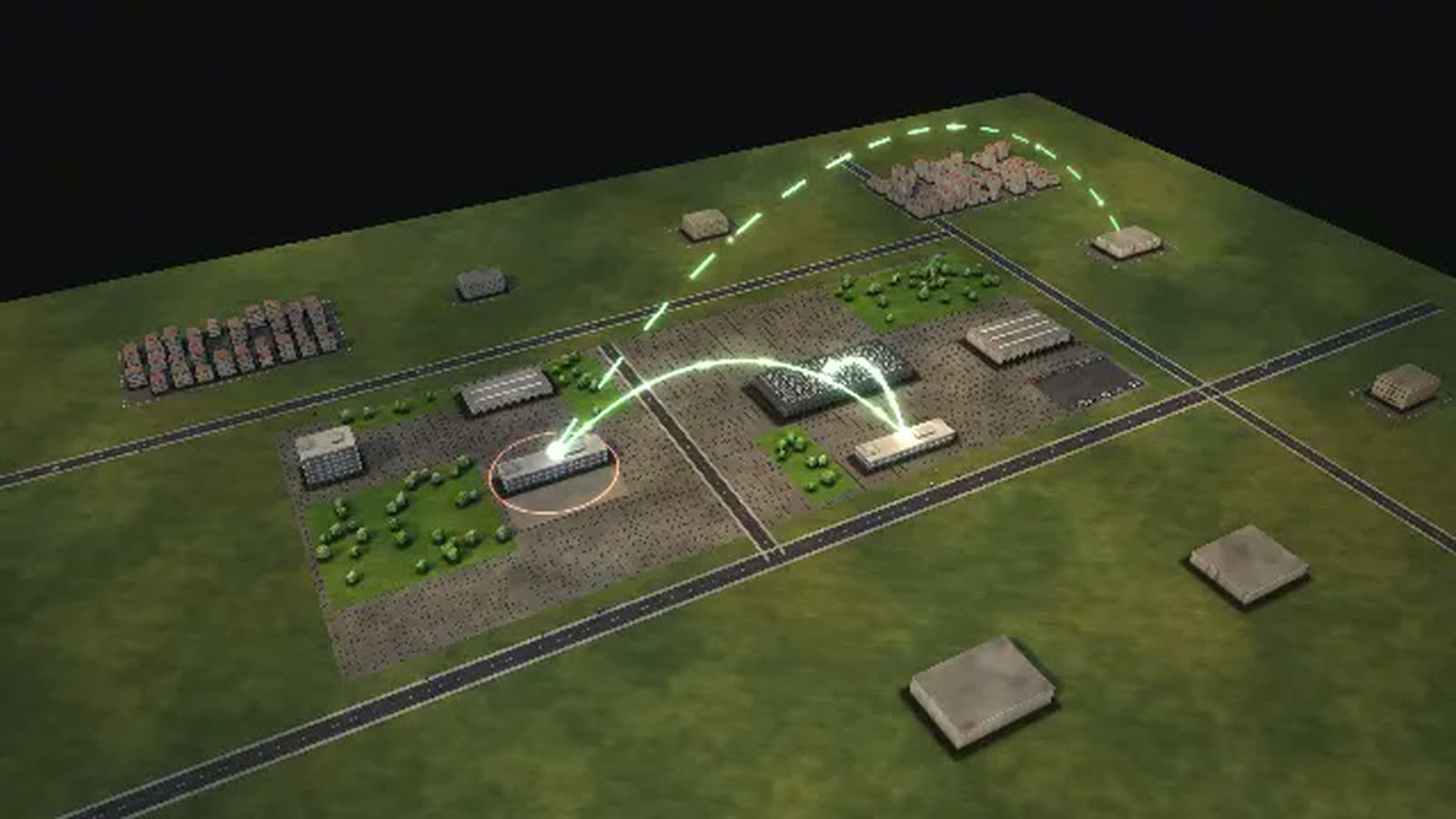
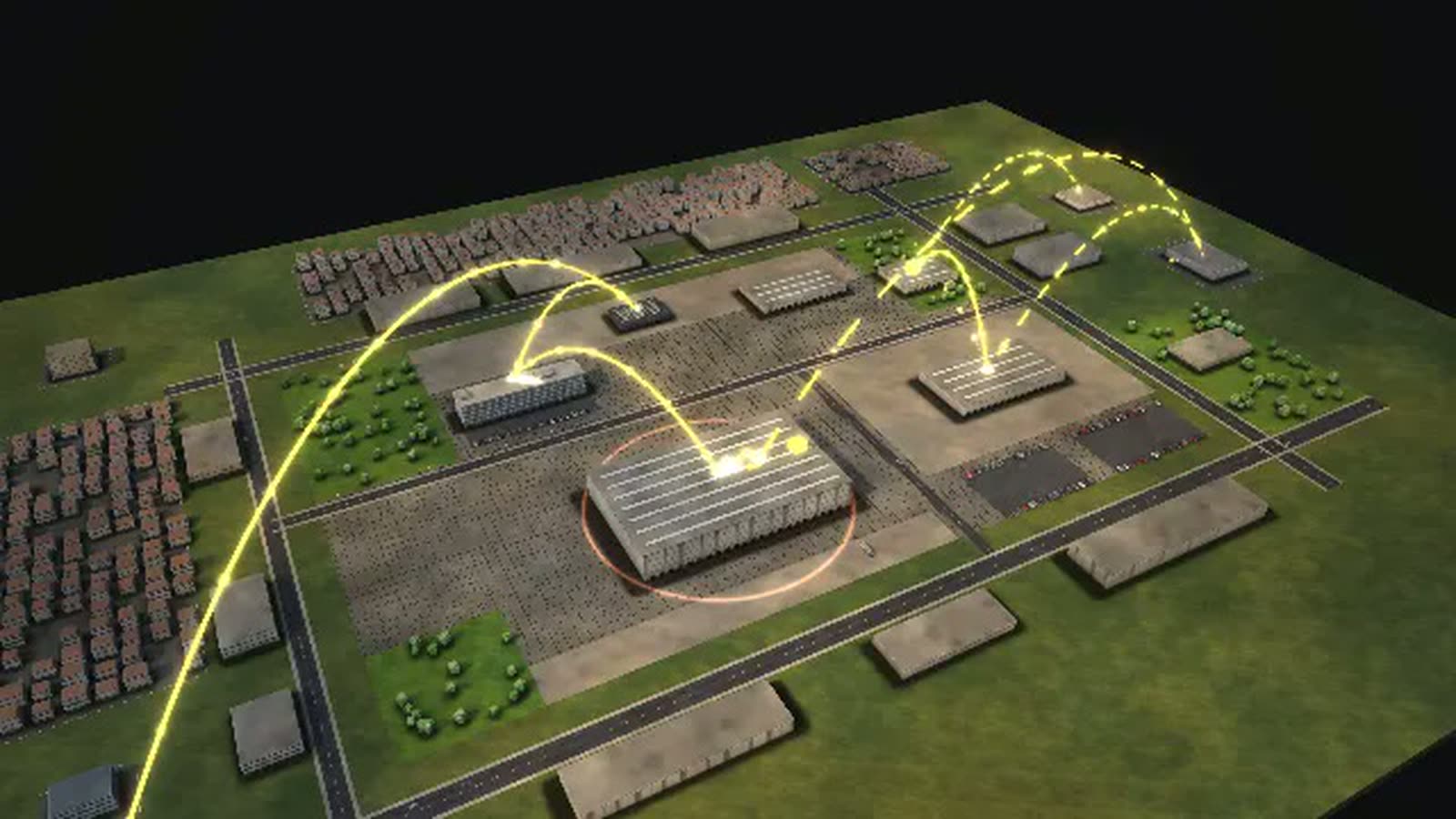
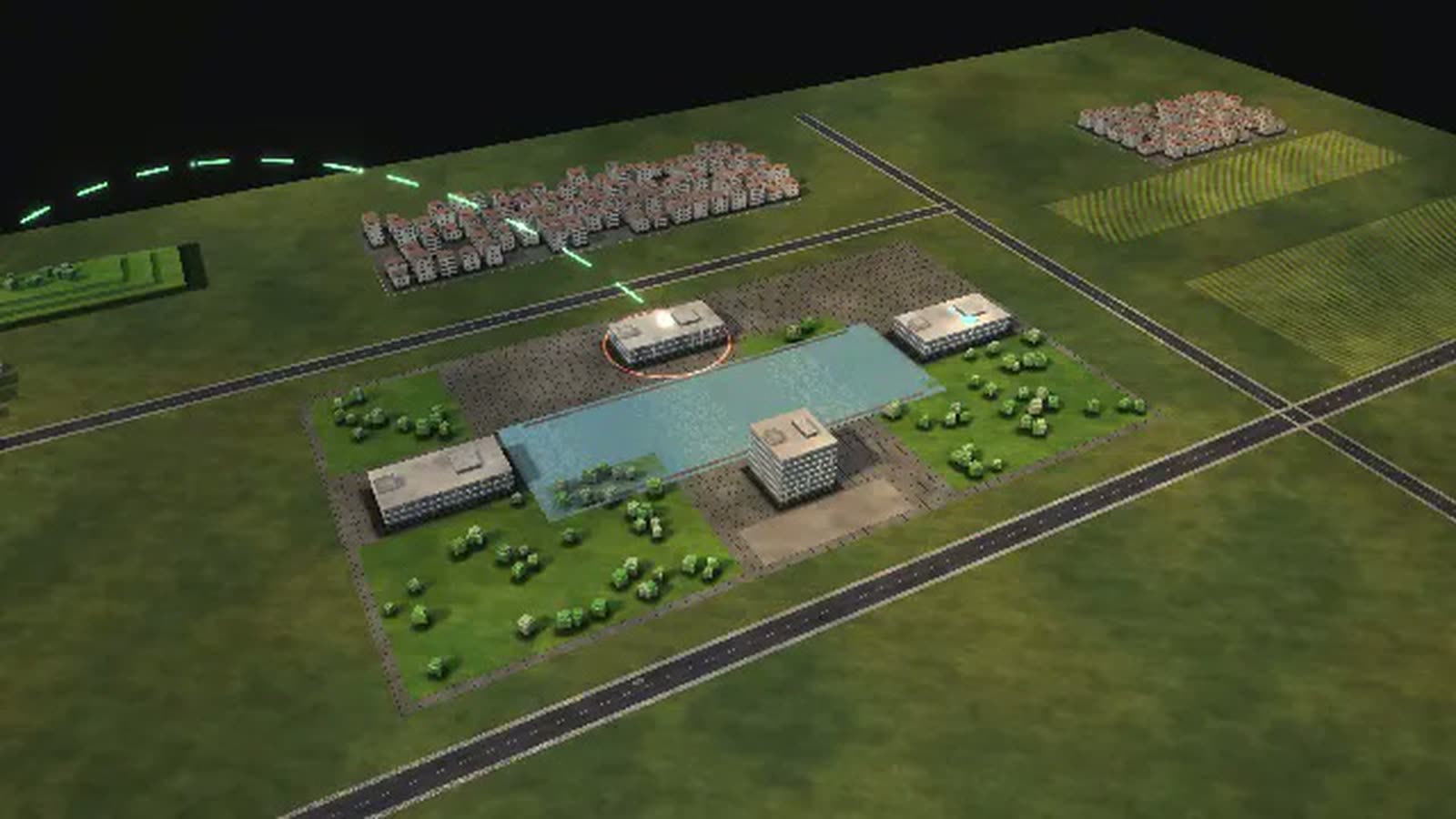
A car plant as a walkable model: follow an ordered car through the fixed build sequence and see what happens when the paint shop stops.
All ARVEN MOTOREN figures are invented model assumptions. With your plant's data the model can show what sits in separate systems today and is never seen together – for instance real vehicles in the build sequence with their build day, or stoppages per line.
How does car manufacturing work, from customer order to handover? This process simulation shows it at ARVEN MOTOREN, a fictional car plant. From sheet metal, paint and supplied parts a car is built minute by minute – and every one is sold before it is built.
In short: the dealer takes the order, programme planning assigns a build day, the car joins the fixed build sequence – the ‘string of pearls’ – through press shop, body shop, paint shop and assembly, and leaves on the car train at 6 am or 6 pm. Target in the model: at the dealer within 18 days of ordering.
If the paint line stops, bodies pile up in front of it and assembly runs dry. If the supplier park strikes, seats arrive in sequence only in a trickle. This page is written for plant management, production planning, purchasing, logistics, sales and the works council.
An ordered car is built
- 01
Configuration at the dealer: At the dealer the customer configures the car: engine, colour, seats, extras.
- 02
Check buildability: Order management checks whether the combination can be built.
- 03
Financing at ARVEN Bank: ARVEN Bank checks financing or leasing.
- 04
The customer cancels.
- 05
Assign build day (daily quota, 6 pm): Every evening planning assigns the new orders to a build day.
- 06
Frozen until build day: A few days before building the sequence is frozen; suppliers receive their call-offs.
- 07
Release into the sequence (hourly): Every hour the next orders enter the string of pearls – the fixed sequence on the line.
- 08
Press sheet metal parts: Presses form doors, roof and side panels from sheet metal.
- 09
Body shop (robots): Robots weld and bond the body – almost without people.
- 10
Painting: Cleaning, primer, colour, clear coat – in dust-free booths.
- 11
Sand and repaint: A dust inclusion: sand and back through painting.
- 12
The body goes into the buffer, at the same time logistics calls off the seats.
- 13
Sequencing buffer: In the buffer the sequence is restored.
- 14
Seats in build sequence: The supplier builds the matching seats and delivers them to the line.
- 15
Body and seats are here.
- 16
Assembly on the line: On the line: wiring harness, cockpit, powertrain, marriage, wheels, seats – minute by minute.
- 17
Final inspection and test bench: Roller test bench, rain test, software check.
- 18
Rework: A defect is fixed by hand.
- 19
Car train departs (6 am and 6 pm): In the dispatch yard cars wait for car train and transporters.
- 20
Transport to the dealer: A logistics provider brings the car to the dealer.
How a car manufacturer can use the model
-
Internal communication
Development, press shop, body shop, paint shop, assembly, logistics and dispatch yard on one site. ‘The path across the site’ shows everyone how a car travels through the plant.
対象Plant management, communications, works council
-
Onboarding
New staff see where their hall sits in the chain and which buffers lie before and after it. The eight-step guided tour explains how to move around the model.
対象New staff in production, logistics and quality
-
Training
Apprentices stop the paint line for six hours, switch on the quality drive or change the shift model, and watch congestion, rework and delivery time respond.
対象Mechatronics and logistics apprentices, work-study students
-
Explaining to dealers and customers
‘Where the time goes’ shows how much of the 18 days passes before the build day. Dealers can use it to explain why a new car does not roll off the line on the day it is ordered.
対象Sales, dealers, customers, plant tours
-
Strategic overview
Shift model, quality drive, dispatch capacity and demand all affect delivery time. ‘What each control does’ ranks them, and the disruptions show where the plant is vulnerable.
対象Board, plant management, programme planning, works council
What is shown – why – for whom
| 表示内容 | なぜ | 対象 |
|---|---|---|
| Diagram ‘The path across the site’: from press shop to dispatch yard | なぜshows the build sequence through the plant | 対象Plant management, visitors |
| Diagram ‘How a case flows’: rework and repainting | なぜshows how many cars take a detour | 対象Quality, production |
| Diagram ‘Where it gets tight’ when the paint line is down | なぜshows the jam before it and the empty line after it | 対象Shift leaders, maintenance |
| Diagram ‘Who works with whom’: supplier park, dealers, logistics | なぜshows the dependence on just-in-sequence delivery | 対象Purchasing, logistics |
| Diagram ‘What each control does’: shifts, quality drive, dispatch | なぜranks the levers for delivery time | 対象Plant management, works council |
| Diagram ‘Where the time goes’: 18 days to the dealer | なぜshows how much waiting comes before the build day | 対象Sales, dealers |
| Resources view over the halls | なぜshows the buffers between the shops | 対象Production planning |
Departments in the model
-
Executive board
Leads development, production, purchasing and sales.
-
Development
Body, powertrain, testing – and the specification for every supplier part.
-
Electronics and software
Control units and vehicle software; every car is programmed on the line.
-
Purchasing
Awards parts to suppliers – by price, quality and risk.
-
Sales and order management
Takes dealer orders and checks whether they can be built.
-
Production planning
Assigns orders to production weeks and fixes the sequence on the line (string of pearls).
-
Press shop
Forms doors, roofs and side panels from sheet metal.
-
Body shop
Robots weld and bond the body together.
-
Paint shop
Cleaning, priming, painting – dust-free and around the clock.
-
Final assembly
On the line body and a thousand parts become drivable cars.
-
Plant logistics
Calls off parts, sequences bodies in the buffer and loads finished cars.
-
Quality
Final inspection, supplier audits, field monitoring – and the recall decision.
-
Finance
Costs, investments and the money for vehicle projects.
-
Human resources
Shift plans, hiring, training.
-
Works council
Elected by the employees, not reporting to the board: it co-decides on shift models and extra shifts.
All processes in the model
An ordered car is built
- 01Configuration at the dealer: At the dealer the customer configures the car: engine, colour, seats, extras.
- 02Check buildability: Order management checks whether the combination can be built.
- 03Financing at ARVEN Bank: ARVEN Bank checks financing or leasing.
- 04The customer cancels.
- 05Assign build day (daily quota, 6 pm): Every evening planning assigns the new orders to a build day.
- 06Frozen until build day: A few days before building the sequence is frozen; suppliers receive their call-offs.
- 07Release into the sequence (hourly): Every hour the next orders enter the string of pearls – the fixed sequence on the line.
- 08Press sheet metal parts: Presses form doors, roof and side panels from sheet metal.
- 09Body shop (robots): Robots weld and bond the body – almost without people.
- 10Painting: Cleaning, primer, colour, clear coat – in dust-free booths.
- 11Sand and repaint: A dust inclusion: sand and back through painting.
- 12The body goes into the buffer, at the same time logistics calls off the seats.
- 13Sequencing buffer: In the buffer the sequence is restored.
- 14Seats in build sequence: The supplier builds the matching seats and delivers them to the line.
- 15Body and seats are here.
- 16Assembly on the line: On the line: wiring harness, cockpit, powertrain, marriage, wheels, seats – minute by minute.
- 17Final inspection and test bench: Roller test bench, rain test, software check.
- 18Rework: A defect is fixed by hand.
- 19Car train departs (6 am and 6 pm): In the dispatch yard cars wait for car train and transporters.
- 20Transport to the dealer: A logistics provider brings the car to the dealer.
A new supplier part is approved
- 01Write the specification: Development describes the part in a specification – say a new door handle.
- 02Supplier quotations: Several suppliers submit quotations.
- 03Purchasing committee and supplier audit run in parallel.
- 04Award in the purchasing committee: The committee awards by price, quality and risk.
- 05Supplier audit (VDA 6.3): Quality audits the supplier on site (VDA 6.3).
- 06Award and audit are in.
- 07Tooling at the supplier: The supplier builds the tools – it takes months.
- 08Initial samples and PPF documents: First parts from series tools, plus the PPF documents.
- 09Sample inspection in the measuring room: In the measuring room every dimension is checked.
- 10Tool correction: The tool is corrected.
- 11Capacity proof (run@rate): The supplier shows it can make the planned volume (run@rate).
- 12Part approved.
A field defect is resolved
- 01Cluster of cases in workshops: Workshops report the same fault again and again – say a sensor fails.
- 02Analysis with the supplier (8D): Quality retrieves parts and looks for the cause with the supplier (8D).
- 03Product safety committee: The product safety committee decides: service campaign or recall.
- 04Spare parts from the supplier: Service campaign: parts are procured, repair at the next workshop visit.
- 05Recall: report to the authority, fix series production and procure parts – at the same time.
- 06Report to the authority: The authority is informed and publishes the recall.
- 07Fix the fault in series production: Development changes the part, series production builds it right from now on.
- 08Again: Spare parts from the supplier: The supplier makes spare parts.
- 09Parts here, series fixed, authority informed.
- 10Write to vehicle owners: Owners receive a letter – addresses come via the authority.
- 11Repair in the workshops: Workshops repair; the completion rate is tracked.
- 12Completed.
What you can change
Controls
- Demand: How many cars the dealers order.
- Shift model: More shifts in press shop, body shop and assembly – the works council co-decides. The paint shop already runs around the clock.
- Quality drive: More checks on the line: fewer paint defects and less rework, the line runs a little slower (model assumption).
- Dispatch capacity: How many cars a car train takes.
Disruptions
- Paint line down: The paint line is down for six hours: bodies pile up before painting, assembly runs dry.
- Supplier strike: A one-day strike at the supplier park: seats arrive only in a trickle, bodies wait in the buffer.
- Software fault: For two days every car must be reprogrammed at the test bench – they pile up before final inspection.
What the model gives a car plant
-
01
The build sequence in 3D
Instead of a flowchart, a plant you can walk through: press shop, body shop, paint shop, assembly and dispatch yard with people, queues and backlogs stacking up on the roofs.
-
02
Disruption and recovery
Paint line down, supplier strike, software fault: trigger them and see where bodies pile up and how long the plant needs until the buffers are cleared again.
-
03
Quality versus takt
The quality drive cuts paint defects and rework but slows the line a little. The model shows both sides in the same diagrams.
-
04
Co-determination in the picture
The works council is a department with a control role, and the shift model is a control. Management and employee representatives get one shared picture when shifts are on the table.
-
05
Runs where you present
In the browser at a desk or on large projections during plant tours and staff meetings; a demo mode shows everything on its own.
Basis and limits
Fictional car manufacturer · model based on researched industry structures · no forecast for real companies
1 case = 5 vehicles · 1 figure ≈ 40 employees
All volumes, durations, rates and capacities are model assumptions, not values of a real manufacturer.
The plant runs every day in the model; weekends and plant holidays are missing. Each build day has a fixed quota (levelled programme).
Documented: type approval, recall monitoring, dealers as independent businesses, supplier audit and part approval per VDA.
Public sources the model is based on:
- VDA – Verband der Automobilindustrie
- VO (EU) 2018/858 (Typgenehmigung)
- Kraftfahrt-Bundesamt (Typgenehmigung, Rückrufe)
- Vertikal-GVO (EU) 2022/720
- VDA QMC (VDA 6.3, Band 2 PPF)
Your car plant as a model
Tell us about your plant, your build days and your buffers, and we will show you how the model would look with your data. The simulation opens with a password you can request from us.
cube4tec.de/spiele/minimal-organization/
この件について問い合わせる
Minimal Organization: Automobilhersteller
Similar business models
-
Car dealership
A franchised car dealership with workshop as a walkable model: how a car gets from reception to handover in one day and where lifts, parts or inspections slow it down.
-
Special machine builder
A family-owned special machine builder as a walkable model: how a custom packaging line moves from enquiry to site acceptance and where the 28 weeks go.
-
Semiconductor manufacturer
A chip fab as a walkable model: see where a wafer lot spends its weeks and why lithography sets the pace for the whole fab.
-
Freight forwarder
A freight forwarder as a walkable model: groupage, ocean and air freight, cross-docking and customs in a running simulation.
-
Chemical group with integrated site
A chemical site as a walkable model: see how a polyethylene order runs through the integrated site and which plants stall when the cracker trips.
-
Pharmaceutical company
A pharmaceutical plant as a walkable model: follow a batch from the cleanroom to certification by the qualified person and see where the four weeks go.
-
Online retail
An order from click to doorstep as a walkable model: payment check, warehouse, packing, trucks, sortation and delivery in a running simulation.
-
Search engine
A search and advertising group as a walkable model: auctions in milliseconds, experiments over weeks, and a new ad campaign that waits for people.
All ARVEN MOTOREN figures are invented model assumptions. With your plant's data the model can show what sits in separate systems today and is never seen together – for instance real vehicles in the build sequence with their build day, or stoppages per line.