模拟 · Minimal Factory · Iron and steel
Henrichshütte Hattingen · blast furnace and ironworks
A blast furnace as a model you can walk through: wind, hot-blast stoves, burden and tapping, plus steelworks, rolling mill and works railway, on the real terrain of the Ruhr valley.
Trailer
Real are location, terrain and buildings (official NRW elevation data, OpenStreetMap). The plant is a simplified interpretation; quantities, processes and times are model values. With your data, the model shows your site and your processes.
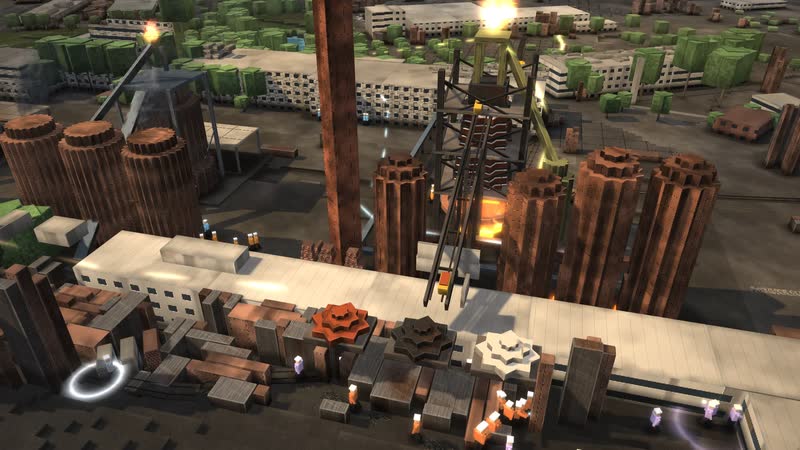
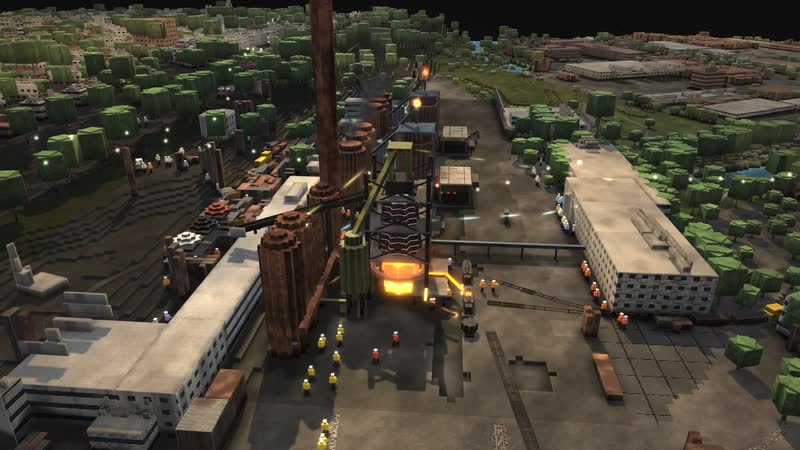
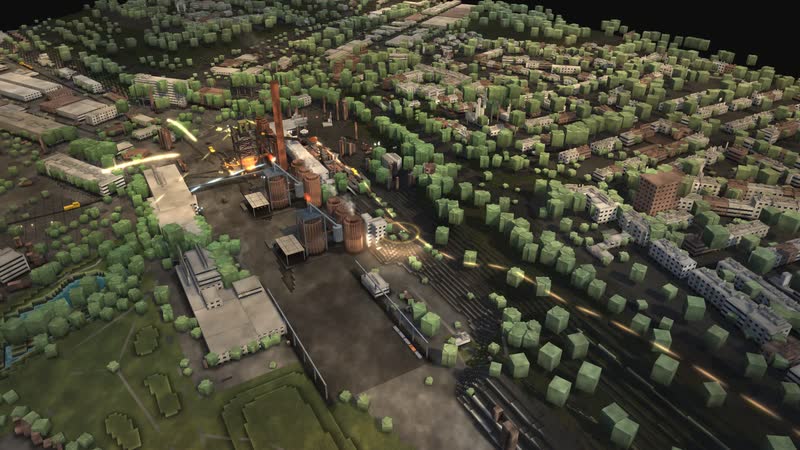
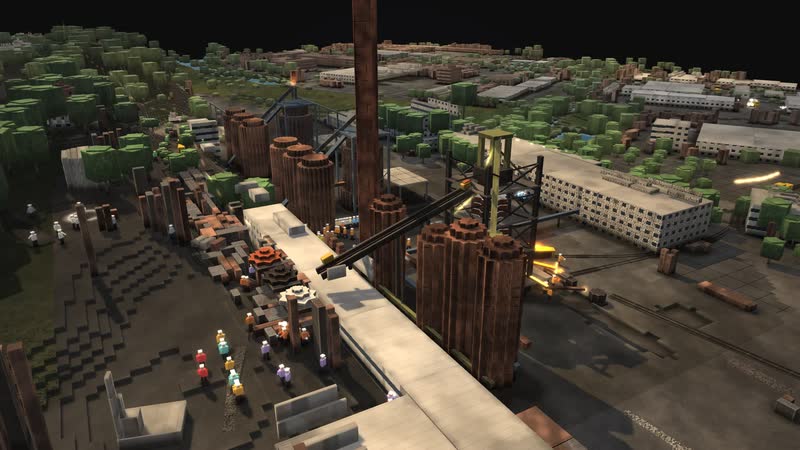
Henrichshütte in the Ruhr valley near Hattingen stands as a block model on its real terrain: blast furnace 3 with four hot-blast stoves, blower house, skip hoist and tapping, plus steelworks, rolling mill, forge and works station. A foreman runs the furnace's four stations – blower, hot-blast stoves, burden and tapping –, the pig iron runs into torpedo cars, and locomotives take it to the steelworks, around the clock in three shifts.
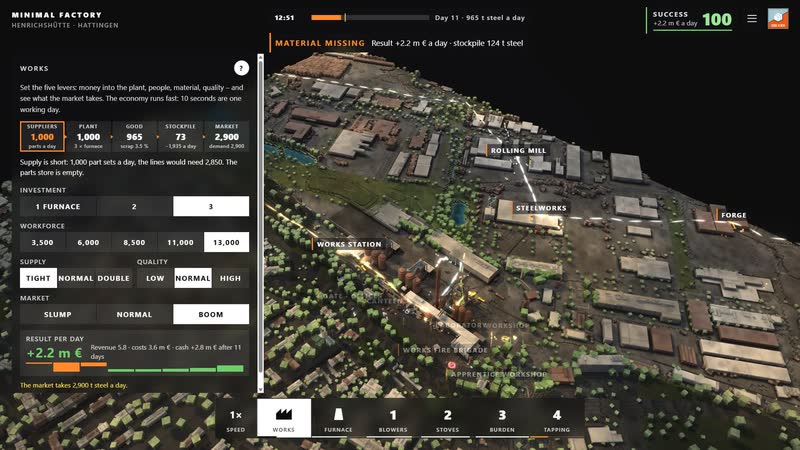
Five controls steer the whole ironworks: investment (one to three blast furnaces), workforce, supply with ore and coke trains, quality and market. Output, stockpile and daily result show at once what follows. You see why a change at the top of the furnace only arrives at the bottom about a minute later, and why an ironworks only pays off with volume.
Real are location, terrain and buildings from official NRW elevation data and OpenStreetMap. The plant in the centre is a simplified interpretation of our own: quantities, processes and times are model values. The page is for museums and exhibitions, schools and universities, industrial heritage and local history.
From ore to plate
- 01
ore, coke and lime arrive by rail at the burden bunker
- 02
the skip hoist carries them up as charges
- 03
hot blast from the stoves makes the coke burn, the ore melts
- 04
at tapping the pig iron runs into the torpedo cars
- 05
the steelworks turns it into steel
- 06
rolling mill and forge make heavy plates and forgings
01
A site at work
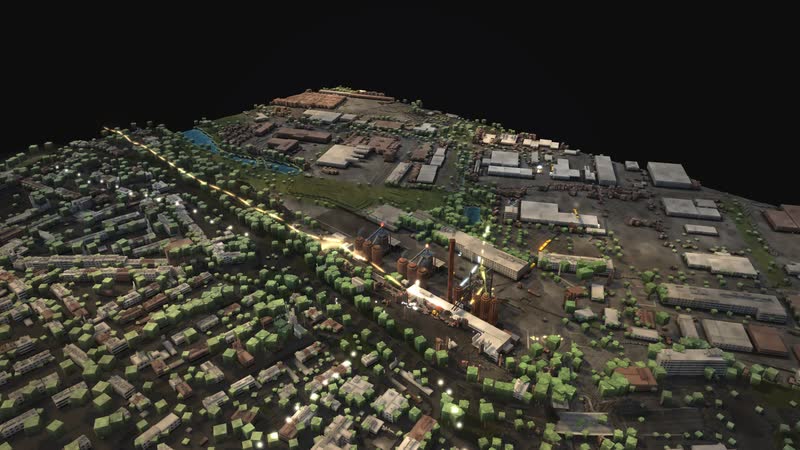
Henrichshütte: The ironworks in the Ruhr valley at Hattingen: furnace 3 turns ore, coke and lime into pig iron, the steelworks, rolling mill and forge make plates and forgings from it.
02
Furnace 3
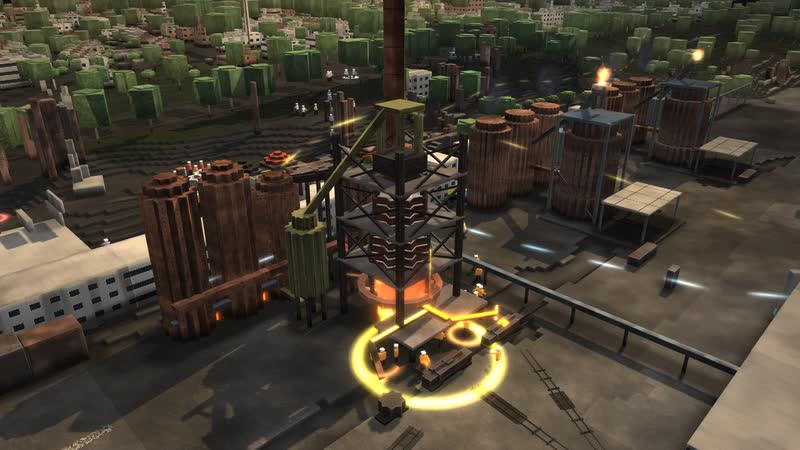
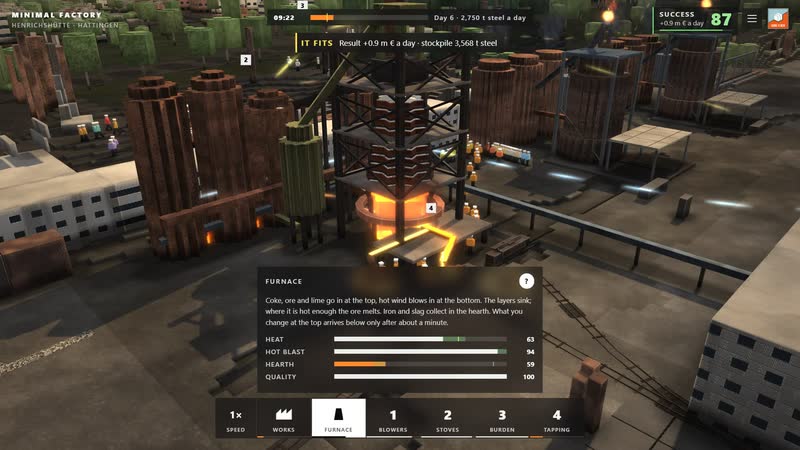
Furnace 3 – Coke, ore and lime go in at the top, hot wind blows in at the bottom. The layers sink; where it is hot enough the ore melts. Iron and slag collect in the hearth. What you change at the top arrives below only after about a minute.
What is shown – why – for whom
| 展示内容 | 为什么 | 适用对象 |
|---|---|---|
| Blast furnace 3 with throat, hearth and taphole | 为什么Shows where ore becomes iron. | 适用对象museum, teaching |
| Four hot-blast stoves, one blowing, the others heating | 为什么Shows why the wind has to be hot and when to switch. | 适用对象teaching, history of technology |
| Burden bunker and skip hoist | 为什么Shows how ore, coke and limestone get to the top. | 适用对象museum, teaching |
| Tapping with tilting runner and torpedo cars on two tracks | 为什么Shows how the liquid iron leaves the works. | 适用对象museum, exhibition |
| Steelworks, rolling mill, forge and works station | 为什么Shows the way from pig iron to plate. | 适用对象teaching, industrial heritage |
| Workshop, laboratory, canteen, gate and works fire brigade | 为什么Shows that an ironworks was also a place for thousands of people. | 适用对象local history, exhibition |
| Five controls with output, stockpile and daily result | 为什么Shows connections in operations, not a forecast. | 适用对象economics teaching |
03
Tapping
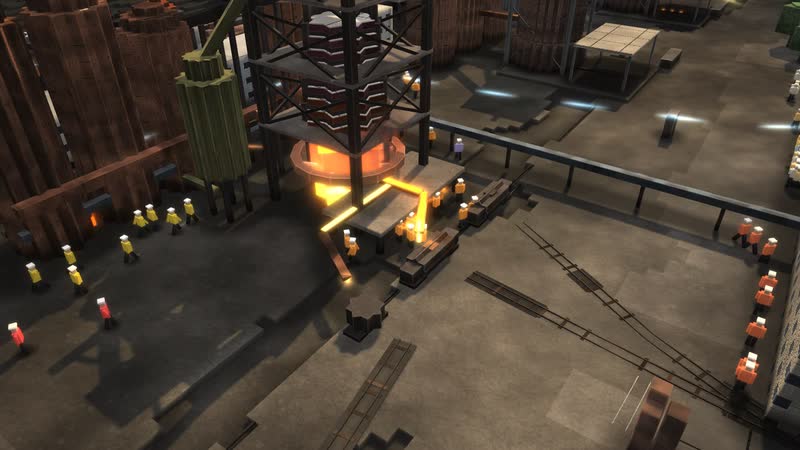
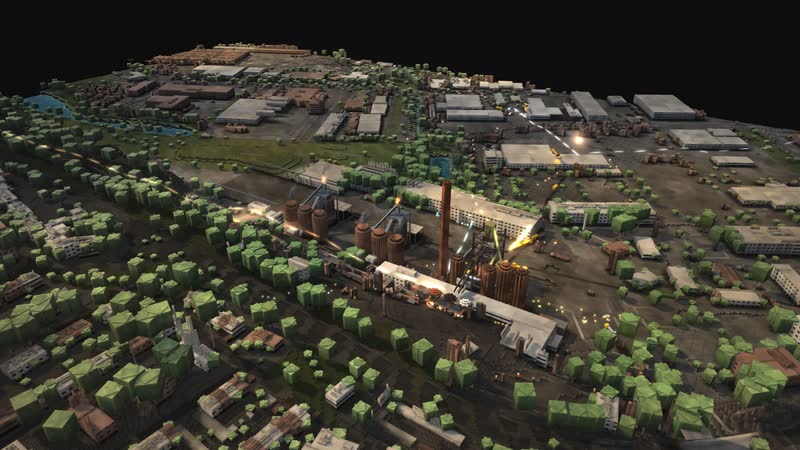
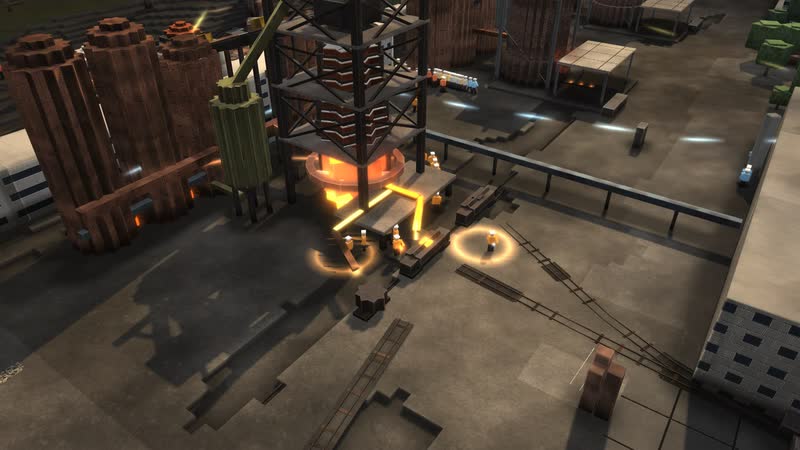
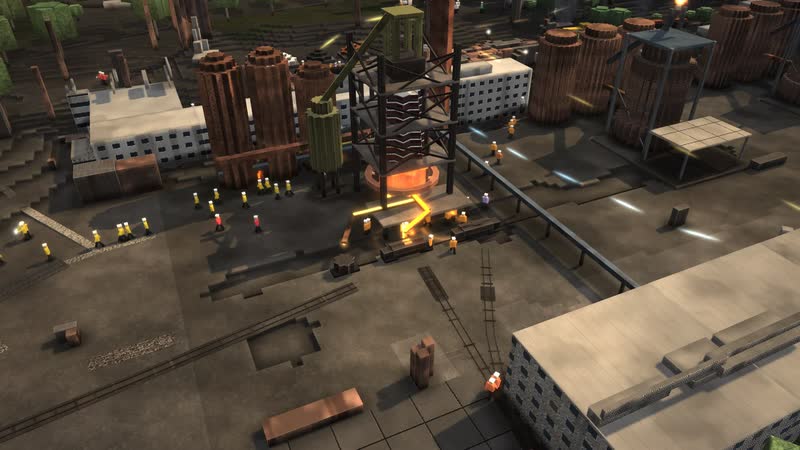
Tapping – the taphole is open, pig iron runs down the runner into the torpedo car, the slag into the slag car.
04
Five levers, one works
Full investment – three blast furnaces side by side: steel is a volume business, the works only pay with two furnaces.
Films from the model
-
Above Henrichshütte
A flight across the whole site: low approach, furnace 3 with its hot-blast stoves, then across the works to the long shot – everything moving, with the sound of the works.
-
How a blast furnace runs
The foreman runs the blast furnace: blowers, hot-blast stoves and burden – at the end the taphole opens and pig iron runs into the torpedo car.
-
A working day in time-lapse
The works clock runs from six to six: early, late and night shift, sirens at shift change, trains and people at the gate – in time-lapse.
-
A works grows
Investment step by step: new blast furnaces appear, the workforce grows with them, then more supply and a boom in the market.
-
Bottleneck – the works respond
First materials run short and the plant only runs in part, then the market takes too little and the stockpile fills up – in the boom the works recover.
-
Using the software
With the full interface: blast furnace with help text, hot-blast stoves, tapping and burden, then the works with five levers – slump and boom.
Facilities and areas in the model
-
Blast furnace
Coke, ore and lime go in at the top, hot wind blows in at the bottom. The layers sink; where it is hot enough the ore melts. Iron and slag collect in the hearth. What you change at the top arrives below only after about a minute.
-
Blower house
The blower house produced the wind for the furnace (here: the real building from the elevation model). More wind means more iron – but also a faster sinking column and faster cooling stoves.
-
Hot-blast stoves
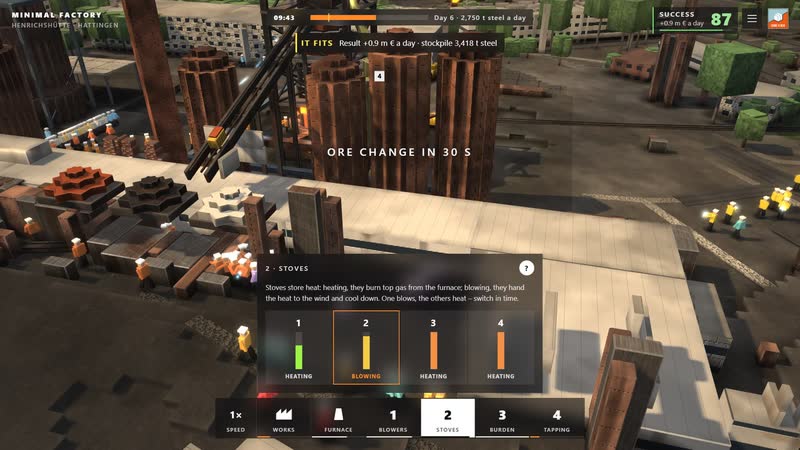
Stoves store heat: heating, they burn top gas from the furnace; blowing, they hand the heat to the wind and cool down. One blows, the others heat – switch in time.
-
Burden · skip hoist
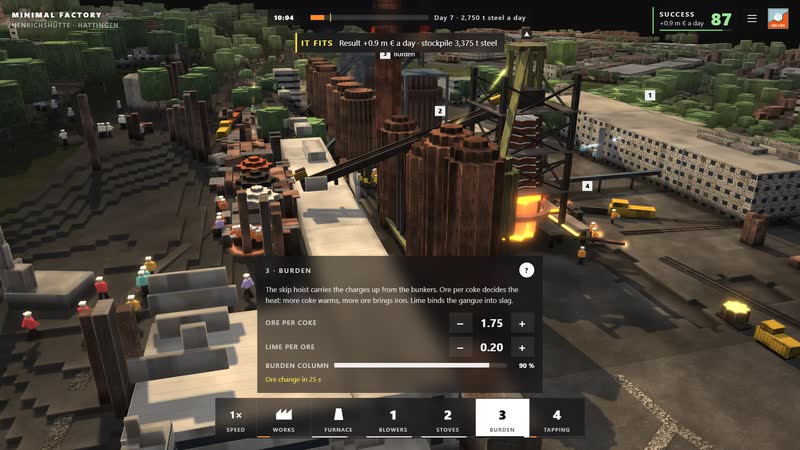
The skip hoist carries the charges up from the bunkers. Ore per coke decides the heat: more coke warms, more ore brings iron. Lime binds the gangue into slag.
-
Tapping · tracks
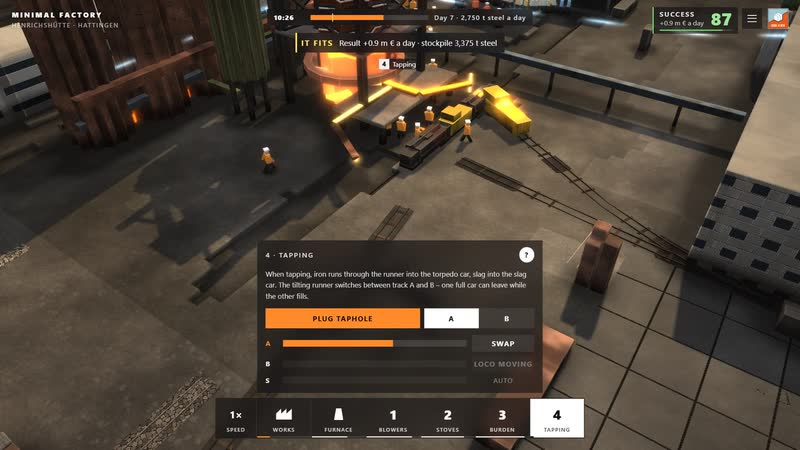
When tapping, iron runs through the runner into the torpedo car, slag into the slag car. The tilting runner switches between track A and B – one full car can leave while the other fills.
-
Steelworks
In the steelworks the pig iron becomes steel with scrap – about 1.2 t of steel from one tonne of pig iron.
-
Rolling mill
Rolling mill and forge turn the steel into heavy plates and forgings for ships, bridges and tanks.
-
Forge
Heavy forgings are made from the works’ steel in the forge.
-
Works station
Ore, coke and lime arrive at the works station; slabs also pile up here when more steel is made than sold.
-
Slag heap
The slag goes to the heap; as granulated slag it ends up in cement and road building.
-
Hattingen
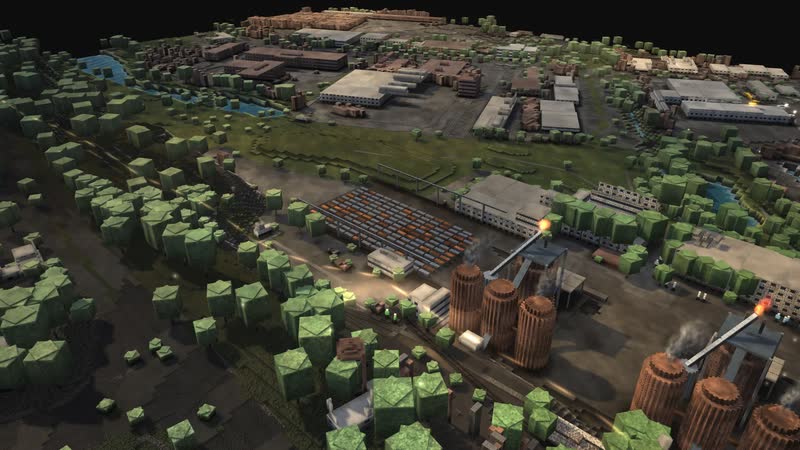
Hattingen right next door – houses, streets and trees from official elevation data and OpenStreetMap.
-
Workshop
Fitters, electricians and welders keep the works running. When something breaks they go there – more maintenance means more of them.
-
Laboratory
Every tap sends a sample to the lab: carbon, sulphur, silicon. Only then does the steelworks know what it gets.
-
Canteen
Hot meals for thousands. Busiest at shift change and in the breaks.
-
Gate · offices
Gatekeepers, wages office, management. The shifts come through the gate; foremen and engineers walk into the works from here.
-
Works fire brigade
Works fire brigade and first aid: patrols at the furnace and cast house, always on call where there is heat and gas.
-
Apprentice workshop
Apprentices learn filing, welding and turning – tomorrow’s fitters. In between they help in the workshop.
05
When things get tight
Slab yard filling up – more is made than sold; when there is no room left the surplus goes at a 40 % discount.
06
Medium long shot
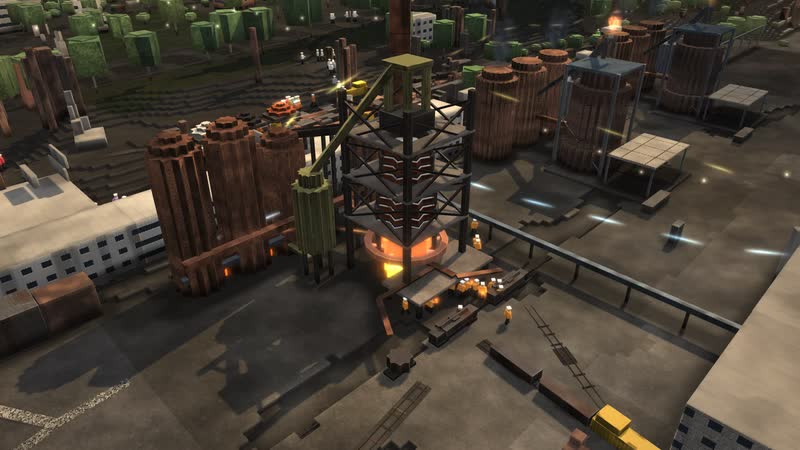
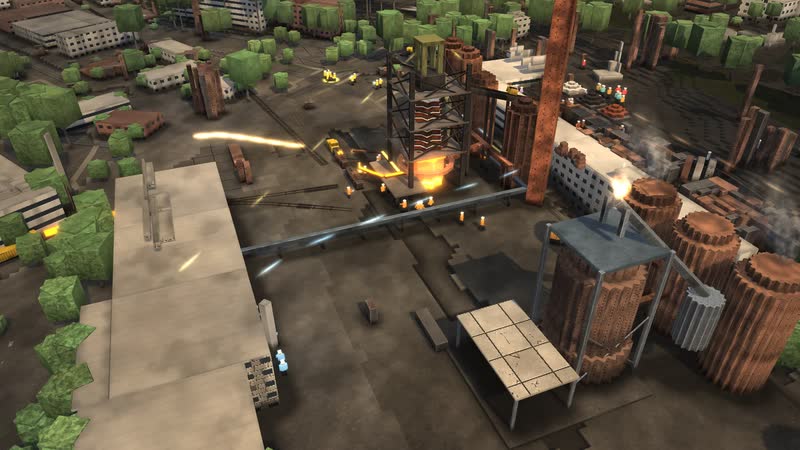
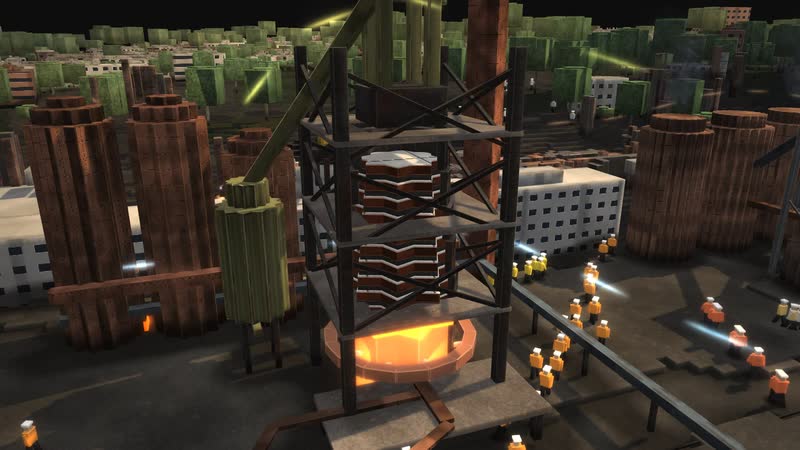
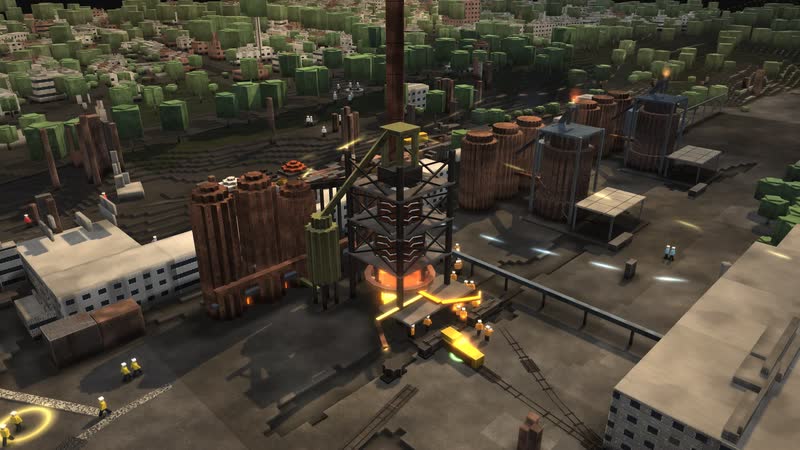
Medium long shot – furnace 3 with its hot-blast stoves: glow at the taphole, smoke above the furnace top.
Processes in the model
From ore to plate
- 01ore, coke and lime arrive by rail at the burden bunker
- 02the skip hoist carries them up as charges
- 03hot blast from the stoves makes the coke burn, the ore melts
- 04at tapping the pig iron runs into the torpedo cars
- 05the steelworks turns it into steel
- 06rolling mill and forge make heavy plates and forgings
Tapping (station 4)
- 01enough pig iron in the hearth
- 02open the taphole
- 03pig iron runs down the runner into the car on track A
- 04shortly before it is full, swing the tilting runner to track B
- 05the full car leaves, an empty one follows
- 06plug the taphole
Switching the hot-blast stoves (station 2)
- 01one stove blows, the others heat with top gas
- 02the blowing stove cools down
- 03switch a hot one to blowing
- 04then switch the cold one to heating
Expansion
- 01investment: a second and third blast furnace west of furnace 3
- 02more people for the furnaces
- 03more ore and coke trains
- 04only with volume do the works pay
Bottleneck and recovery
- 01supply short – the store empties
- 02materials missing – the plants only run in part
- 03market in a slump – the stockpile grows until the fire sale
- 04boom – the stockpile empties, the result rises
What the model can be used for
-
Museum and exhibition
The blast furnace explains itself on the plant: blower, hot-blast stoves, burden and tapping one after the other, with one sentence per step. On a big screen the demonstration also runs without anyone at the controls.
适用对象museums, visitor centres, exhibitions
-
School and university
How do ore, coke and limestone become pig iron, and pig iron become steel? The stations can be shown one by one, and terms like throat, burden and slag sit where they belong.
适用对象schools, universities, vocational training
-
Industrial heritage and local history
Ironworks and town lie side by side on the real terrain. You see how the works railway, the tracks and the change of shifts shaped the Ruhr valley.
适用对象industrial heritage, city marketing, local history societies
-
Understanding operations
Investment, workforce, supply, quality and market act at once on output, stockpile and result. It becomes visible why a new plant without people and sales loses money.
适用对象economics teaching, further training
07
Hot-blast stoves
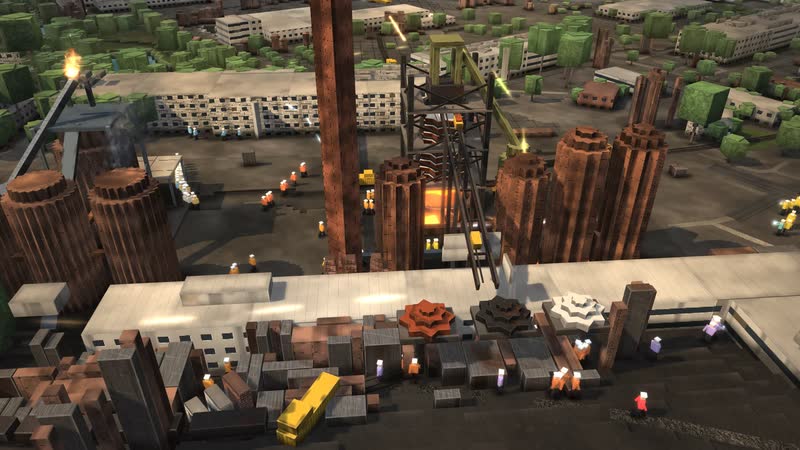
Hot-blast stoves – one blows hot air into the furnace while the others reheat with top gas; the foreman switches in time.
08
The whole software
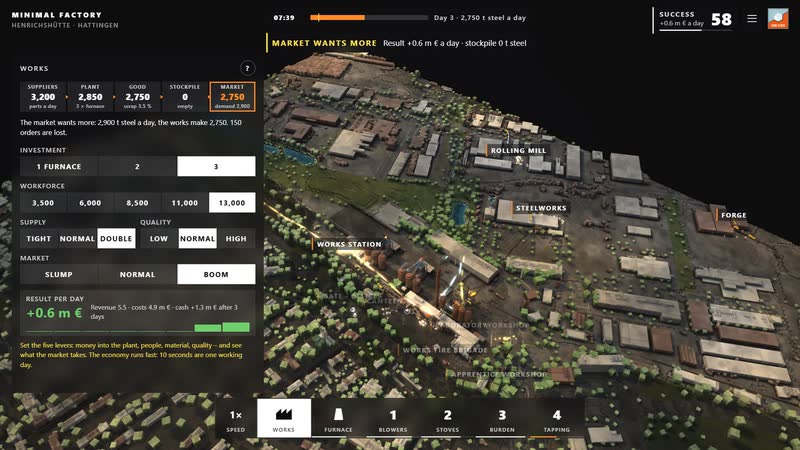
Running the works – five levers: investment, workforce, supply, quality and market; the chain shows at once what follows.
What you can change
Controls
- Investment: Number of blast furnaces (1 to 3): more money builds more, less shuts them down; without more people they only run in part.
- Workforce: Enough people for all blast furnaces – output rises, and so does success. Too many people cost wages without more output.
- Supply: More material arrives – the plant no longer has to wait. Levels short, normal and double; supply security costs money.
- Quality: More quality means less scrap and fewer breakdowns but costs testing and maintenance (levels low, normal, high).
- Market: Slump, normal or boom. In a slump more is made than sold: the stockpile grows and success drops. In a boom the market takes more: the stockpile empties and success rises.
Disruptions
- Too few people: Workers are missing, part of the plant stands still.
- Material missing: Supply is not enough; once the store is empty the plants only run in part (message: “Parts store empty – supply is short”).
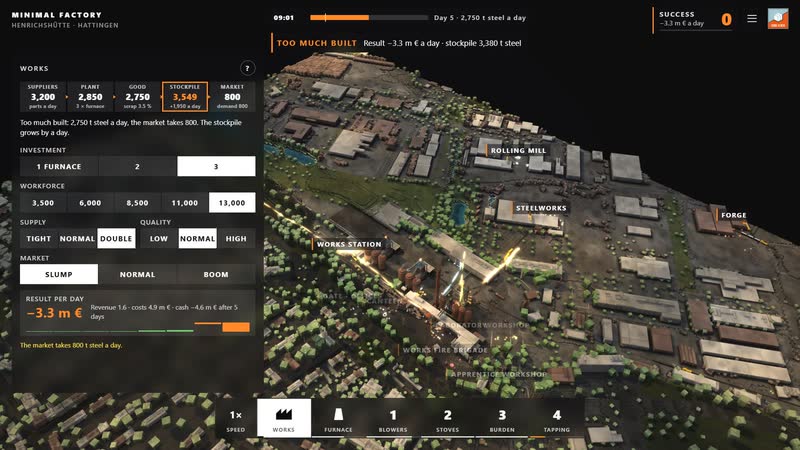
- Too much built: More is made than the market takes: the stockpile grows; when it is full the surplus goes at a 40 % discount (message: “Stockpile full – fire sale at a discount”).
- Market wants more: Demand is greater than the works can make; once the stockpile is empty orders are lost (message: “Stockpile empty – orders are lost”).
- Safety (manual operation, without the foreman): The hearth ran full and the safety cut the wind – tap more often or put more people on each shift.
- Furnace cold (manual operation, without the foreman): Furnace cooling. Some iron was off-spec – too cold or too much slag: lower ore per coke (more coke) and switch stoves in time.
- Breakdown: Low maintenance: more people in production, but something breaks about every 5 hours – blower, loco, rolling line.
What the model brings
-
01
The real terrain as a stage
Ironworks, tracks and town stand on terrain from official elevation data. You show the site as it lies, not as a diagram.
-
02
One furnace, step by step
The four stations of the blast furnace can be shown one by one, or the foreman runs them himself. You understand the process before you operate it.
-
03
Disruptions without damage
Material runs short, the stockpile fills up, a blower fails. You see where it gets tight first, and set it back.
-
04
For big screens and the browser
Runs in the browser and on large projections, with a demonstration that starts without anyone at the controls.
-
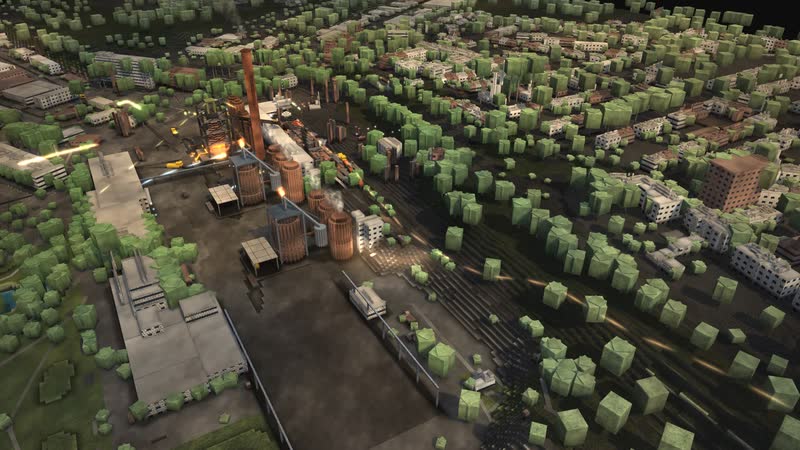
Henrichshütte: The ironworks in the Ruhr valley at Hattingen: furnace 3 turns ore, coke and lime into pig iron, the steelworks, rolling mill and forge make plates and forgings from it. -
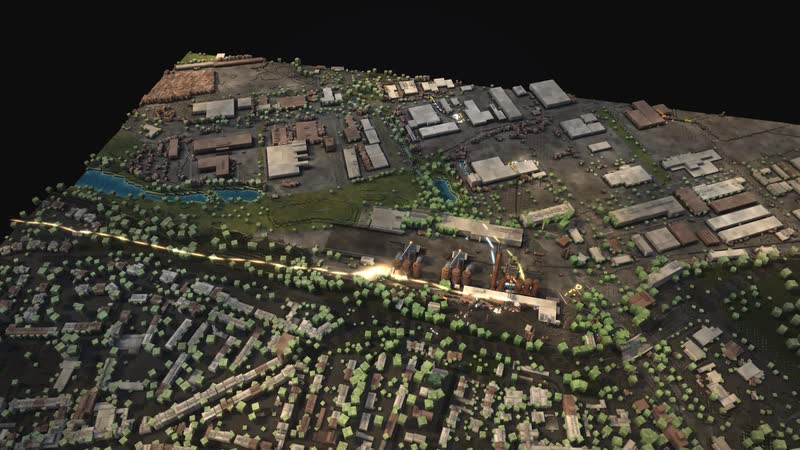
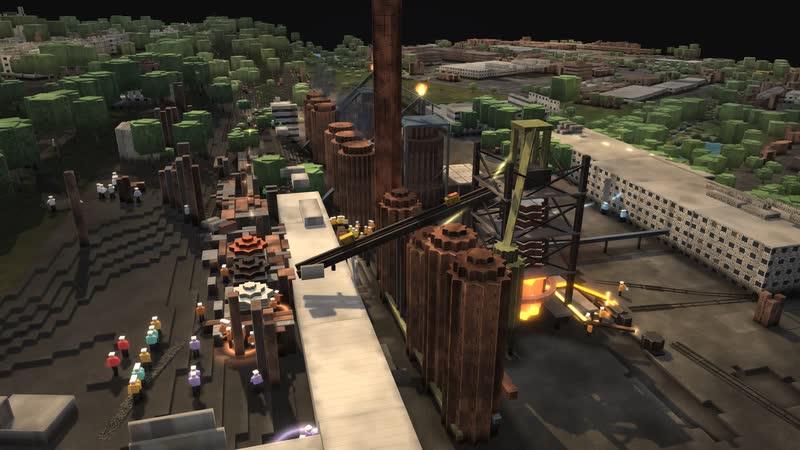
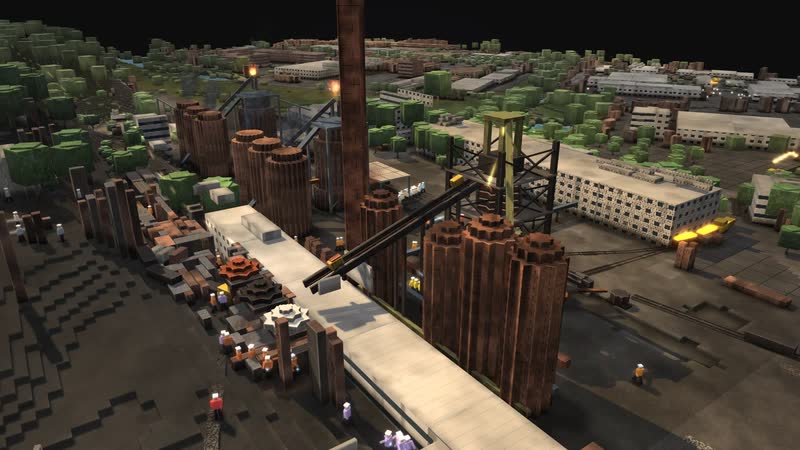
Henrichshütte from the other side – the same site in the afternoon sun from the south-west, with long shadows of halls and structures. -
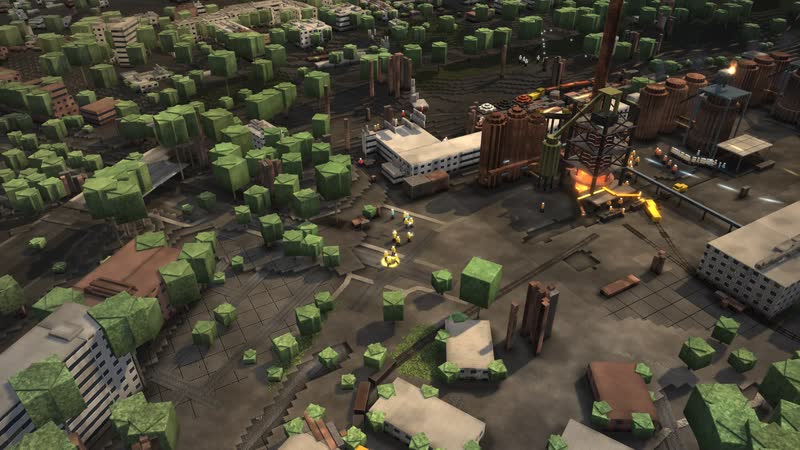
Medium long shot – furnace 3 with its hot-blast stoves: glow at the taphole, smoke above the furnace top. -
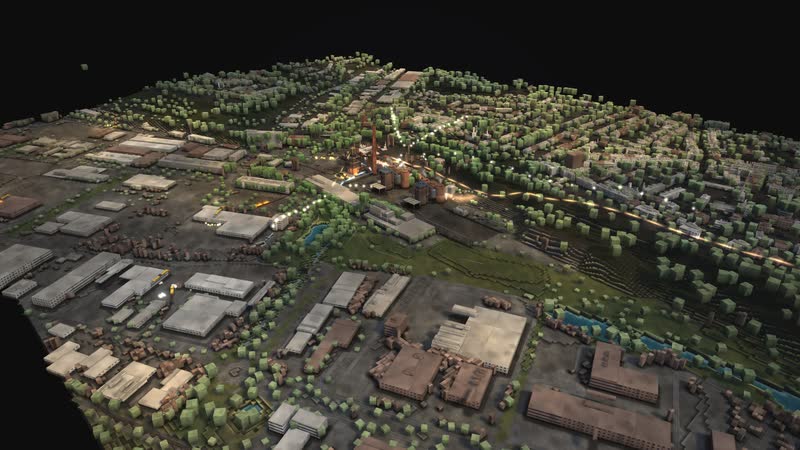
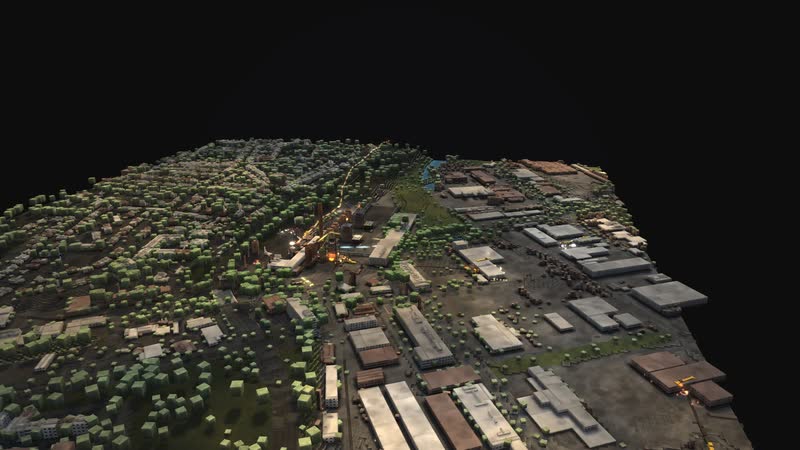
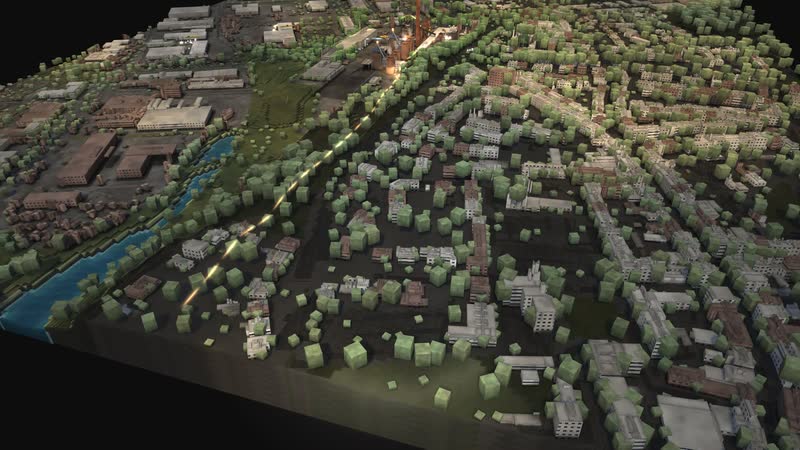
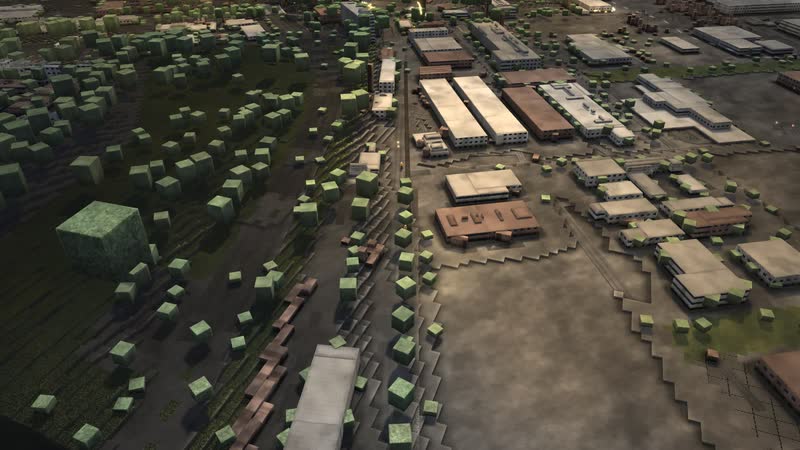
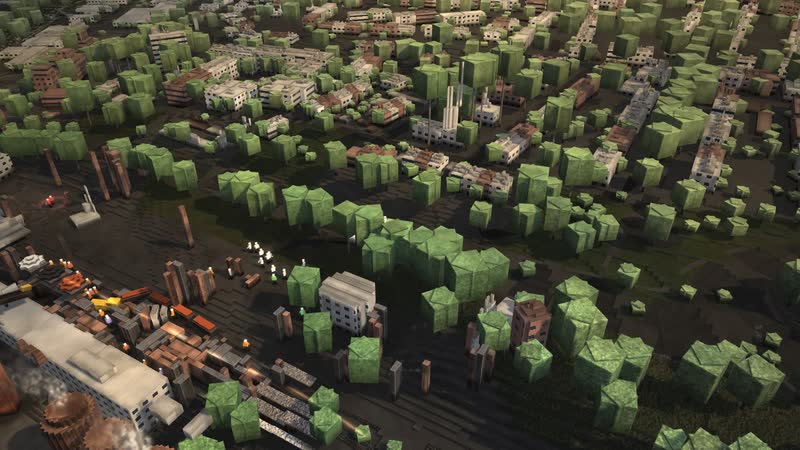
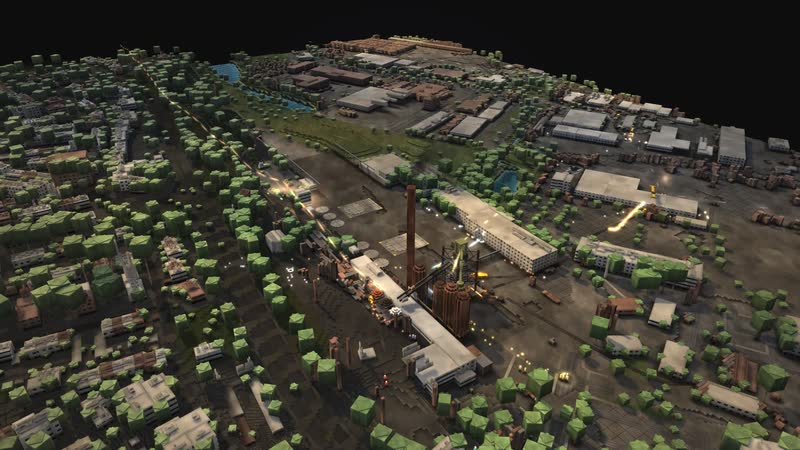
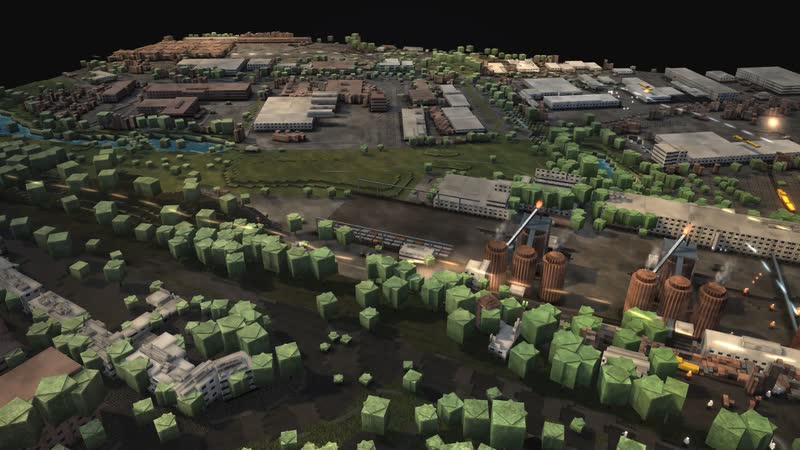
Far out near Hattingen – terrain, houses and trees come from official elevation data; at the edge the world fades softly into the dark. -
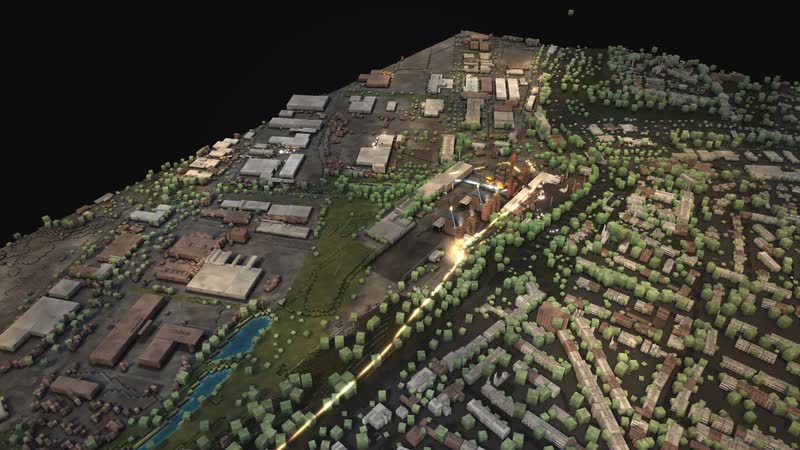
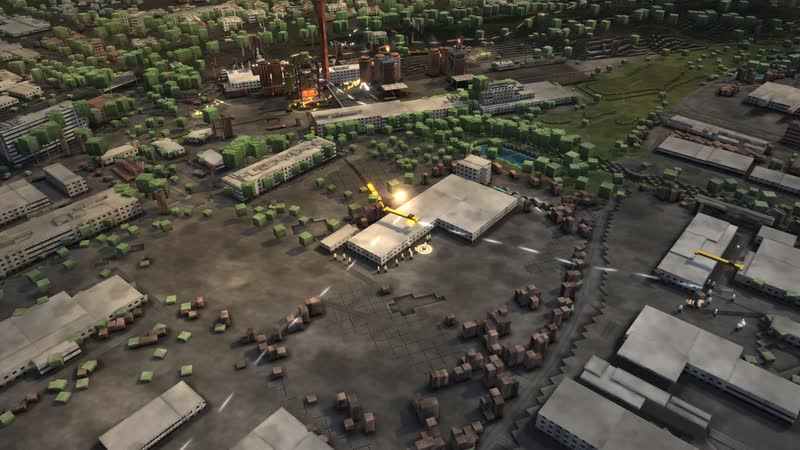
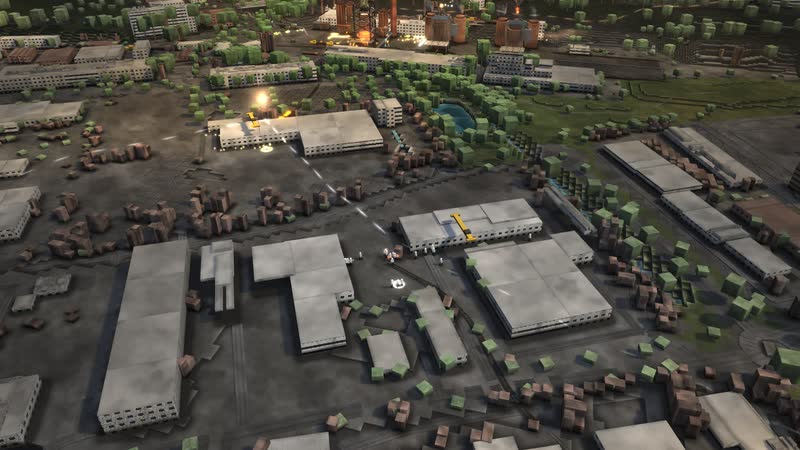
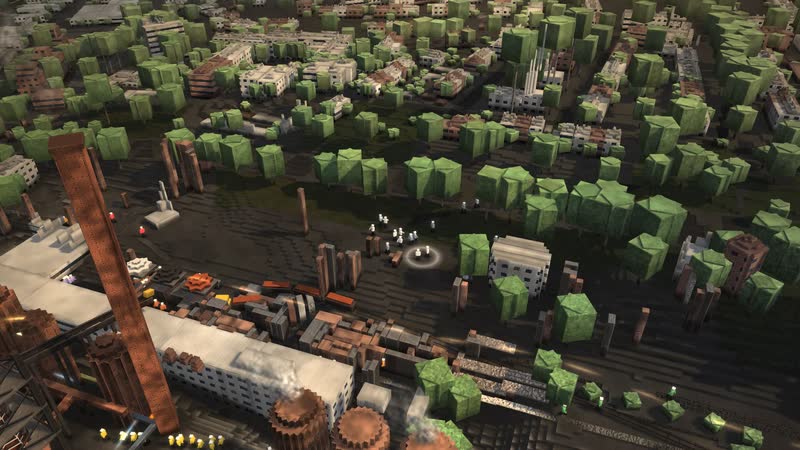
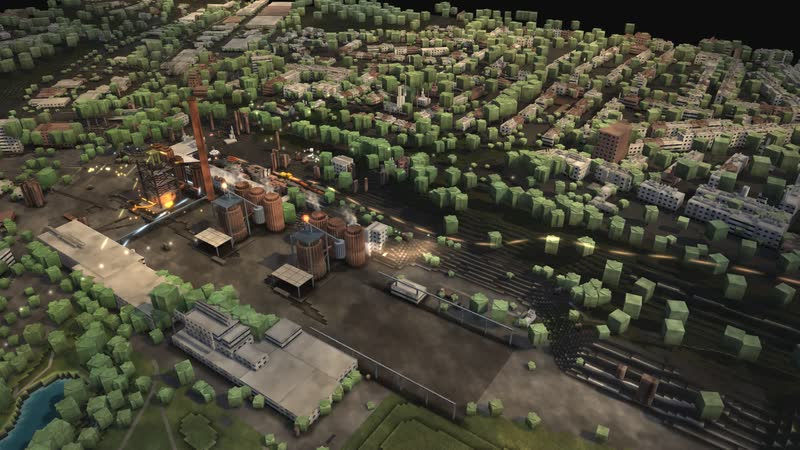
From above – Henrichshütte as a model of blocks: every cell a block, buildings and terrain from elevation data and OpenStreetMap. -
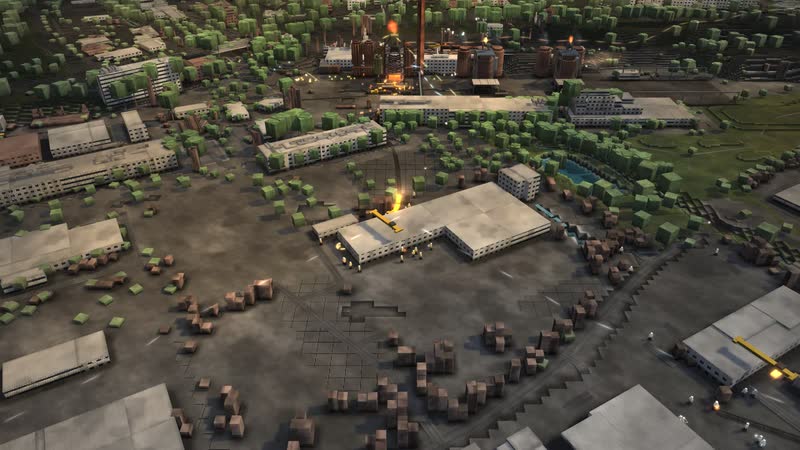
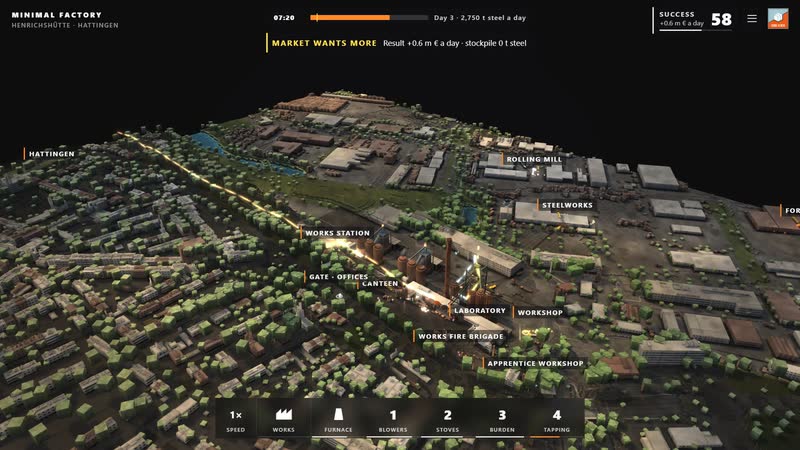
Henrichshütte from above at an angle – burden bunker, blast furnace, steelworks, rolling mill and works station at a glance. -
All around Hattingen: streets, tracks and water from OpenStreetMap, houses and trees from the elevation data – only the plant in the middle is built specially. -
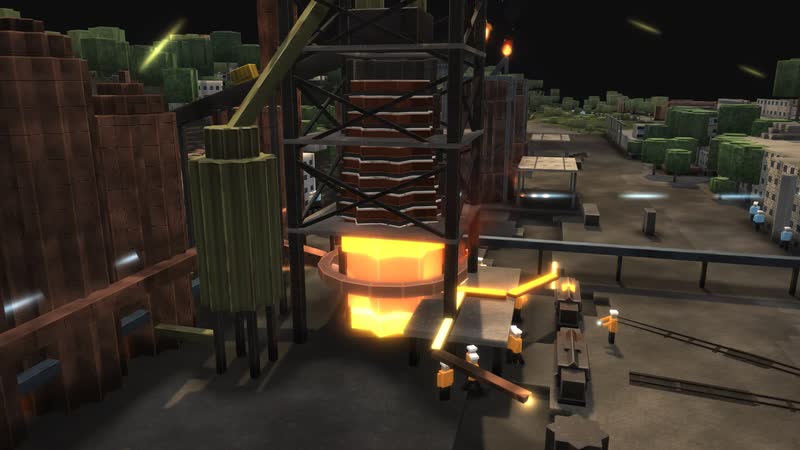
At eye level – furnace 3 with its hot-blast stoves, as close as from the fence. -
Furnace 3 – Coke, ore and lime go in at the top, hot wind blows in at the bottom. The layers sink; where it is hot enough the ore melts. Iron and slag collect in the hearth. What you change at the top arrives below only after about a minute. -
Blower house – The blower house produced the wind for the furnace (here: the real building from the elevation model). More wind means more iron – but also a faster sinking column and faster cooling stoves. -
Hot-blast stoves – Stoves store heat: heating, they burn top gas from the furnace; blowing, they hand the heat to the wind and cool down. One blows, the others heat – switch in time. -
Burden · skip hoist – The skip hoist carries the charges up from the bunkers. Ore per coke decides the heat: more coke warms, more ore brings iron. Lime binds the gangue into slag. -
Tapping · tracks – When tapping, iron runs through the runner into the torpedo car, slag into the slag car. The tilting runner switches between track A and B – one full car can leave while the other fills. -
Steelworks – In the steelworks the pig iron becomes steel with scrap – about 1.2 t of steel from one tonne of pig iron. -
Rolling mill – Rolling mill and forge turn the steel into heavy plates and forgings for ships, bridges and tanks. -
Works station – Ore, coke and lime arrive at the works station; slabs also pile up here when more steel is made than sold. -
Slag heap – The slag goes to the heap; as granulated slag it ends up in cement and road building. -
Workshop – Fitters, electricians and welders keep the works running. When something breaks they go there – more maintenance means more of them. -
Canteen – Hot meals for thousands. Busiest at shift change and in the breaks. -
Furnace 3 close up – glow at the taphole, smoke above the furnace top. -
Charging – the skip hoist carries coke, ore and lime up in layers; in the furnace they sink until the ore melts. -
Hot-blast stoves – one blows hot air into the furnace while the others reheat with top gas; the foreman switches in time. -
Tapping – the taphole is open, pig iron runs down the runner into the torpedo car, the slag into the slag car. -
Full cars leave – the tilting runner switches between track A and B, an empty car follows. -
Smoke and glow – glow at the taphole, smoke above the furnace top; the foreman runs stations 1–4 of furnace 3. -
Works railway – locomotives bring ore and coke, take pig iron to the steelworks and slag to the heap. -
On to steel – in the steelworks the pig iron becomes steel, then heavy plates and forgings are made. -
Gate and offices – early, late and night shifts come into the works here; about 10,000 people worked at the ironworks. -
Small investment – only furnace 3 runs; the first lever decides how many furnaces the works have. -
Full investment – three blast furnaces side by side: steel is a volume business, the works only pay with two furnaces. -
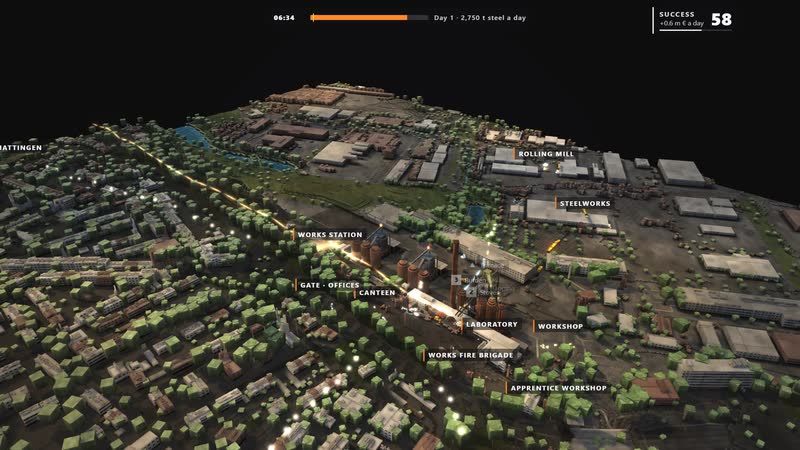
Every facility labelled – steelworks, rolling mill, works station and the areas of the works; at the top the working day with the daily output, on the right success in one number. -
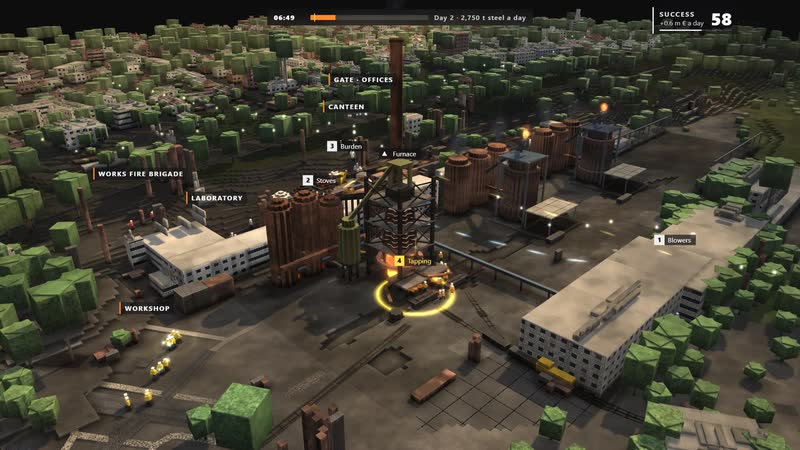
Stations labelled – blast furnace, blower, hot-blast stoves, burden and tapping with their numbers 1–4. -
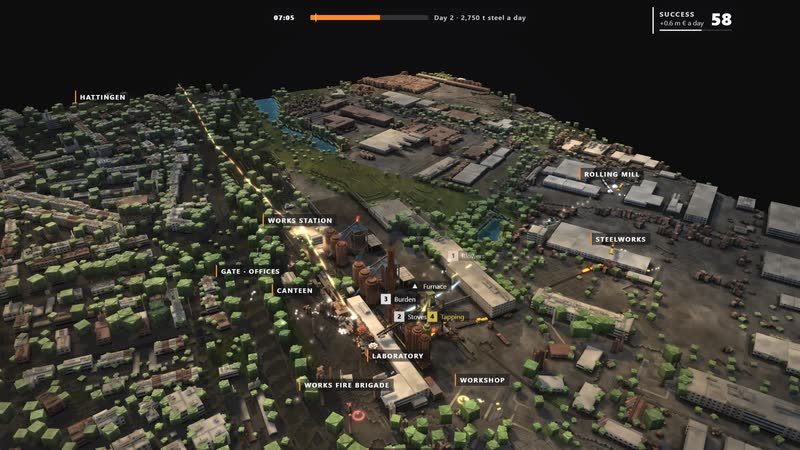
Success in one number – 100 means it cannot get better in this market; below it the result per day, at the top the output per working day. -
Where a lever acts, a ring lights up – here after a change in the market: Works station. -
Materials missing – supply is short, the store is empty: ore and coke trains are not enough for all furnaces. -
Slab yard filling up – more is made than sold; when there is no room left the surplus goes at a 40 % discount. -
Too few people – the workforce is not enough for all blast furnaces, part of the plant stands still. -
Boom – the market takes more than is being made: the stockpile empties, the dispatch route is busy. -
The whole software – at the top the working day with clock and output, on the right success in one number, below the tiles for works and facilities. -
Running the works – five levers: investment, workforce, supply, quality and market; the chain shows at once what follows. -
One lever, visible at once – market set to slump: the status line explains the bottleneck, the stockpile grows, the daily result drops. -
Blast furnace station with explanation – heat, hot blast, hearth and quality, below the help text on the plant. -
Station 2 hot-blast stoves – one blows, the others heat; the foreman runs it, you can take over at any time. -
Station 3 burden – ore per coke and lime per ore decide heat and slag. -
Station 4 tapping – taphole, tilting runner and the cars on tracks A, B and S. -
Bottleneck in orange – supply is not enough: the line at the top and the works status say in one sentence what is missing. -
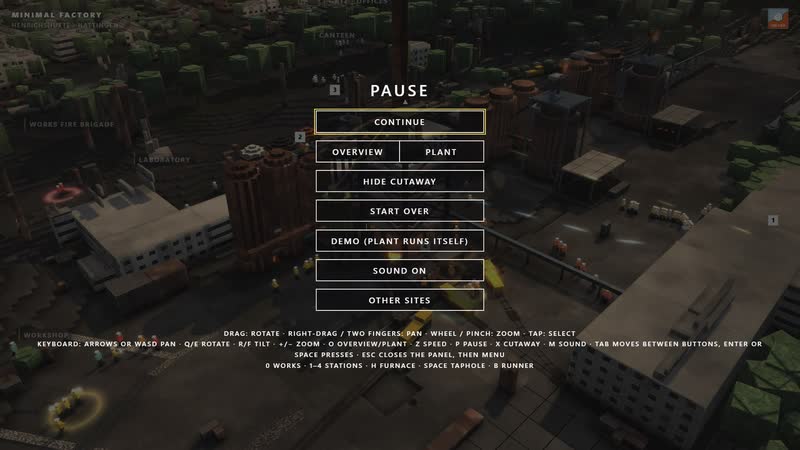
The menu – overview and plant, cutaway, restart, demo, sound and other sites, below the controls for mouse, touch and keyboard. -
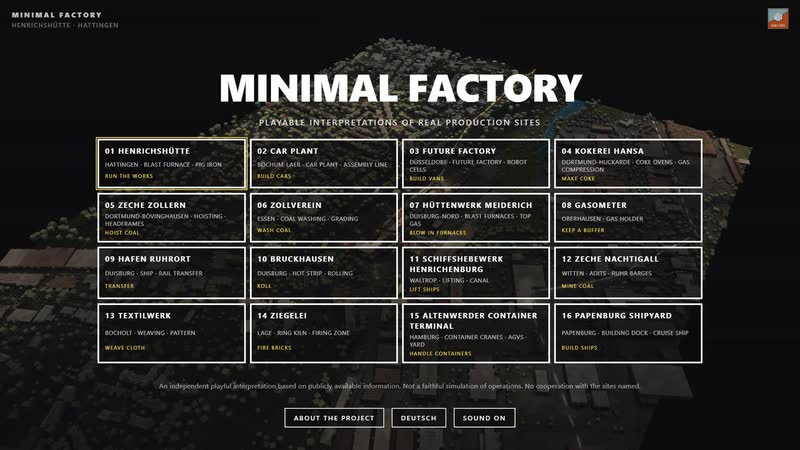
Sixteen real sites – blast furnaces, collieries, car plants, harbours and a shipyard, each where it really stands.
Your site as a model
Would you like to show your plant, your museum or your industrial site like this? Write to us or call. We will send you the password for starting it on request.
cube4tec.de/spiele/minimal-factory/
就此咨询
Minimal Factory: Henrichshütte Hattingen · Hochofen und Hütte
Basis and limits
Real are the location, terrain and buildings in Hattingen (official NRW elevation data and OpenStreetMap). The plant in the middle is our own simplified interpretation: quantities, processes, times and prices are model assumptions; the economy runs in time-lapse (10 seconds are one working day). Not a simulation of real operations and no cooperation with the site.
Public sources the model is based on:
- Website of the museum on site
- Geobasis NRW: digital surface and terrain models DOM1/DGM1 (Data licence Germany – Zero – 2.0)
- OpenStreetMap contributors (ODbL 1.0): streets, tracks, water, land use
Real are location, terrain and buildings (official NRW elevation data, OpenStreetMap). The plant is a simplified interpretation; quantities, processes and times are model values. With your data, the model shows your site and your processes.